What is a BMS control panel?
By Tristan Newton, Commercial Director · 12 November 2026 · 4 min read
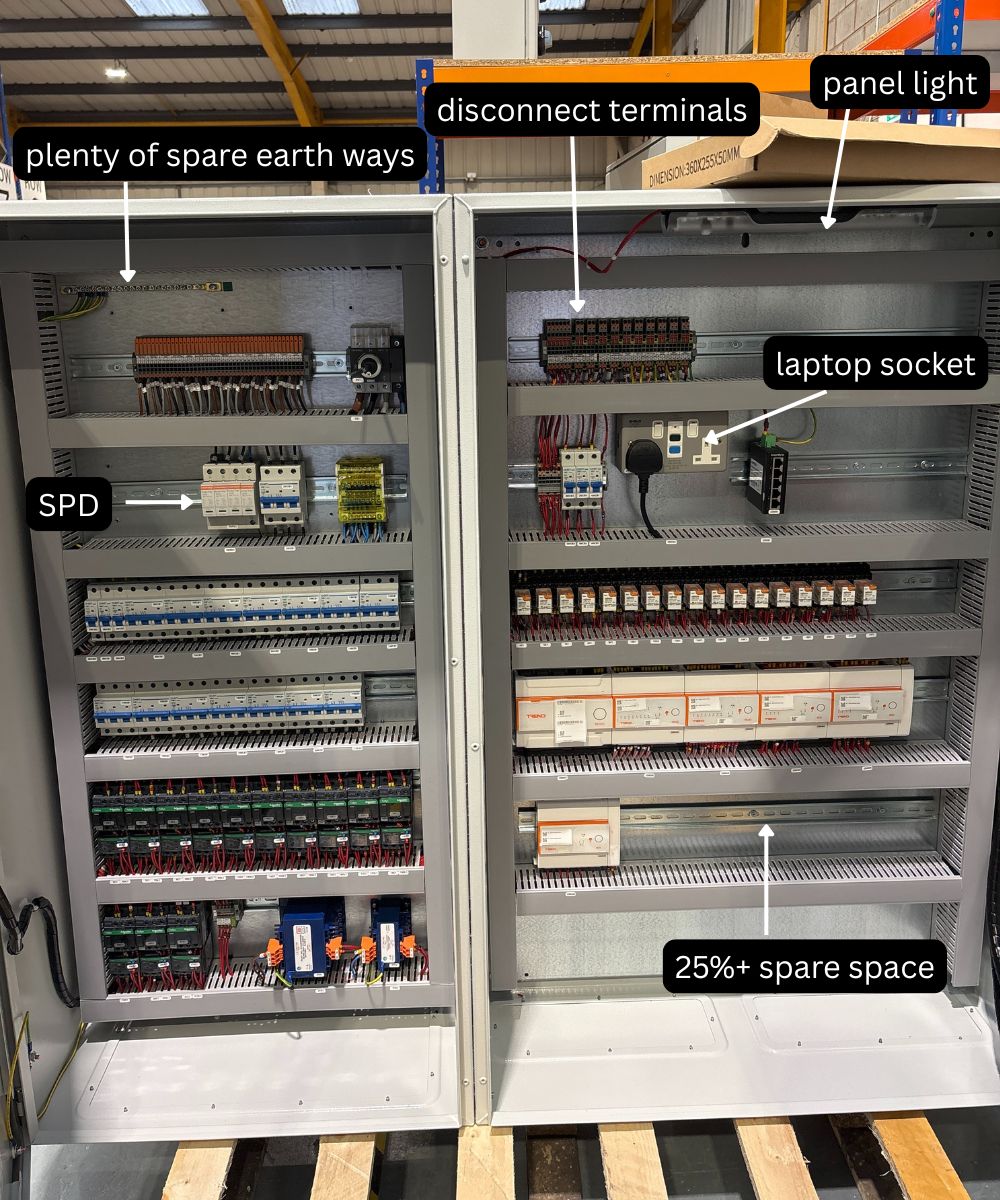
A BMS control panel houses the BMS controller and the power and motor control for a building's plant. It is where the building management system meets the pumps, boilers, chillers and air handling units it runs: the controller reads the sensors and decides, and the panel turns those decisions into power switched to the plant. G&G Controls designs and manufactures BMS control panels in Stoke-on-Trent for BMS integrators across the UK, each built to a points list with a wiring diagram and test certificate.
What a BMS control panel does
A BMS controller on its own is a small computer. It cannot start a pump or open a valve directly, and it should never be wired straight to 230V or 400V plant. The panel around it does three jobs:
- Powers the controls: transformers and power supplies for the controller, the IO modules and the field devices, usually 24V AC and 24V DC.
- Switches the plant: relays, contactors, starters and isolators between the controller's small outputs and the equipment.
- Connects everything: numbered terminals for every field cable, laid out to match the drawing, so the installer can land the wiring and the commissioning engineer can find every point.
What is inside
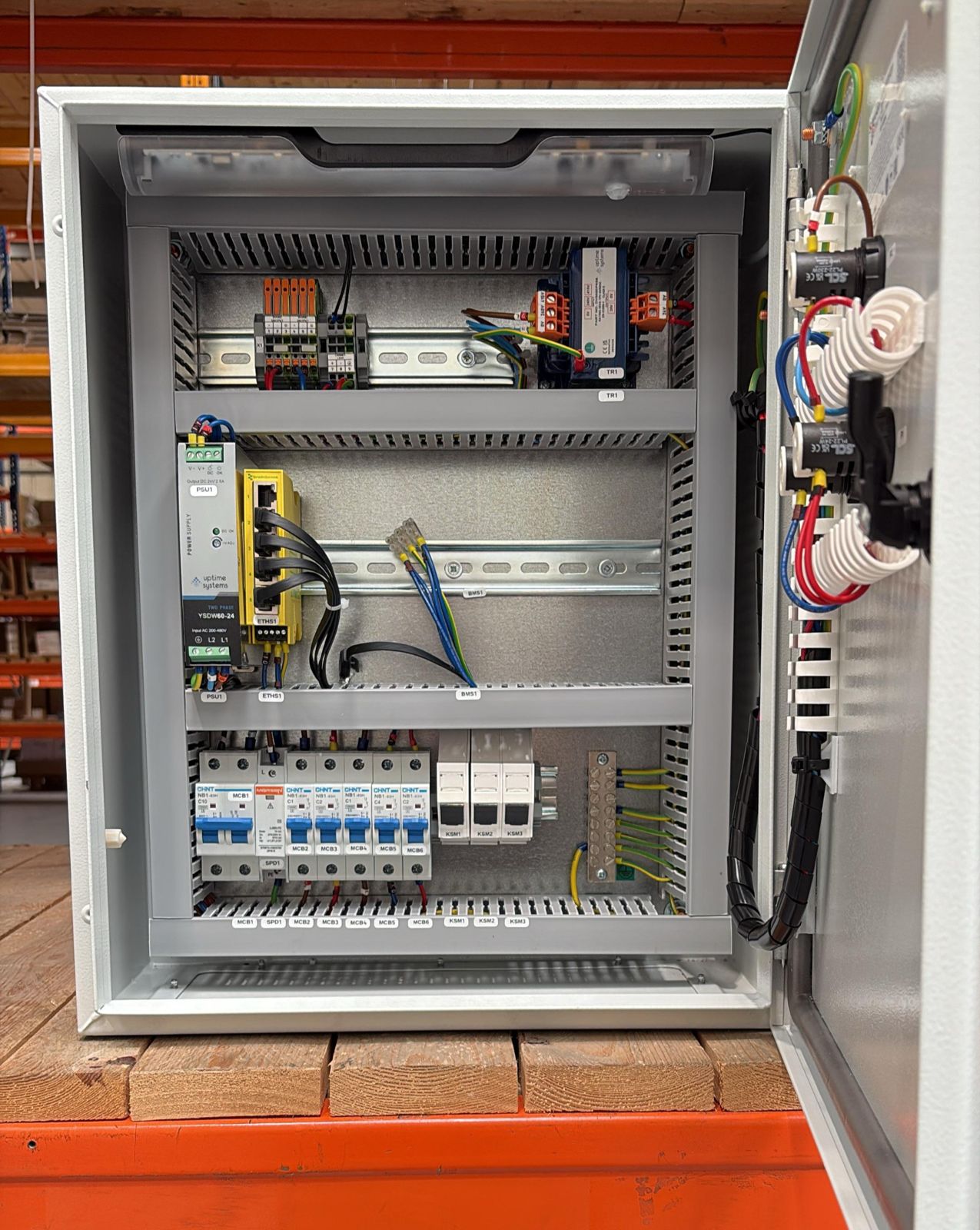
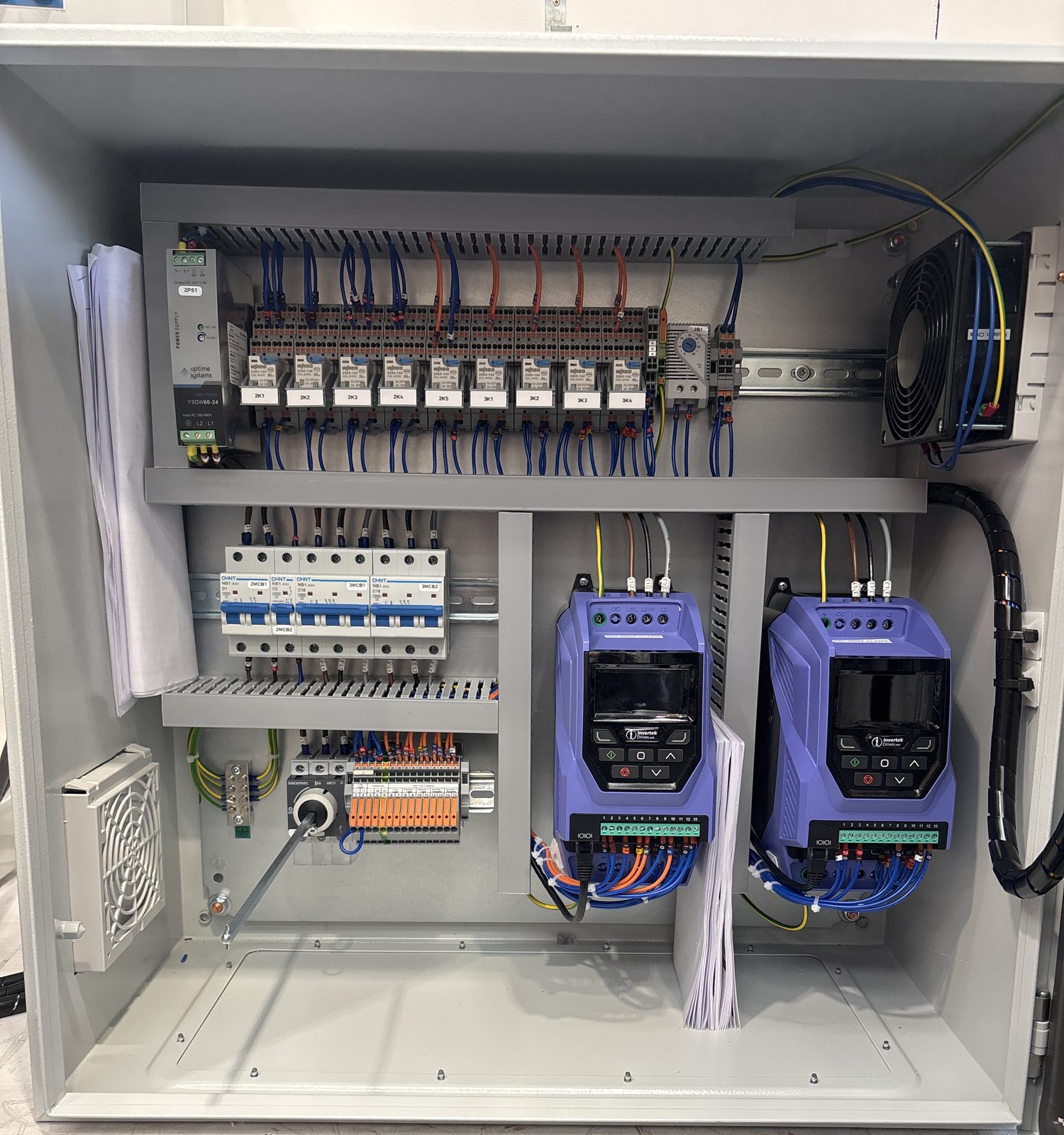
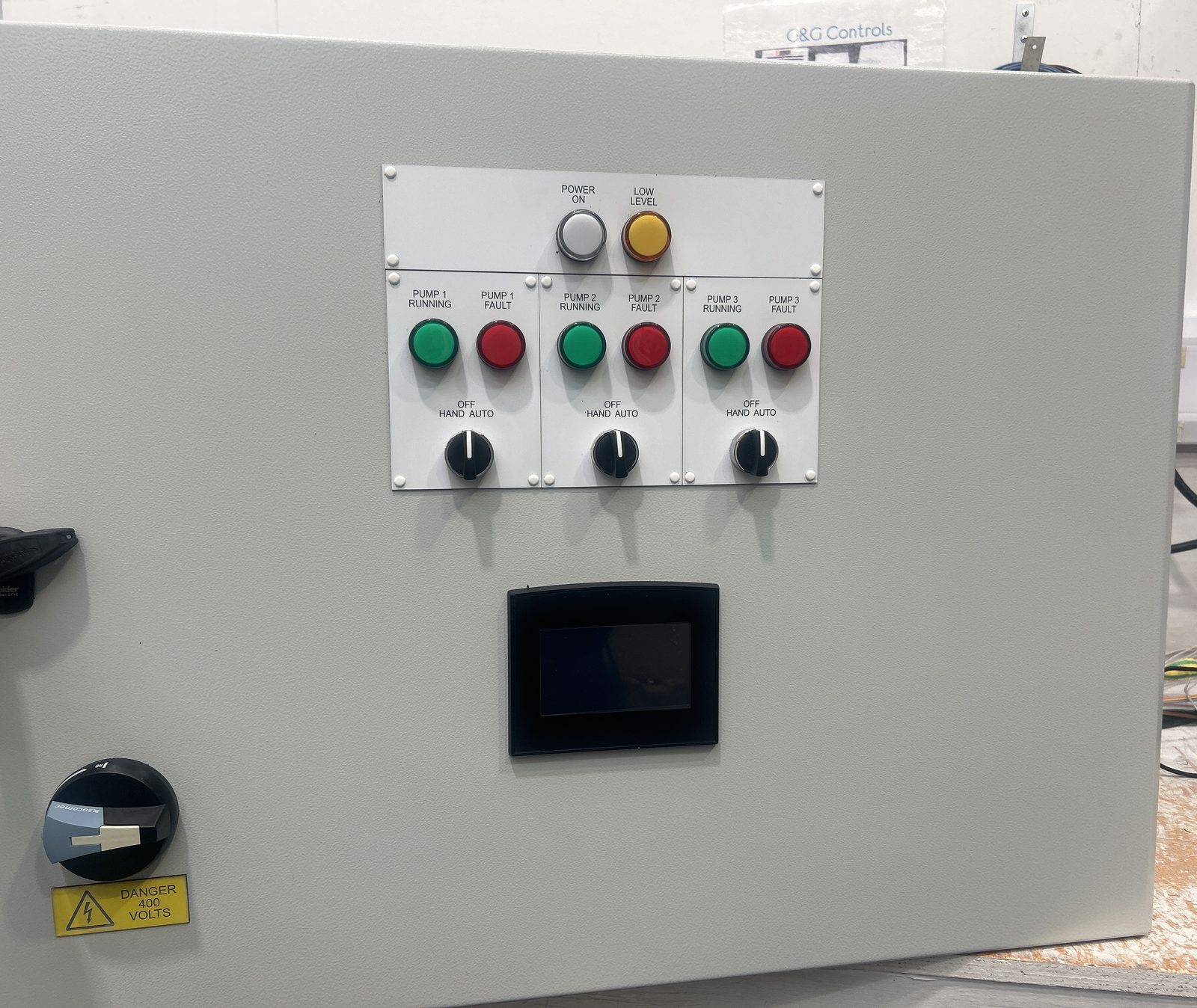
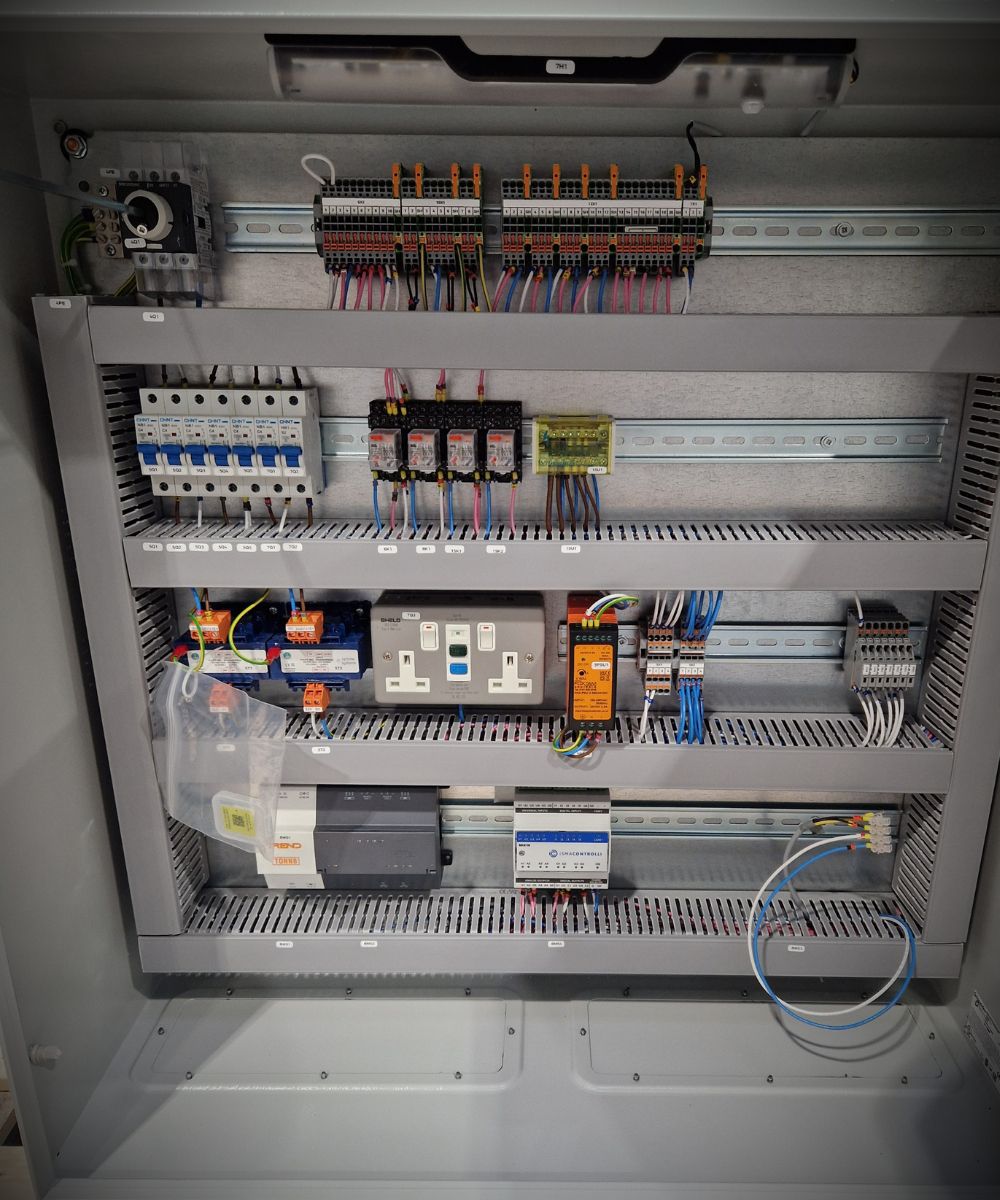
A typical panel holds the controller and its IO modules, a transformer and a DC power supply, a main isolator, circuit breakers for each outgoing circuit, interposing relays for the digital outputs, surge protection, a network switch and rows of terminals. A good one adds the things that make it easy to work on: a panel light, a service socket, lamps on the door for supply healthy, labelling on every wire and terminal, and spare space for the points that get added later. What's inside a BMS outstation panel goes through each part.
Three kinds of BMS control panel
- Outstation panels: a controller, its IO and the power supplies, with no plant switching. They can be as small as 500 x 400mm.
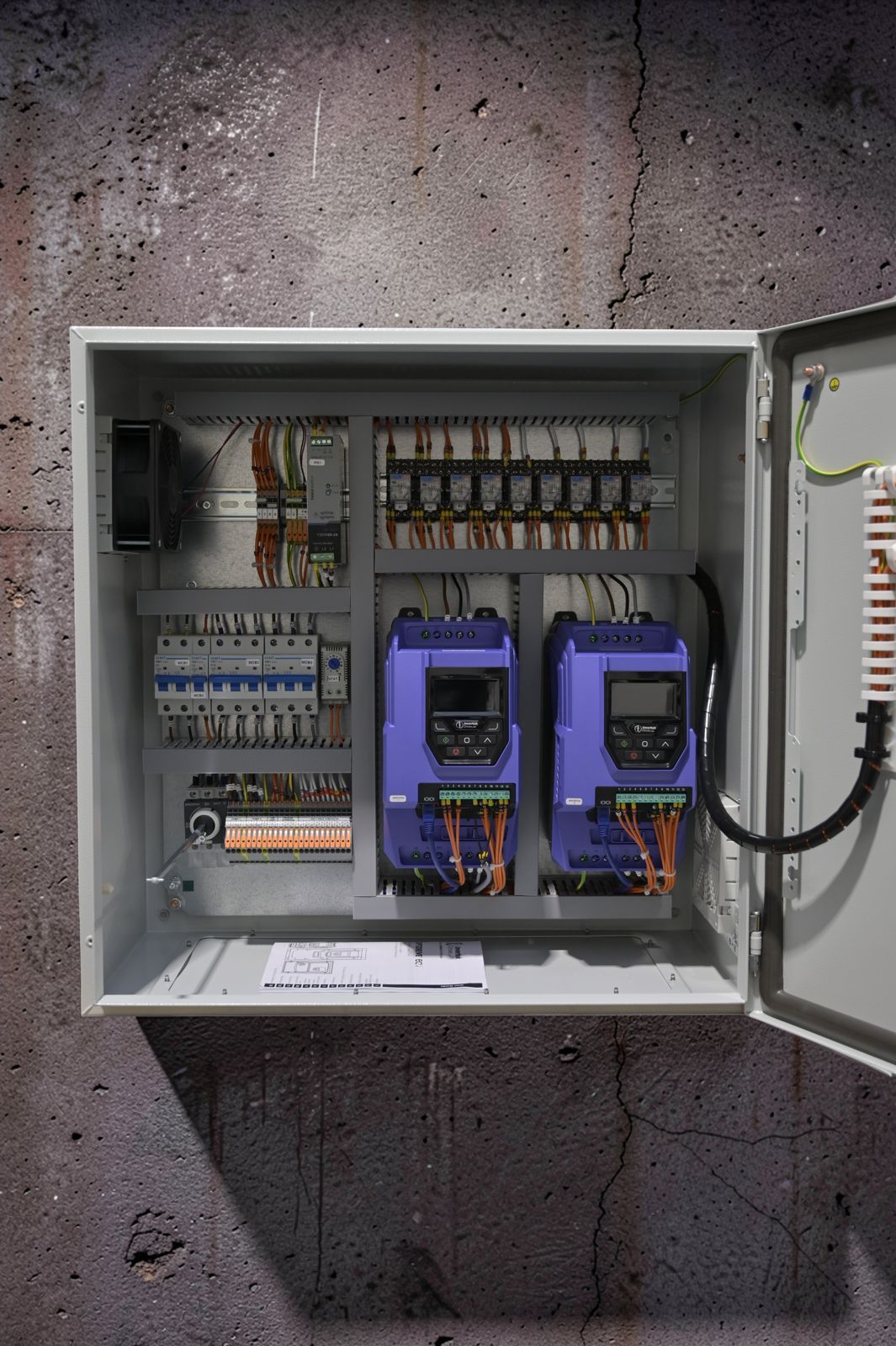
- Plant room panels: controls plus the switching for a few items of plant, such as pumps and boilers. A typical panel under 100 points is around 1200 x 1000mm.
- MCCPs: larger, floor-standing panels that hold the starters, drives and power distribution for a whole plant room, with the BMS controls built in. They can run to several metres.
What decides the size is mostly the power equipment, not the number of points.
Who supplies what
On most jobs the BMS integrator free-issues the controller, IO modules and HMI, and the panel builder supplies everything else. The integrator keeps the controller its engineers are trained on and write the strategy for; the panel builder takes responsibility for the panel around it. Free-issue controllers explains how that works in practice. We do not program BMS controllers; the integrator does.
How one is made
- The points list. Every input and output the panel has to handle. It is what the panel is priced and drawn from. How to write a BMS points list shows what to include.
- The wiring diagram. Drawn from the points list and sent to the integrator for approval before anything is built.
- The build. To the integrator's specification, or to the panel builder's own where there is none.
- The test. Every panel tested before it leaves, with a test certificate and the drawings in the door pocket.
Bespoke BMS panels typically take 3 to 4 weeks from drawing approval. Standardised panels such as Evometrix are quicker, at 10 to 20 working days, because the design already exists.
What to look for in a BMS panel builder
- A published specification, so you know what you are getting before you order.
- A wiring diagram for approval before the build, not after.
- A test certificate with every panel, and panels built to BS EN 61439.
- Spare space and spare terminals, because points always get added.
- Experience with the controllers you use: Trend, Siemens, Schneider, Tridium, Distech and others.
Our BMS control panels page has our specification, prices and lead times.
Frequently asked questions
What is the difference between a BMS panel and an MCCP?
An MCCP is a larger BMS panel that also holds the starters, drives and power distribution for the plant. A smaller BMS panel, such as an outstation, holds the controls and switches little or no plant itself.
How big is a BMS control panel?
From 500 x 400mm for a simple outstation to several metres for a large MCCP. A typical panel under 100 points is around 1200 x 1000mm.
How long does a BMS control panel take to build?
Bespoke panels typically take 3 to 4 weeks from drawing approval. Evometrix standard panels take 10 to 20 working days.
Who programs the BMS controller?
The BMS integrator. The panel builder fits and wires the controller, and the integrator writes and loads the strategy.
What standard should a BMS control panel be built to?
BS EN 61439 for the assembly, with BS EN 60204-1 where it controls machinery, and the EMC Directive.
Written by the engineers at G&G Controls, a UK control panel manufacturer in Stoke-on-Trent. For general guidance only; consult a qualified professional for advice on your own installation.
Up next
Free-issue controllers: how it works and what we need from you
Sending your own Trend, Distech, ISMA or Tridium controllers to be fitted into a panel: what to send, when, how it's labelled and tested, who does what.