Chiller changeover panels explained: duty rotation, assist and trip changeover
By Tristan Newton, Commercial Director · 19 November 2026 · 6 min read
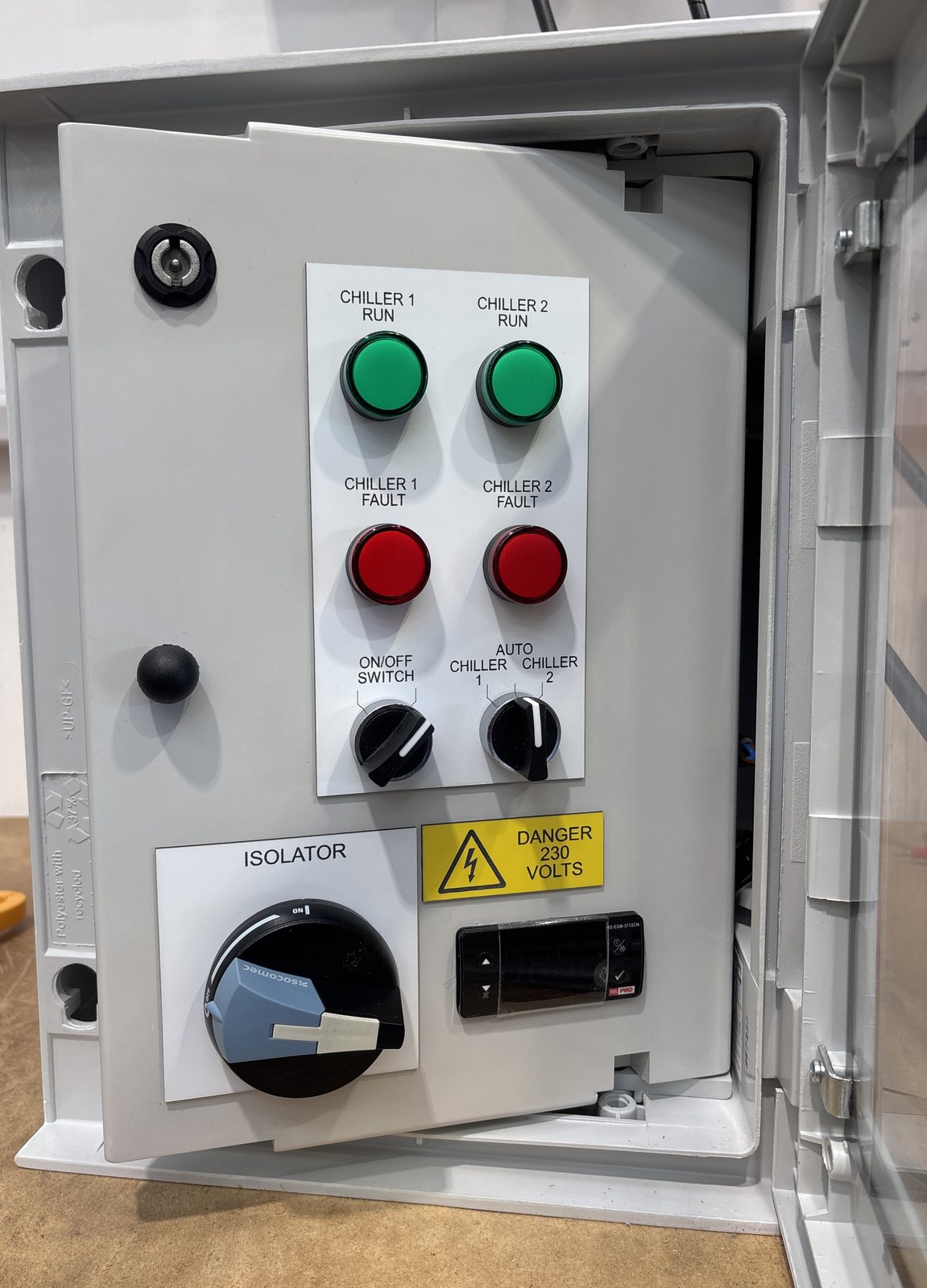
When two or three chillers share one cooling load, something has to decide which one runs, when the next one joins in, and what happens when one trips. That is the job of a chiller changeover panel. It enables the duty chiller, brings in an assist chiller when the load needs it, swaps duty so the chillers wear evenly, and stops calling a chiller that has failed.
Here is how a changeover panel works, what to specify, and why hire companies in particular standardise on one design.
Where are chiller changeover panels used?
- Temporary cooling hire, where chillers go out in pairs or threes to cover a breakdown, a shutdown, a summer peak or a process that needs N+1 cover.
- Permanent plant with duty and standby chillers, where the chillers' own controls do not sequence each other.
- Process cooling, where a second chiller has to take over without anyone on site if the first one fails.
In each case the chillers are powered separately. The changeover panel does not carry the chillers' power: it enables them and reads their faults through volt-free contacts.
What does a chiller changeover panel do?
Duty and assist
A start signal (a switch, a BMS enable or a timer) tells the panel cooling is wanted. The panel enables the duty chiller. If the duty chiller cannot keep up, an over-temperature stat on the water or the space tells the panel, and it enables the assist chiller as well. When the temperature comes back down, the assist drops out.
Duty rotation
If chiller 1 always runs and chiller 2 only runs on assist, chiller 1 wears out and chiller 2 sits idle, and nobody knows whether chiller 2 still works until the day it is needed. The panel swaps the duty chiller on a schedule, typically once a week at a set day and time, so both chillers do similar hours and both are proven.
Duty/standby, duty/assist and duty changeover explained covers the same three ideas for pumps. They work the same way for chillers.
Trip changeover
If a chiller reports a fault, the panel stops calling it and makes the healthy chiller the fixed duty until the fault is cleared. Two details matter here:
- Fail-safe fault inputs. The fault signal from each chiller should be a contact that is closed when healthy. A broken cable, an unplugged connector or a chiller that has lost power then reads as a fault, not as a working chiller.
- Short delays on the fault inputs, so a flicker on a contact does not cause a changeover.
Manual override
A switch on the front lets an engineer force chiller 1 or chiller 2 to run, for servicing, testing or when one chiller is to be kept off.
Signals out
Separate volt-free outputs for a common fault and a chiller alarm let the site's BMS, a telemetry unit or the hire company's own monitoring see what the panel sees.
What to specify
| Item | What to ask for |
|---|---|
| Number of chillers | Dual or triple changeover |
| Start signal | Volt-free contact from BMS, timer or switch |
| Assist | Over-temperature stat, with its set point accessible |
| Duty rotation | Weekly, at a set day and time, adjustable |
| Fault inputs | Fail-safe (closed when healthy), with a short delay |
| Control voltage | 24V DC, so the circuits out to the chillers are extra-low voltage |
| Controller | A small PLC with a display, such as a Siemens LOGO!, so the settings can be seen and changed |
| Outputs | Volt-free common fault and chiller alarm |
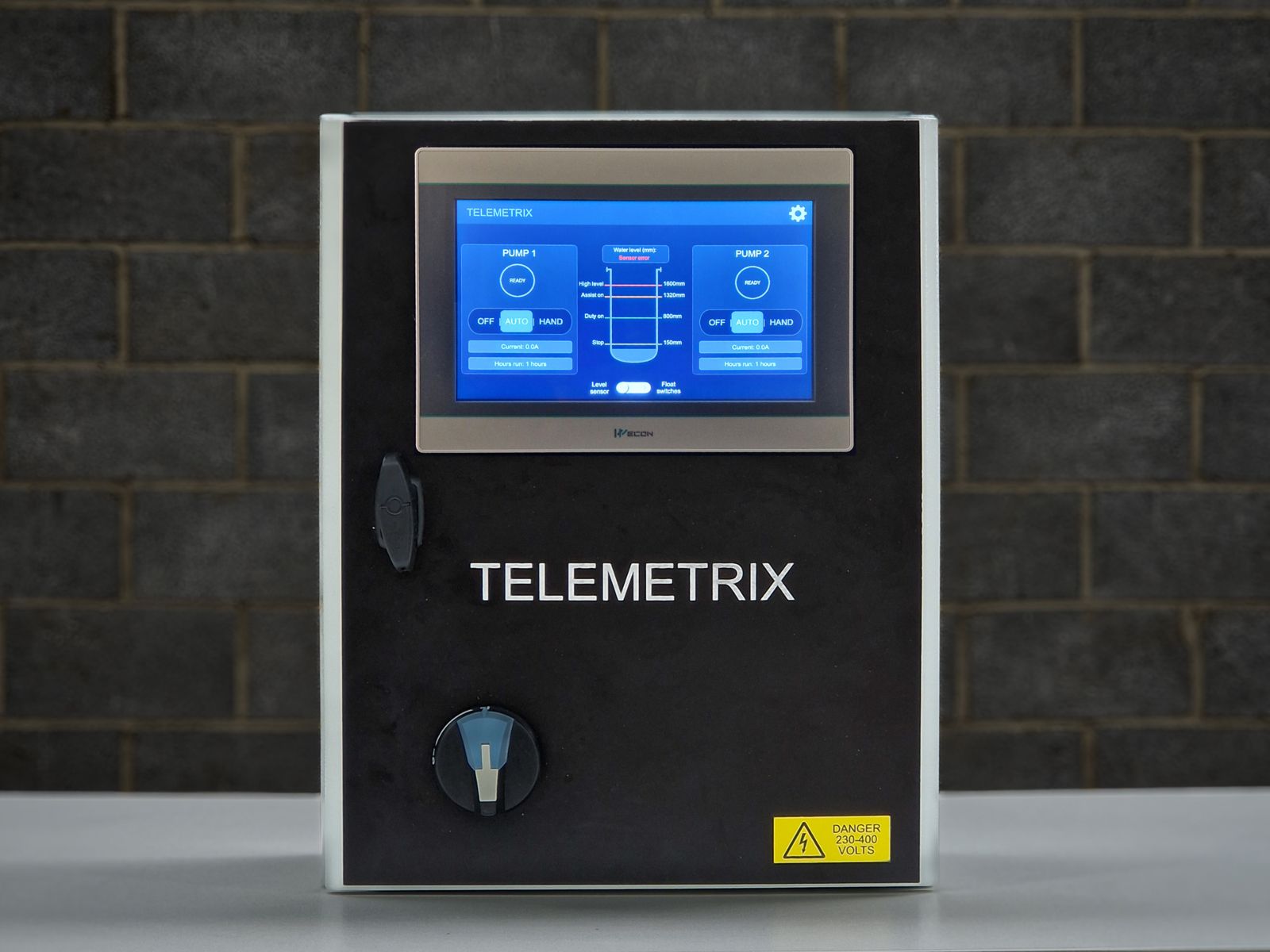
| Door | Run and fault lamps per chiller, on/off and duty selector switches |
| Enclosure | Steel for indoors; polyester with a clear outer door for outdoors |
Why 24V DC control?
On a hire site the cables from the changeover panel to each chiller are run out across the site by whoever sets up the job, and plugged into chillers that are powered separately. Running the panel's control circuit at 24V DC rather than 110V or 230V AC means those volt-free circuits are extra-low voltage: safer to handle, and safer if a cable is damaged.
Indoor and outdoor versions
Hire chillers end up on roofs, car parks and plant rooms. A standard indoor version in a steel wall box and an outdoor version in a polyester enclosure, wired and laid out the same way, let one engineer install and fault-find either.
Why hire companies standardise their changeover panel
Hire jobs arrive at short notice. If every changeover panel is built as a one-off when the job comes in, the panel is the thing holding the job up.
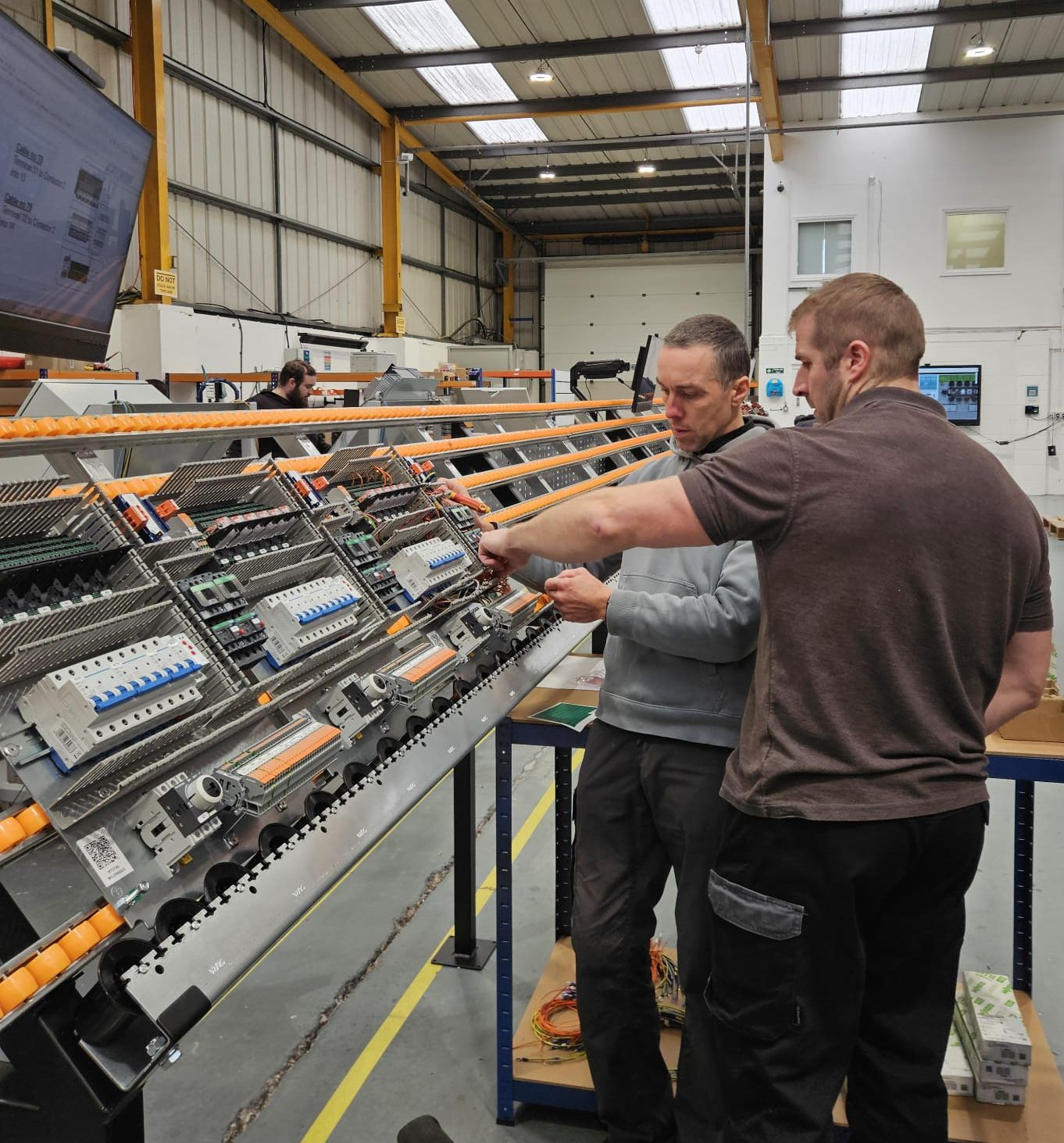
A national cooling hire company came to us with exactly this problem. They had a changeover panel design that worked, but each one was built as a one-off. We re-engineered it with circuit breakers in place of fuses and a 24V DC control circuit on a Siemens LOGO!, drew it once as indoor and outdoor standards, and now build it to order. Twenty dual chiller changeover panels have been built to that one drawing set so far, nine indoor and eleven outdoor, plus triple changeover and defrost panels, typically turned round in one to three weeks. Their depots hold them in stock, so an urgent hire goes out with a panel that is already on the shelf. Read the case study.
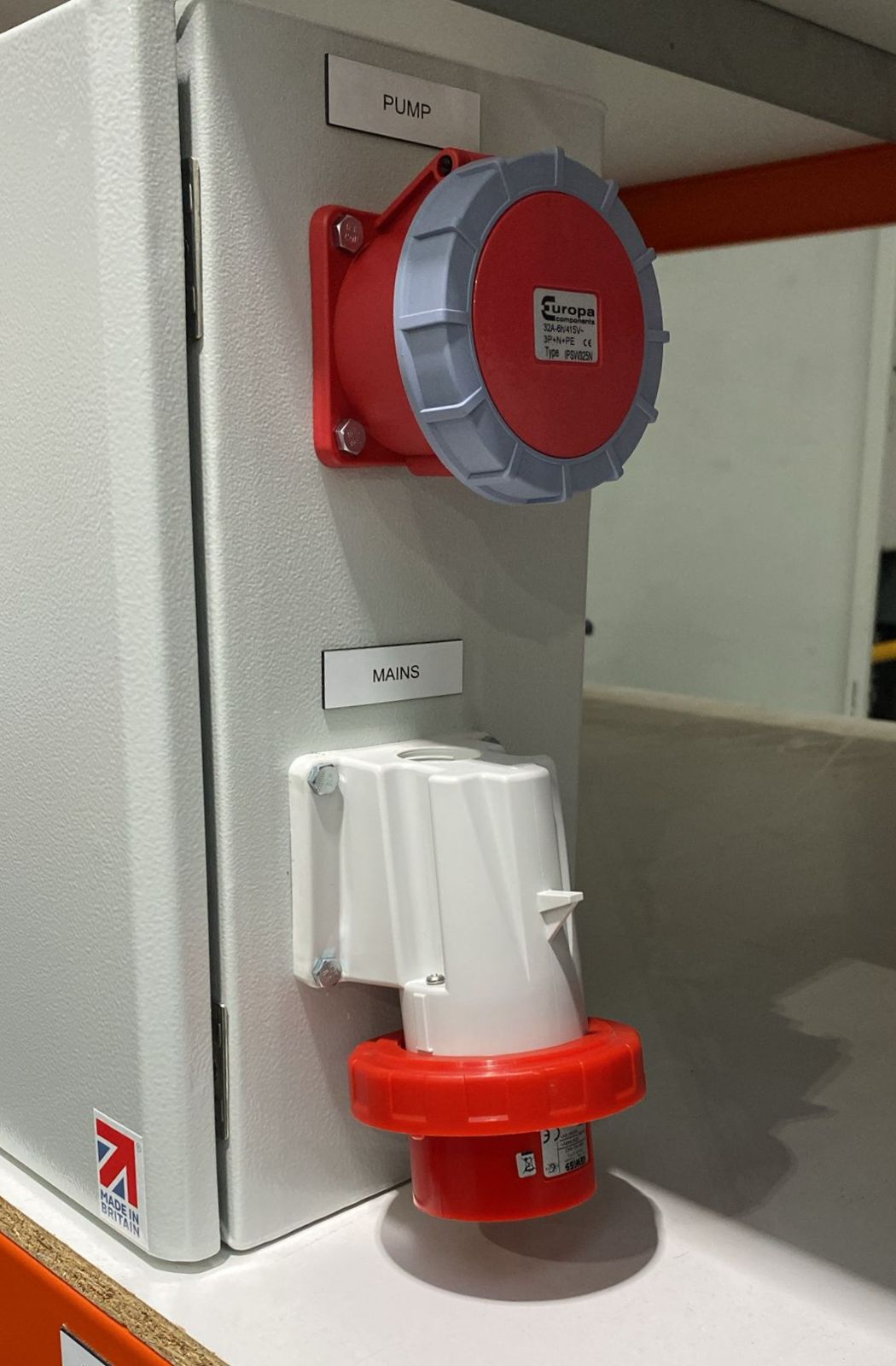
Control panels for a hire fleet covers the wider list: plug-in connections, enclosures, fault indication and the paperwork that makes the check between hires quick.
Beyond changeover: full process cooling control
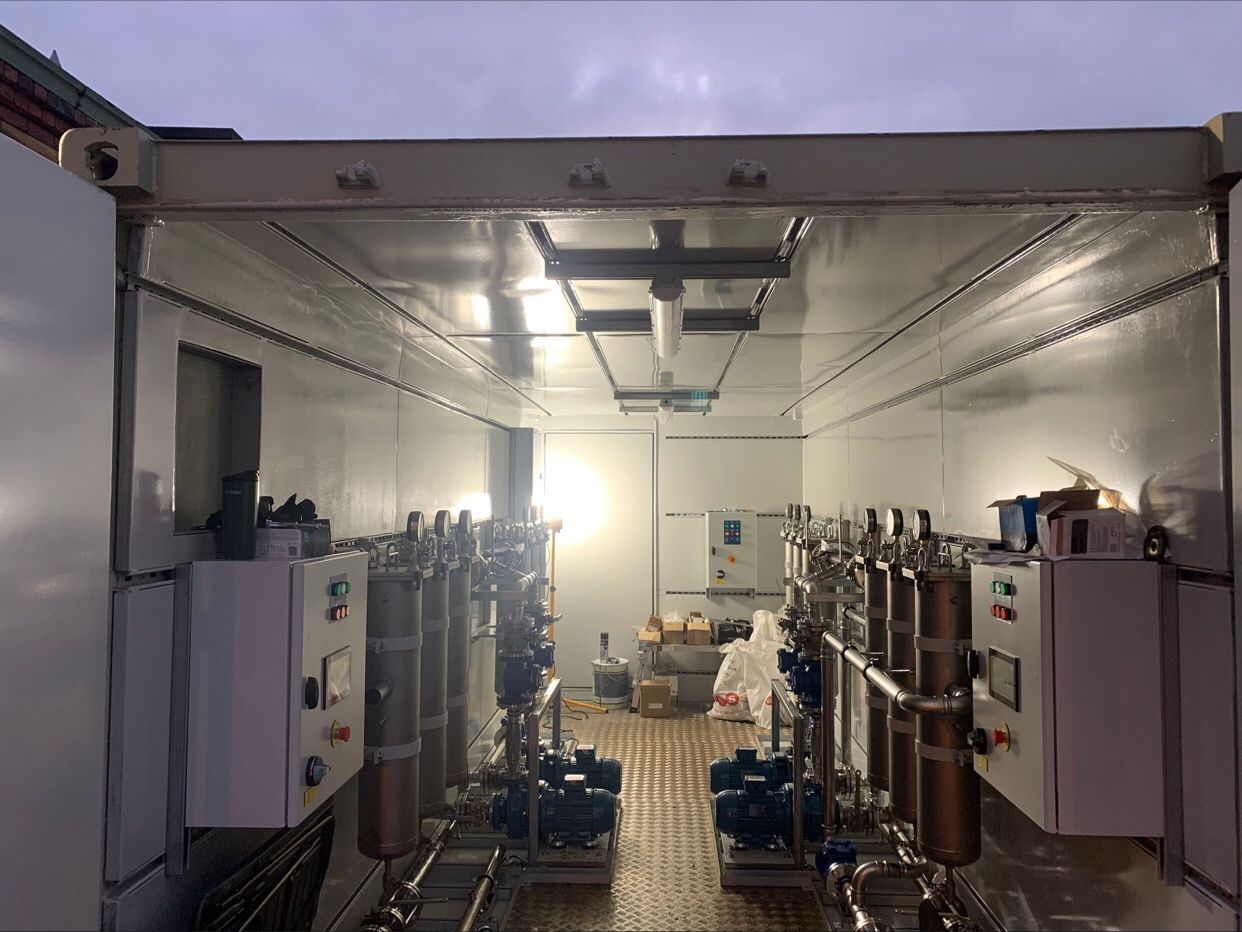
Sometimes the package is bigger than two chillers: a chiller, an air-blast cooler, process and recirculation pumps and a tank, all run from one panel with temperature control and Modbus to the site network. We built one for a cooling hire company supplying a chemical manufacturer, and the end client watched it run through a two-day witnessed factory acceptance test before it left Stoke-on-Trent. For process cooling companies who build their own pump skids, see pump skid panels with a chiller interlock.
Frequently asked questions
What is a chiller changeover panel?
A control panel that sequences two or three chillers on one load: it enables the duty chiller, brings in an assist chiller on high temperature, rotates duty on a schedule and stops calling a chiller that has tripped. The chillers are powered separately; the panel enables them and reads their faults through volt-free contacts.
What is the difference between duty/standby and duty/assist for chillers?
With duty/standby, the second chiller only runs if the first fails. With duty/assist, the second chiller also runs alongside the first when the load is more than one chiller can handle, usually brought in by an over-temperature stat.
How often should chiller duty rotate?
Weekly is common, at a set day and time, so both chillers do similar hours and the standby chiller is proven to work. The interval should be adjustable on the panel.
Why should chiller fault inputs be fail-safe?
So that a broken cable, an unplugged connector or a chiller with no power reads as a fault. If the fault contact is open when healthy instead, a disconnected chiller looks healthy and the panel keeps calling a chiller that cannot run.
Can the changeover panel connect to a BMS?
Yes. The start signal can come from a BMS enable contact, and volt-free common fault and chiller alarm outputs report back to it. Modbus is available where the site wants more than volt-free signals.
Talk to us about chiller changeover and OEM control panels, or send your existing drawing to sales@gandgcontrols.co.uk.
Written by the engineers at G&G Controls, a UK control panel manufacturer in Stoke-on-Trent. For general guidance only; consult a qualified professional for advice on your own installation.
Up next
Control panels for a hire fleet: what survives the hire cycle
What hire companies should ask a panel builder for: one drawing per panel, plug-in connections, outdoor enclosures, fail-safe faults and the paperwork for between hires.