Pump control panels on hire and dewatering sites: generators, phase rotation and unattended running
By Tristan Newton, Commercial Director · 19 November 2026 · 6 min read
A hire pump on a dewatering, overpumping or flood job usually runs where nobody is watching, often from a generator, and on a supply that was connected in a hurry. The control panel has to cope with that: protect the pump when the supply is wrong, restart sensibly when the power comes back, and tell someone when it stops. Here is what goes wrong on hire and dewatering sites, and what the panel should do about each.
Wrong phase rotation
A three phase pump connected with two phases swapped runs backwards. A submersible pump running backwards still moves some water, which is why it is easy to miss, but nowhere near its rated flow, and the site floods slowly while everyone thinks the pump is working.
On hire sites rotation changes all the time: a different generator, a different distribution board, a re-made extension lead.
What the panel should have:
- A phase sequence and phase failure relay that stops the pump if the phases are in the wrong order, and lights a lamp to say why.
- A simple way to correct it at the supply, such as an inlet plug with a phase inverter, so the site does not need to open the panel or re-terminate the pump cable.
Lost phase and low voltage
A three phase motor that loses one phase tries to keep running on two, draws far more current and overheats. Generators that are undersized, low on fuel or loaded with other plant can also sag in voltage when a pump starts.
What the panel should have:
- The phase failure relay above, which also trips on a missing phase.
- Motor overloads set to the pump's full load current, not the panel's maximum. What you are doing wrong with overloads explains why this matters.
- Pump thermal protection wired in where the pump has thermistors or thermal switches.
Running from a generator
Sizing the generator is the hire company's or the site's job, but the panel can make it easier:
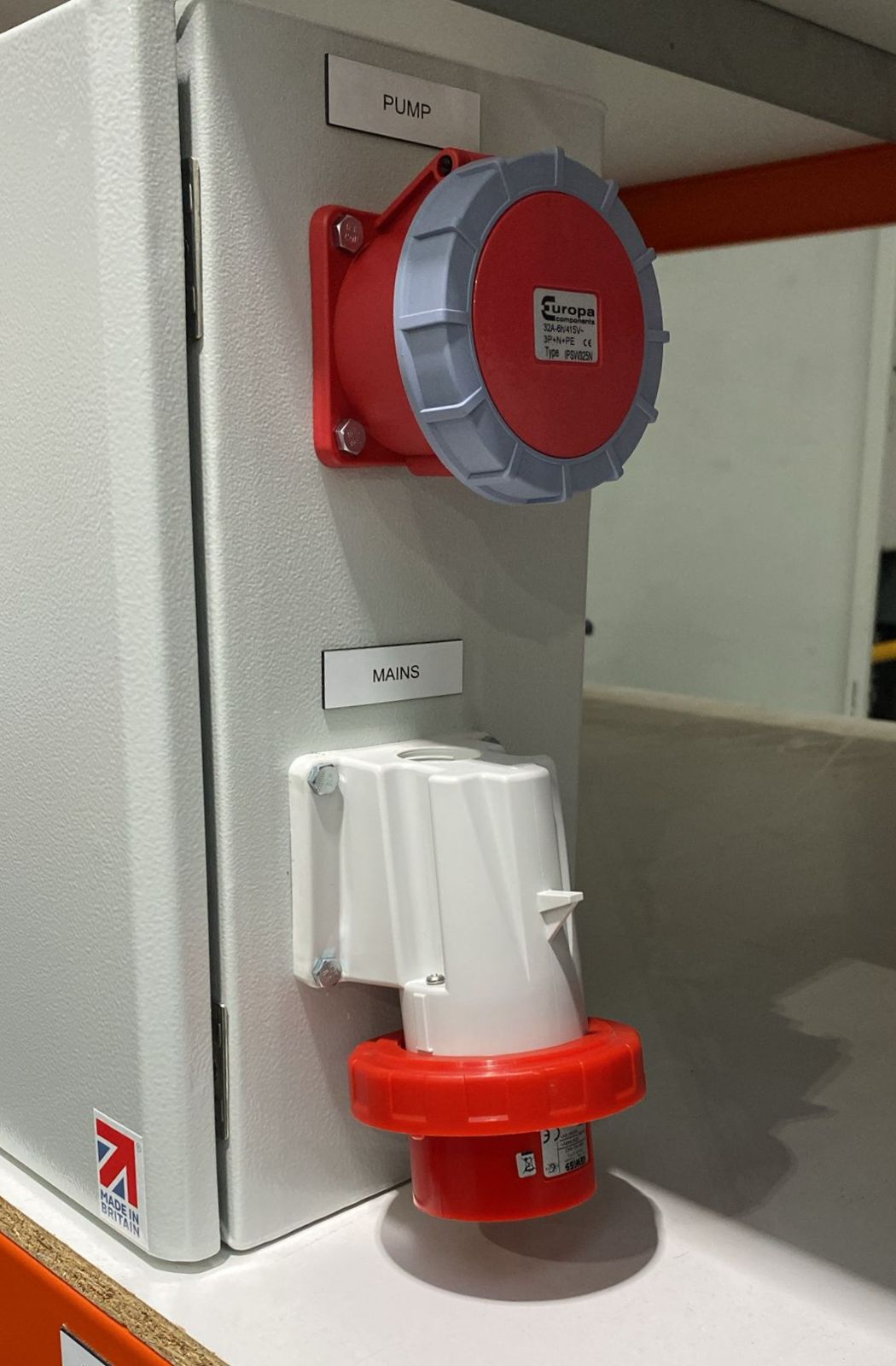
- A generator inlet sized to the load. Ours come in 32, 63 or 125A.
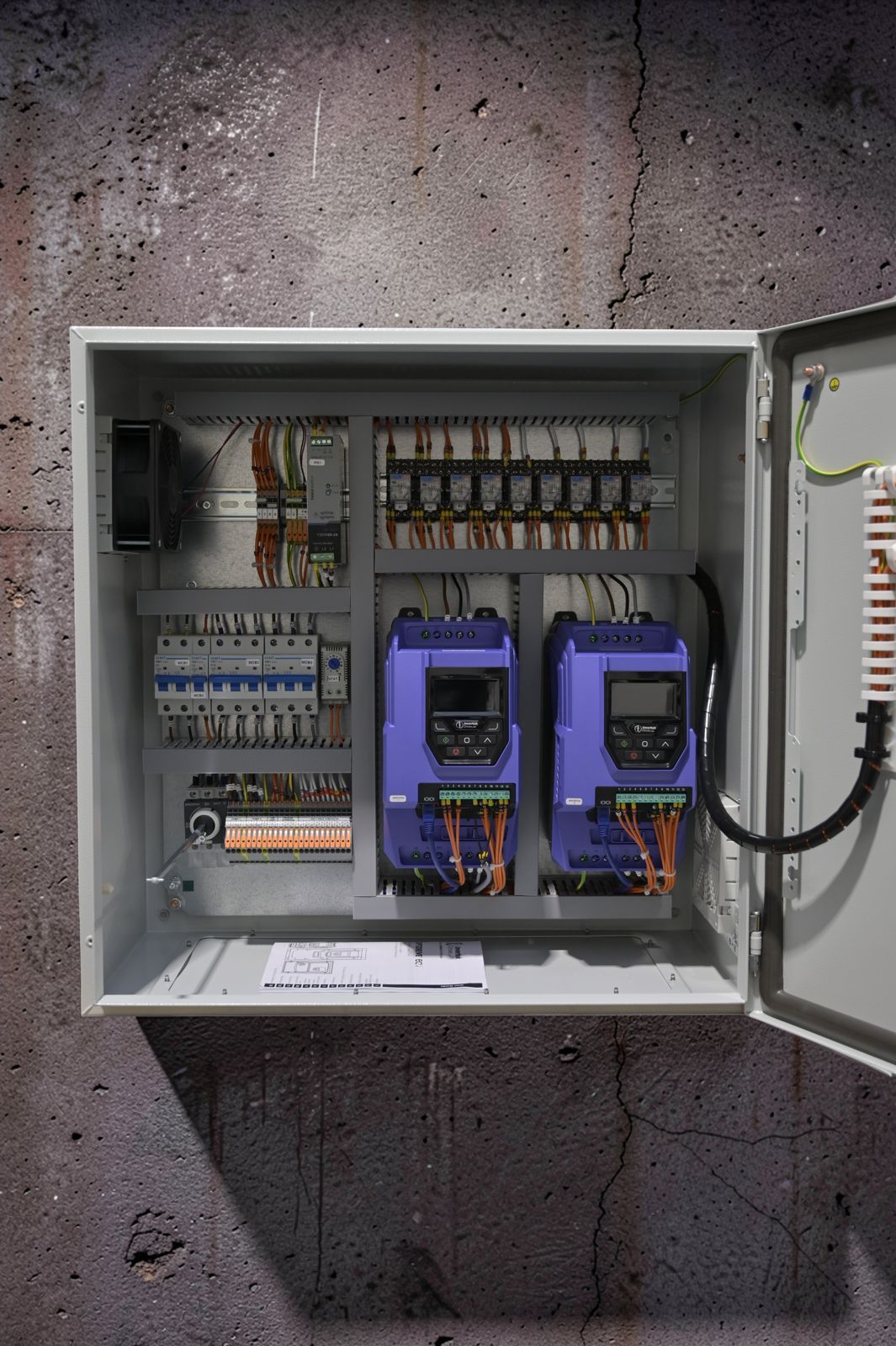
- A gentler starting method on larger pumps. A direct on line start draws several times the running current, and a generator has to be sized for that. A soft starter or an inverter reduces the starting current, and with it the size of generator needed. Motor starting methods compared.
- Earthing and RCD protection that suit the generator arrangement. BS 7671 Section 551 covers low voltage generating sets; whoever connects the supply has to confirm the earthing is right for that site.
Restarting after a power cut
On a dewatering or flood job you usually want the pump to restart by itself when the power comes back: the water has kept rising while it was off. Two things make that safe:
- A restart delay, and on a panel running more than one pump, staggered restarts, so two pumps do not start on a generator at the same moment.
- A local isolator on the panel, so anyone working on the pump isolates it there and knows it cannot restart under them.
The panel should be clearly labelled that the pump starts automatically.
Level control on a temporary site
Hire jobs use floats more than anything else: they are cheap, simple and easy to re-hang on the next job. A level sensor makes sense where the sump is turbulent, full of debris or the levels need adjusting from the panel.
- Where to hang the floats: stop, start, assist and high level
- Choosing level sensing: radar vs hydrostatic vs float switches
On two-pump jobs, duty/assist with duty changeover keeps both pumps proven and brings in the second on a storm. Duty/standby, duty/assist and duty changeover explained.
Nobody on site: alerts
The worst thing a hire pump can do is stop quietly. On an unattended dewatering site, the first anyone hears of a tripped pump is usually a flooded excavation or a phone call from the client.
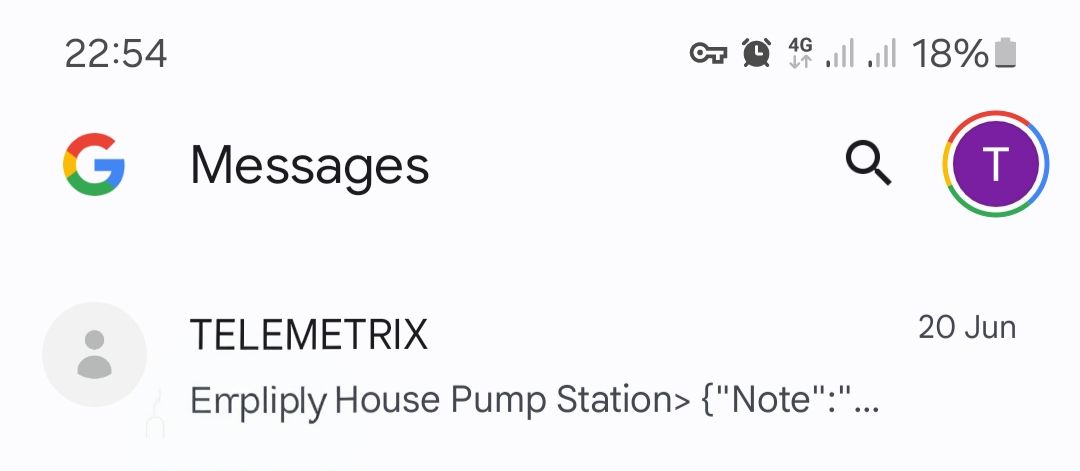
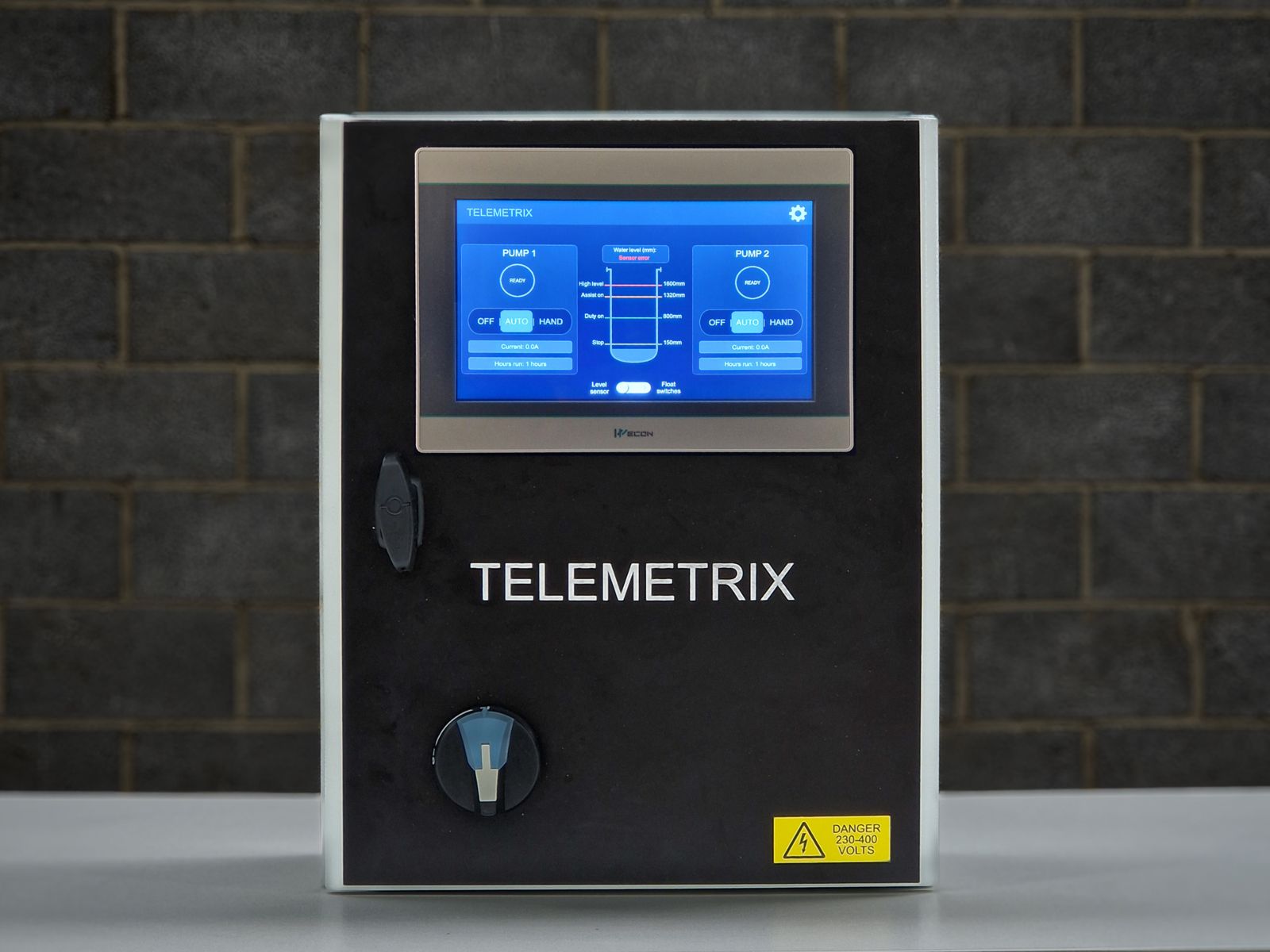
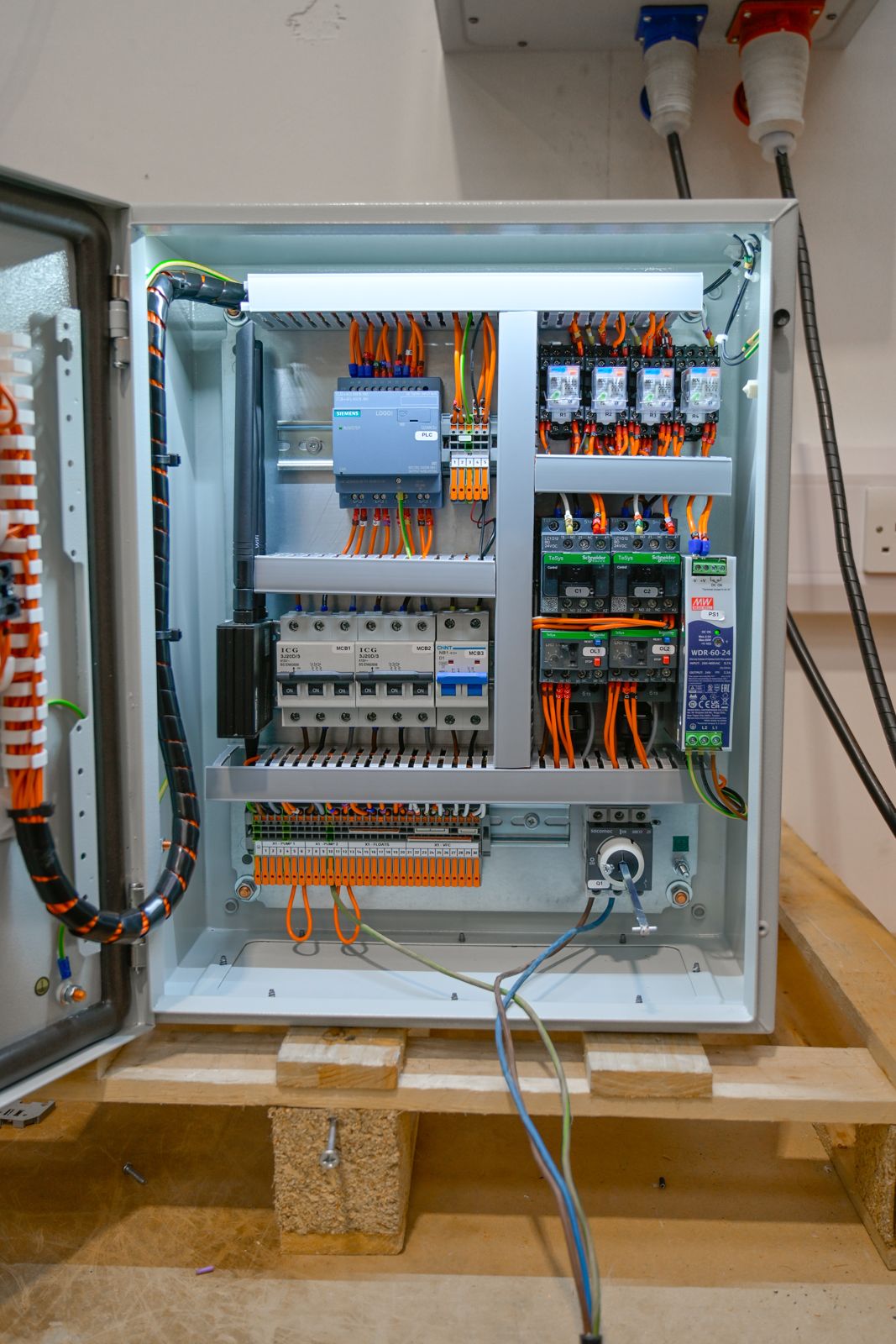
A panel with Telemetrix built in sends pump trip, high level and panel offline (power fail) alerts by email or text, over 4G, WiFi or Ethernet. The alerts carry no subscription: emails are free, texts are 10p each, and a 4G SIM is £6 a month where there is no site network. Telemetry costs explained gives the full breakdown. The current range covers single and dual pump panels up to 18A direct on line and 41A star/delta.
We supplied one to a pump service contractor who refurbished a neglected de-watering station under an old mill: two new pumps, new floats and a Telemetrix panel, so the next problem is a message rather than a flooded basement.
Built for the hire cycle
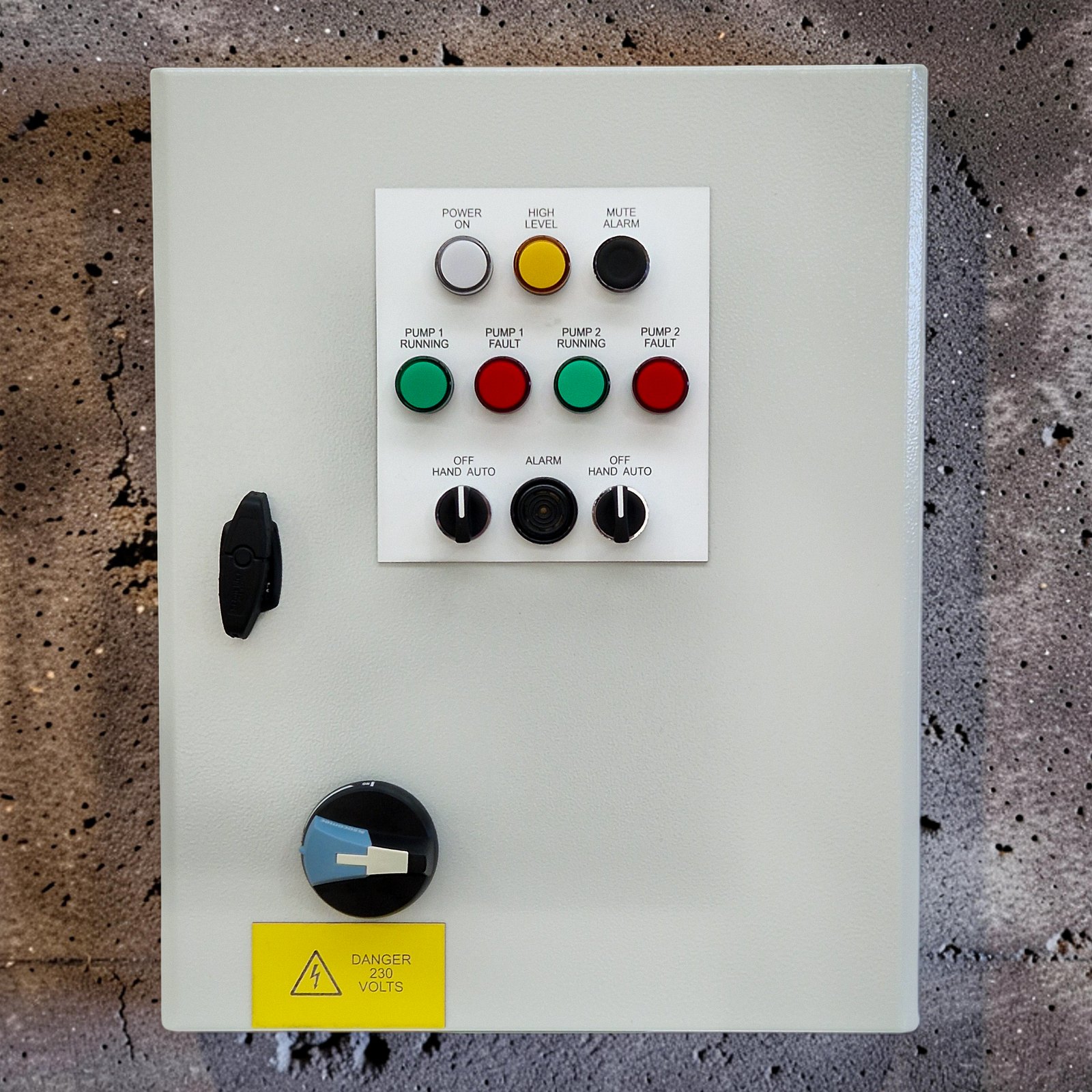
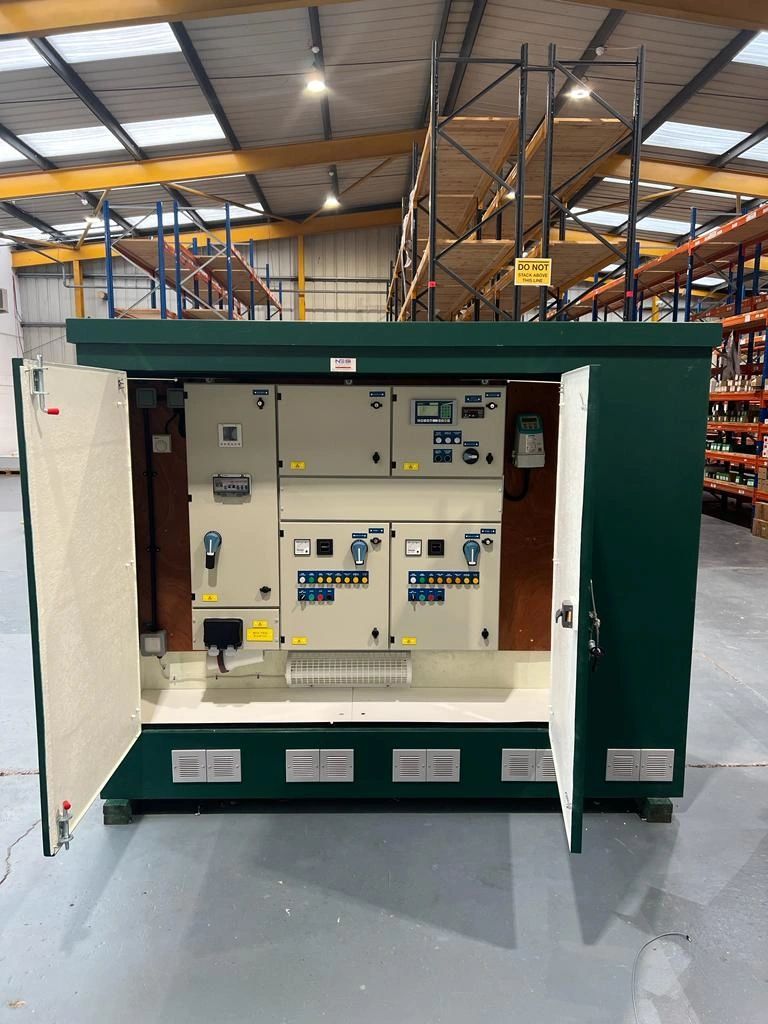
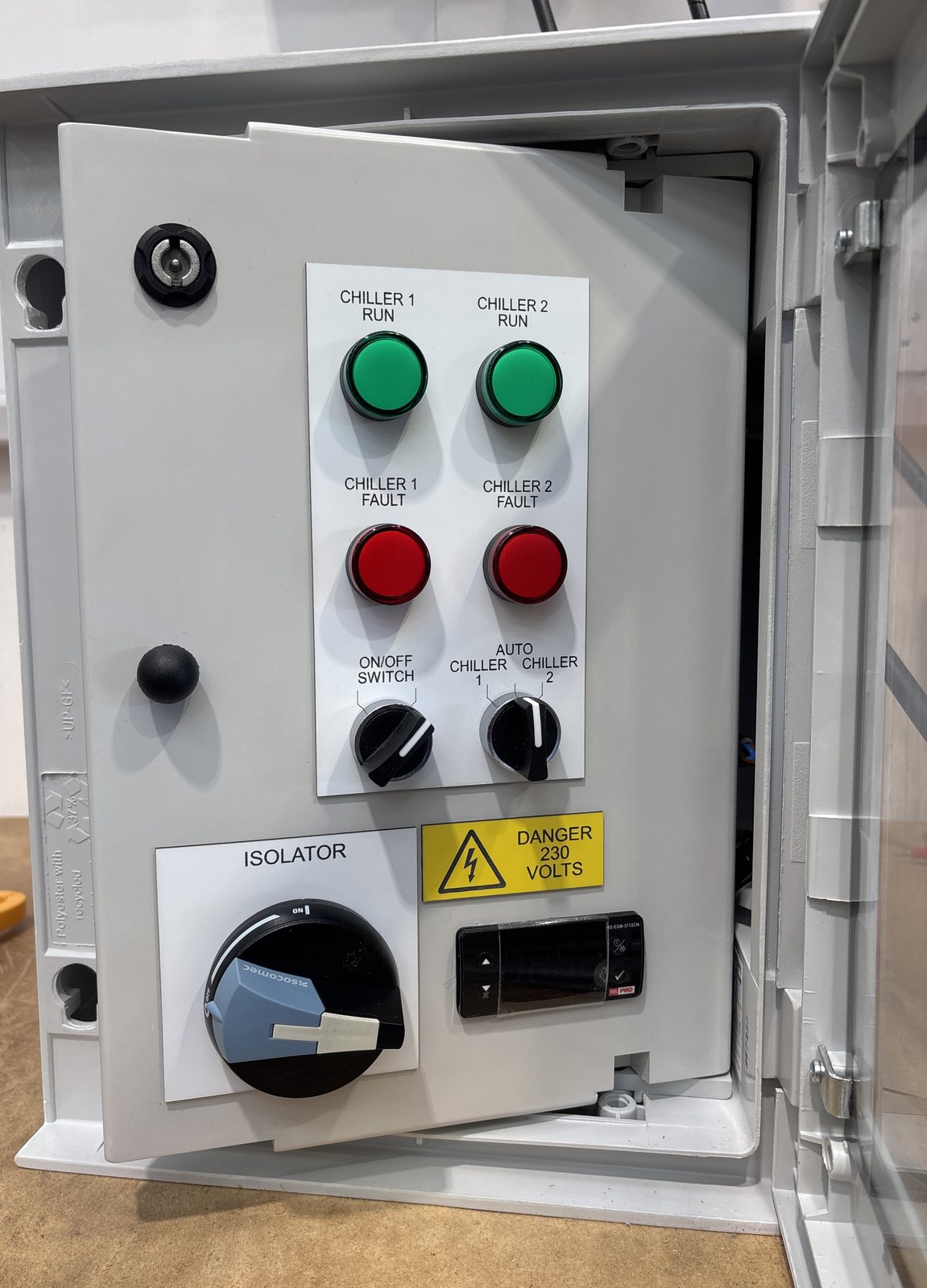
Everything in control panels for a hire fleet applies: one drawing per panel type, BS EN 60309 plugs and sockets for the supply and the pumps, an outdoor-rated polyester enclosure, run and fault lamps on the door, and a test certificate with every panel to make the check between hires quick.
A checklist for a hire pump panel
| Feature | Why |
|---|---|
| Phase sequence and phase failure relay | Stops a backwards or single-phasing pump |
| Phase inverter on the inlet | Corrects rotation without opening the panel |
| Overloads set to the pump's full load current | Real protection, not the panel's maximum |
| Pump thermal protection input | Uses the protection already in the pump |
| Generator inlet | Plug straight into the generator |
| Soft start or inverter on larger pumps | Smaller generator, gentler on the pump |
| Restart delay and staggered restart | Generator-friendly restart after a power cut |
| Local isolator | Safe isolation at the pump |
| Floats or level sensor, duty/assist and changeover | Both pumps proven, second pump on storms |
| Remote alerts | Someone knows when it stops |
| BS EN 60309 sockets for each pump | Pumps plug in, panel terminals stay untouched |
| IP65 or IP66 polyester enclosure | Lives outdoors |
Frequently asked questions
Why is my hire pump running but not pumping enough?
On a three phase pump, check the rotation first: a submersible pump running backwards still moves some water, but far less than it should. Swapping two phases at the supply corrects it. A panel with a phase sequence relay will not let the pump run backwards in the first place.
Should a dewatering pump restart automatically after a power cut?
Usually yes, because the water keeps rising while the power is off. The panel should have a restart delay, stagger the restarts if it runs more than one pump, have a local isolator, and be labelled to say the pump starts automatically.
What size generator does a pump control panel need?
It depends on the pump's starting current, not just its running current. A direct on line start draws several times the running current; a soft starter or inverter reduces that and with it the generator size. Size the generator for the largest motor starting with everything else already running.
Can I get alerts from a hire pump on a site with no internet?
Yes. A Telemetrix panel has a built-in router with a 4G SIM option, and sends pump trip, high level and power fail alerts by email or text.
What protection should a hire pump panel have?
A phase sequence and phase failure relay, overloads set to the pump's full load current, the pump's own thermal protection wired in, earth fault protection to suit the supply, and a local isolator.
Talk to us about pump control panels and hire fleet panels, or email sales@gandgcontrols.co.uk.
Written by the engineers at G&G Controls, a UK control panel manufacturer in Stoke-on-Trent. For general guidance only; consult a qualified professional for advice on your own installation.
Up next
Telemetry costs explained: SIM, data, texts and the Dashboard
No subscription for alerts, so what does remote pump station monitoring cost? Every Telemetrix cost, with worked examples for one station and for fifty.