Booster set not holding pressure? A fault-finding checklist
By Tristan Newton, Commercial Director · 12 November 2026 · 6 min read
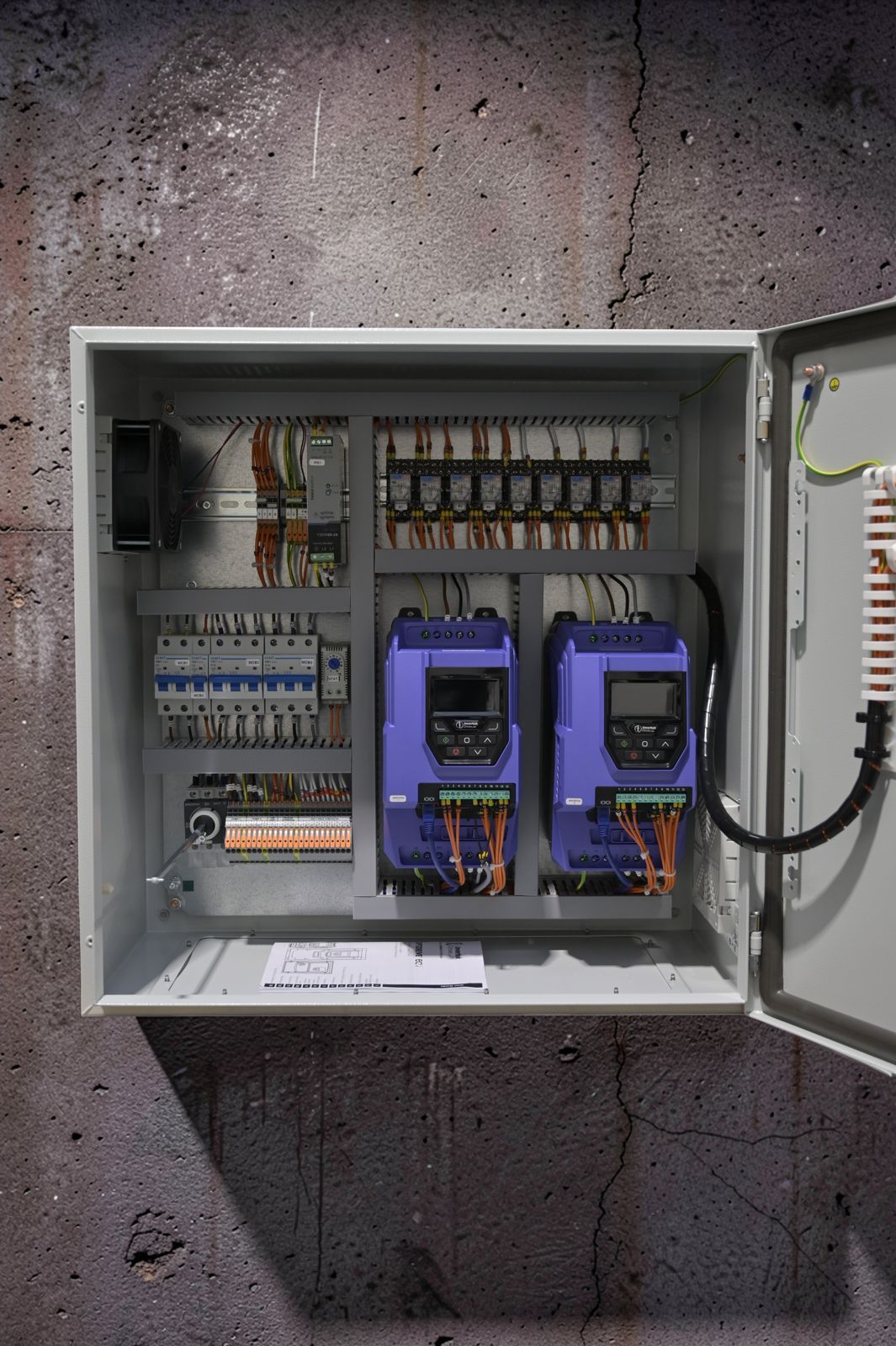
The complaint arrives as "no water on the top floor" or "the pressure keeps dropping". The booster set is running, or was, and it is not holding its pressure. Here is how to work through it, from the things that take a minute to check to the things that mean a part has failed.
As always: only work inside a panel if you are competent to, isolate and prove dead before you touch anything, and follow your safe isolation procedure.
First, look at the panel
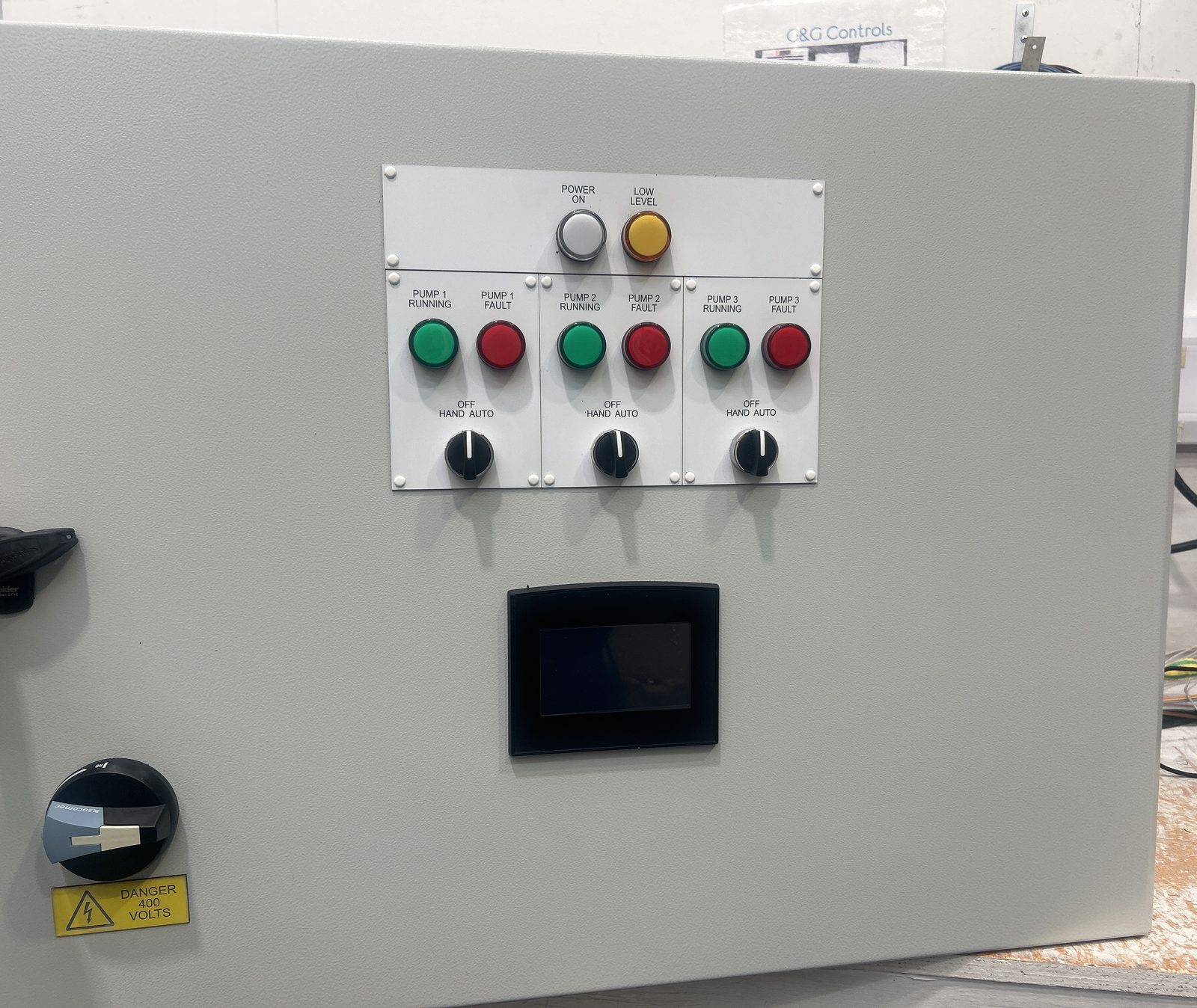
Before touching anything, read what the panel is telling you.
- Is the low level lamp on? Go to step 1.
- Is a pump showing a fault, or a drive showing a fault code? Write the code down, then go to step 3.
- Are all the pumps running flat out and the pressure still low? Go to step 8.
- Are the pumps starting and stopping every few seconds? Go to step 6.
- Nothing showing, and nothing running? Check the supply and the isolator, then step 2.
Then compare two numbers: the pressure on the gauge on the discharge manifold, and the pressure the panel thinks it has, on the touchscreen or the inverter display. If they disagree, go to step 4.
1. Is there water?
The low level float in the break tank stops the pumps to protect them from running dry. If the low level lamp is lit, the panel is doing its job and the fault is upstream: a stuck or failed float valve on the tank inlet, a closed valve, a blocked strainer, or a mains supply that is off or reduced.
If the tank is full and the lamp is still on, the float itself or its cable has failed.
2. Are the pumps in auto?
Each pump has a hand/off/auto switch. A pump left in off after a service visit is a pump the set no longer has, and on a twin set that is half the capacity gone. A pump left in hand runs regardless of pressure. Put them all back to auto.
3. Has a pump or a drive tripped?
A set that normally shares the load across three pumps and is down to two will hold pressure at night and lose it at peak demand. Look for a fault lamp or a drive showing a fault code.
Reset it once. If it comes straight back, do not keep resetting it: find out why. The drive's fault code will say whether it saw overcurrent (a seized or blocked pump, a failing motor), an earth fault (water in the motor or the cable), or overheating (a blocked filter or failed fan on the panel).
4. Is the transducer telling the truth?
The panel can only hold the pressure it can see. If the gauge says 3 bar and the panel says 5, the panel believes it is over the set point and is holding the pumps back.
Common causes: the small isolating valve under the transducer has been closed; the port is blocked with scale or debris; the transducer has failed; or the cable is damaged. A 4-20mA transducer with a broken wire reads below 4mA, which most panels show as a sensor fault rather than a pressure.
5. Has the set point been changed?
It happens: someone turns it down to quieten a noisy pipe, or changes it by accident while looking at something else. Check the set point against the commissioning record, or against what the system needs.
6. Is the pressure vessel doing anything?
A pressure vessel has a bladder with an air charge behind it. If the charge has leaked away or the bladder has split, the vessel is full of water and stores nothing. The symptoms are pumps that start for the smallest demand, stop, and start again seconds later (short cycling or hunting), and a pressure that will not sit still.
To check it, isolate the vessel and drain the water side, then measure the air charge at the valve with a tyre gauge. It should be at the figure in the set's manual, which is a little below the set pressure. If water comes out of the air valve, the bladder has failed and the vessel needs replacing.
7. Is a non-return valve passing?
Each pump has a non-return valve on its discharge. If one sticks open, the water a running pump delivers goes backwards through the idle pump and round again, and the pressure in the system falls as soon as the pumps stop.
Signs: an idle pump that is turning backwards, a set that restarts repeatedly with no demand, and a vessel that seems to empty in seconds.
8. Is the system asking for more than the set can give?
If every pump is running at full speed and the pressure is still below the set point, either the demand is above what the set was sized for, or the water is going somewhere it should not. Look for a burst, an open drain, a failed float valve on a tank the set feeds, or a pressure relief valve that is lifting.
On a fixed speed set, and on any three phase set after work on the supply, also check rotation. A pump running backwards still moves water, but nothing like enough.
9. Did it stop working after the power was off?
If the set was fine until a power cut or a shutdown for maintenance, and a pump-mounted inverter will not come back on, you have met a known failure. Replacing failed Hydrovar inverters explains why it happens and why replacing one drive is rarely the end of it.
When the answer is the panel
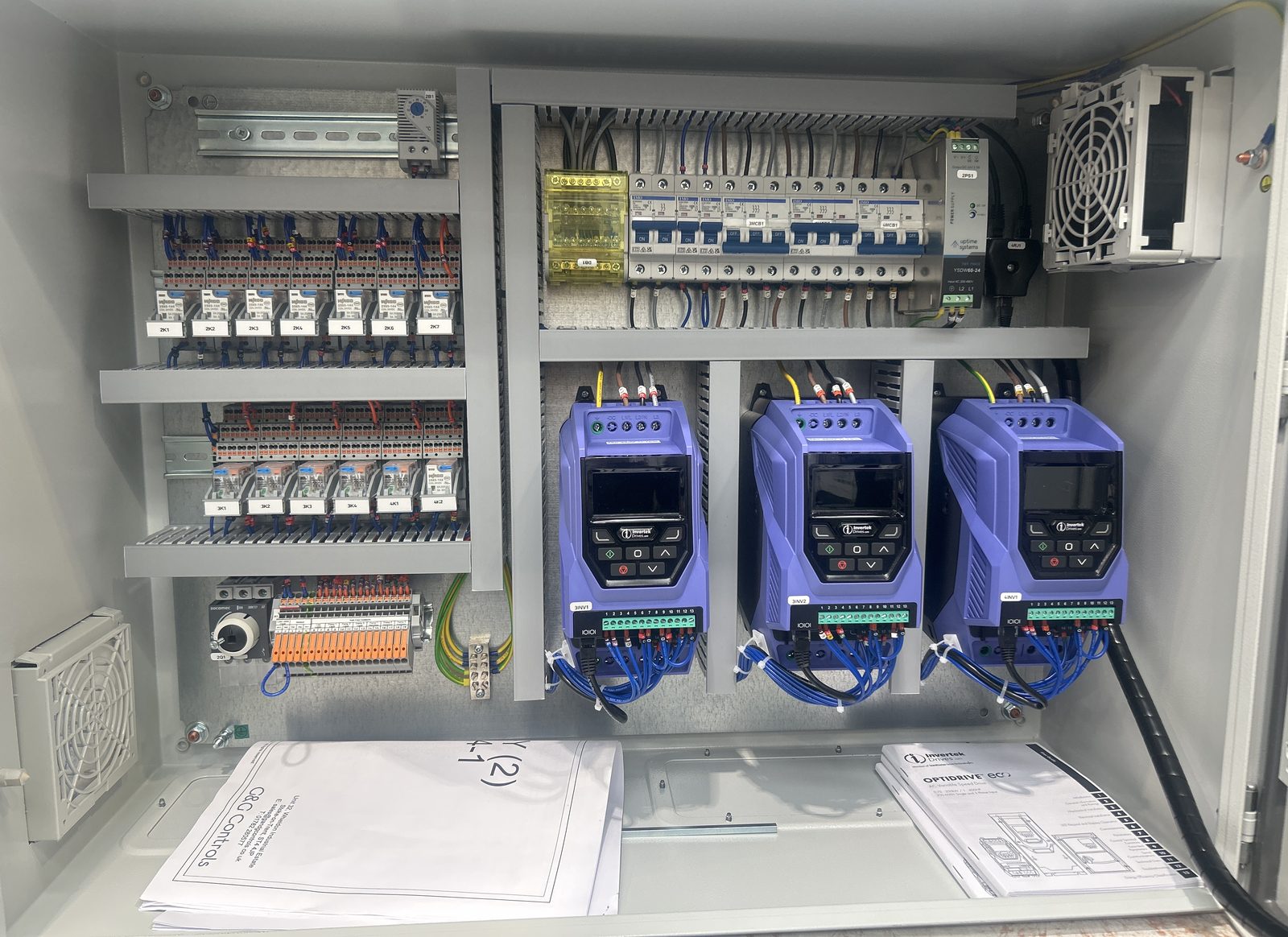
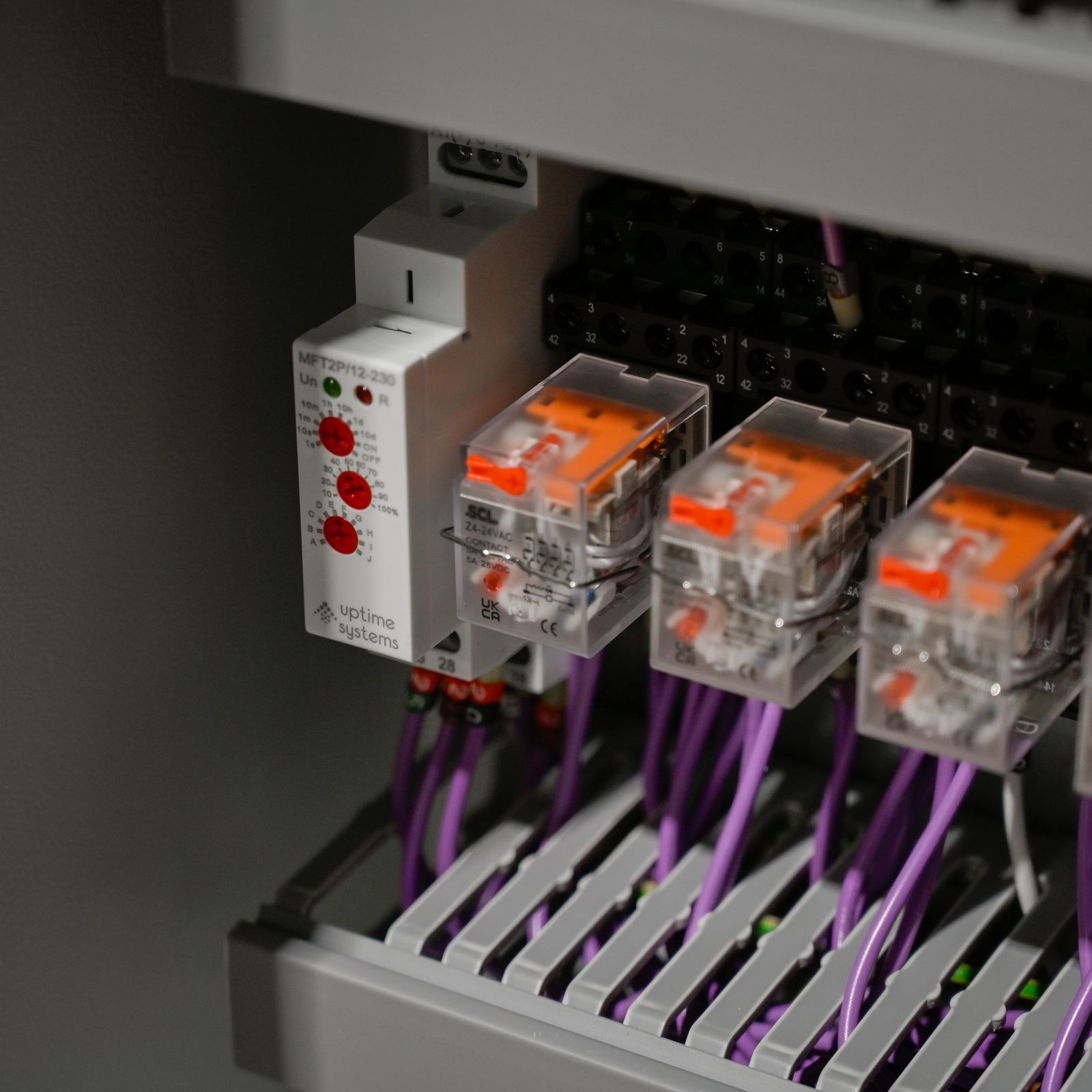
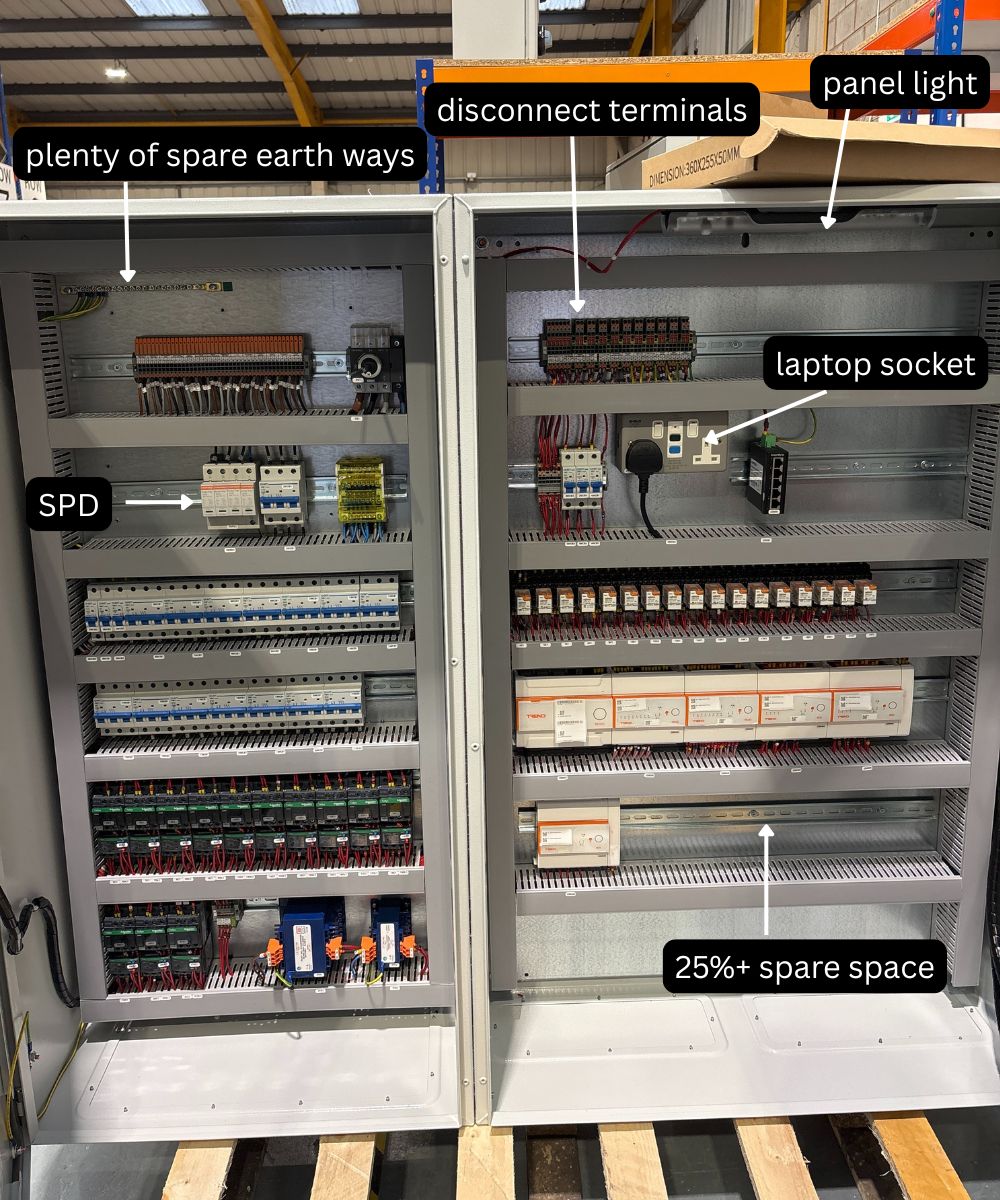
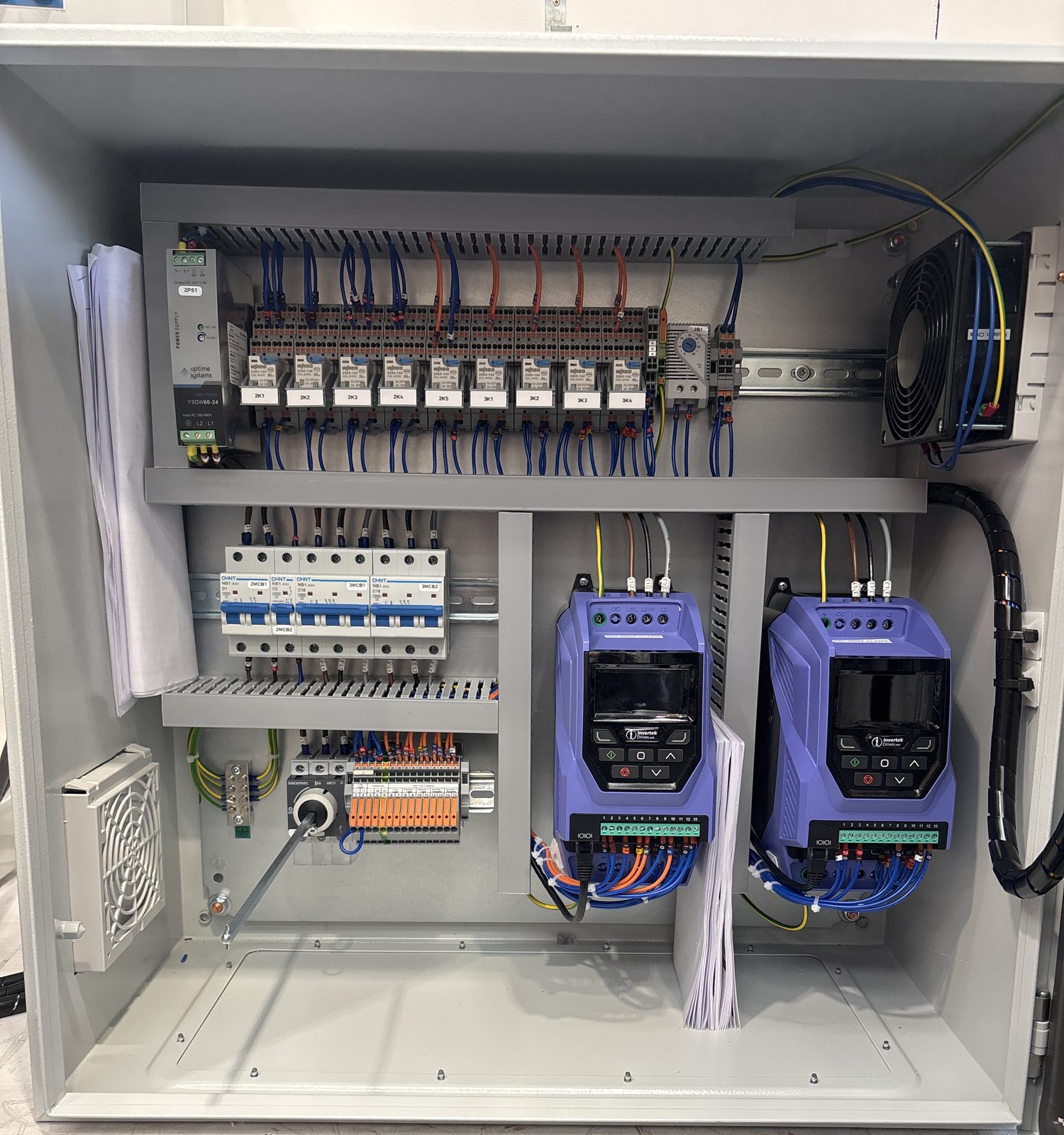
If the controls are obsolete, the drives are failing one after another or the panel has been bypassed so many times that nobody trusts it, a new control panel on the existing pumps is usually cheaper and quicker than a new set. Our booster set control panels are built to suit the pumps already there, with the drives in the panel where they can be reached and replaced. How a booster set control panel works explains what the new one will be doing.
Frequently asked questions
Why does my booster set keep starting and stopping?
The usual cause is the pressure vessel: it has lost its air charge or the bladder has failed, so it stores no water and the pumps start for every small demand. A non-return valve that is passing gives similar symptoms.
Why is the pressure low when all the pumps are running?
Either the demand is more than the set can deliver, or water is escaping: a burst, an open drain or a failed float valve. On a three phase fixed speed set, also check that the pumps are running in the right direction.
Why has my booster set stopped with a low level lamp on?
The break tank is low, and the panel has stopped the pumps so they do not run dry. Check the tank's inlet float valve, any strainer and the mains supply. If the tank is full, the low level float or its cable has failed.
How do I know if the pressure transducer has failed?
Compare the pressure gauge on the manifold with the pressure shown on the panel. If they disagree by more than a little, check the transducer's isolating valve and port first, then the transducer and its cable.
Written by the engineers at G&G Controls, a UK control panel manufacturer in Stoke-on-Trent. For general guidance only; consult a qualified professional for advice on your own installation.
Up next
Fixed speed or variable speed booster set: which do you need?
Fixed speed and variable speed booster sets compared: how each holds pressure, when each makes sense, and how to convert a fixed speed set with a new panel.