Fixed speed or variable speed booster set: which do you need?
By Tristan Newton, Commercial Director · 12 November 2026 · 5 min read
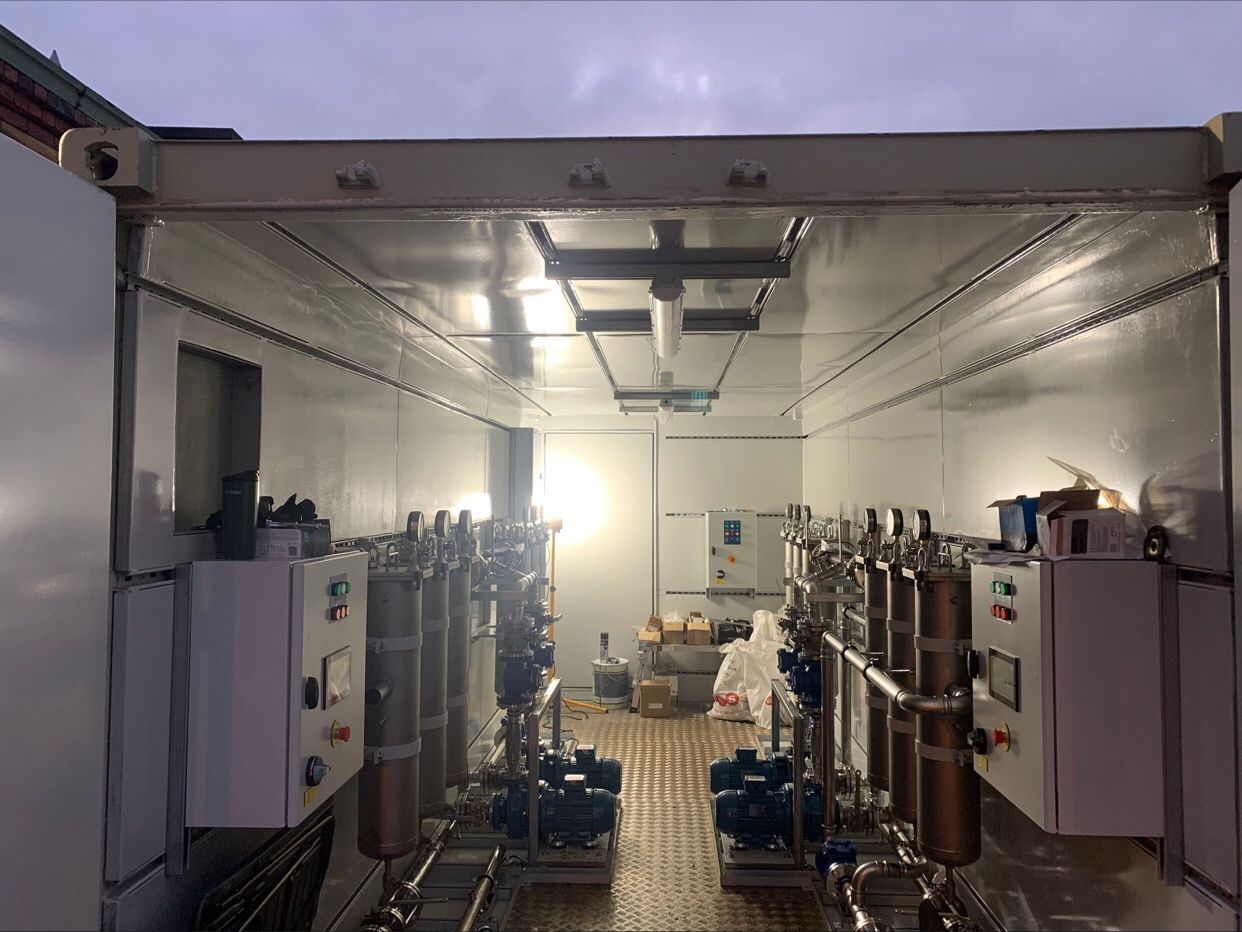
Every booster set does the same job: it keeps the pressure up as the demand changes. There are two ways to do it. A fixed speed set switches pumps on and off at full speed. A variable speed set changes how fast they run. Which one you want depends on how steady the pressure has to be, how the demand varies and what is already on site.
How a fixed speed set works
Each pump is started direct-on-line by a contactor and runs at full speed or not at all. The panel takes its cue from pressure switches, or from a transducer with a cut-in and a cut-out pressure.
When the pressure falls to the cut-in, a pump starts. It pumps more than is being used, so the pressure climbs until it reaches the cut-out, and the pump stops. The pressure vessel then supplies the system until the pressure is back down at the cut-in, and round it goes. If one pump cannot keep up, the second starts at a slightly lower pressure.
So the pressure in the system is never one figure. It moves between cut-in and cut-out all day, typically a bar or more apart.
For it: simple, cheap, easy to fault-find. A contactor and an overload are things every electrician understands.
Against it: the pressure swings; every start is a full-speed start, with the current surge and the thump in the pipework that goes with it; the pumps cycle on and off, and a set that starts too often wears its contactors and motors; and it needs a large pressure vessel to keep the number of starts down.
How a variable speed set works
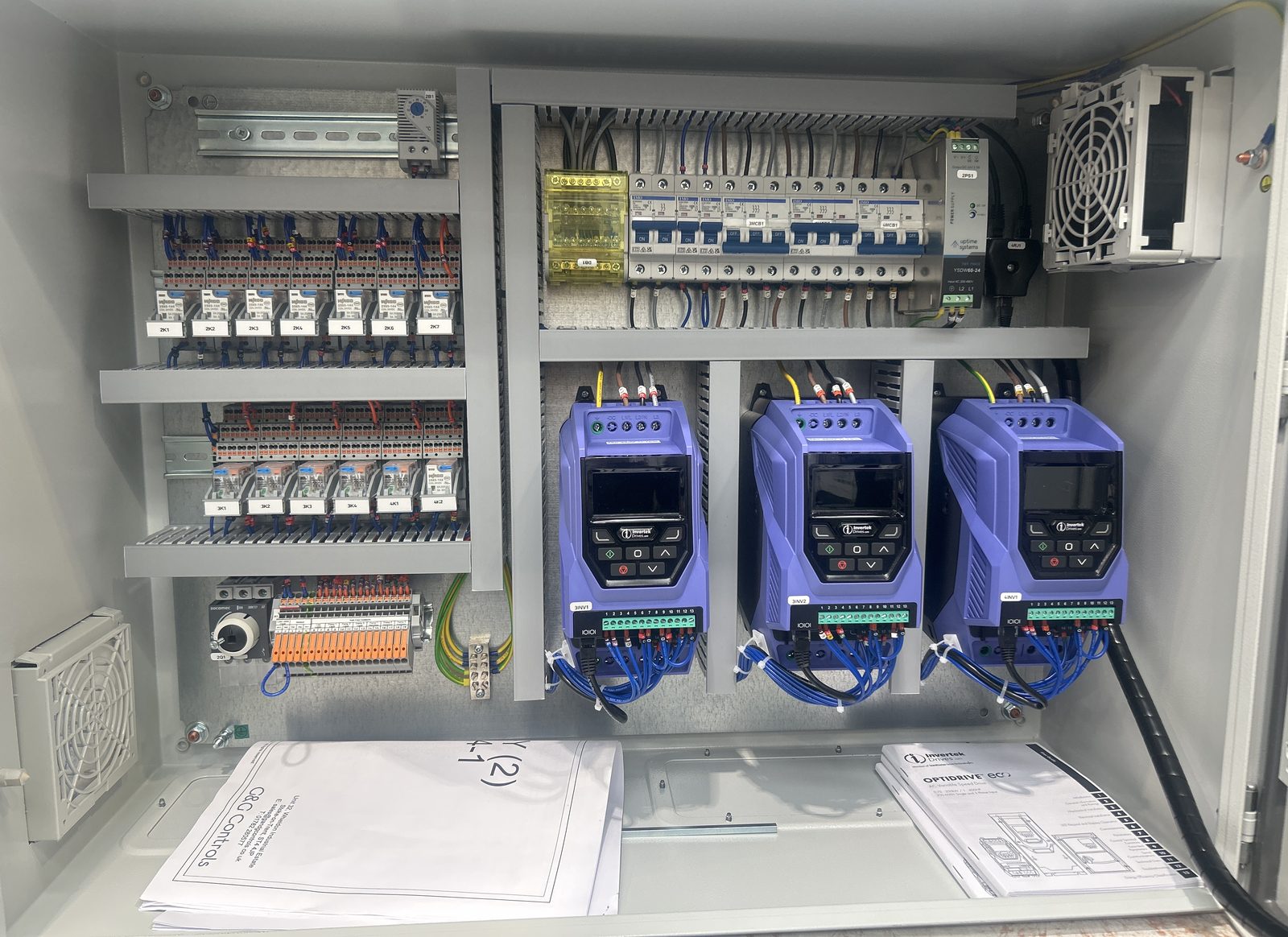
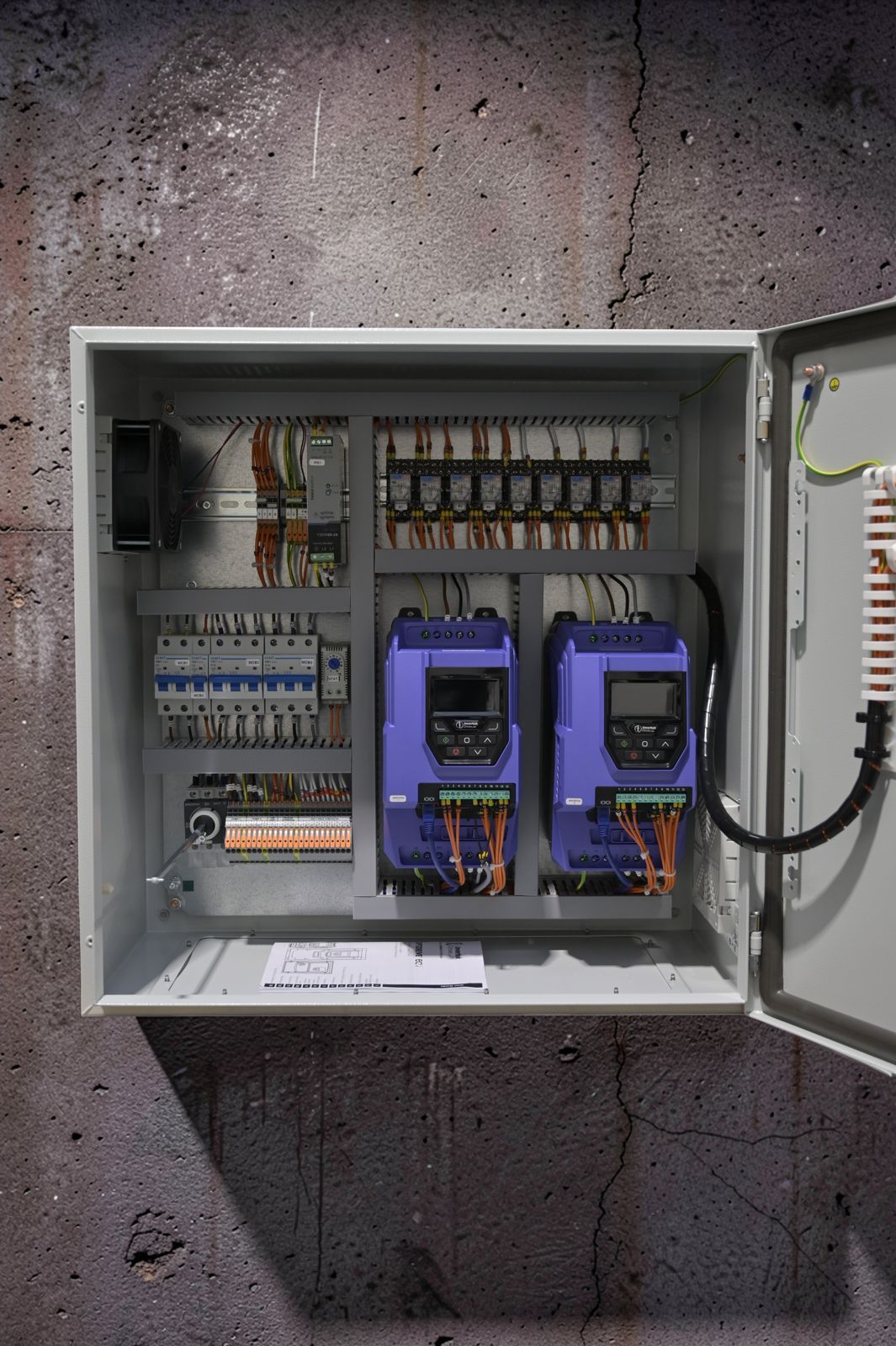
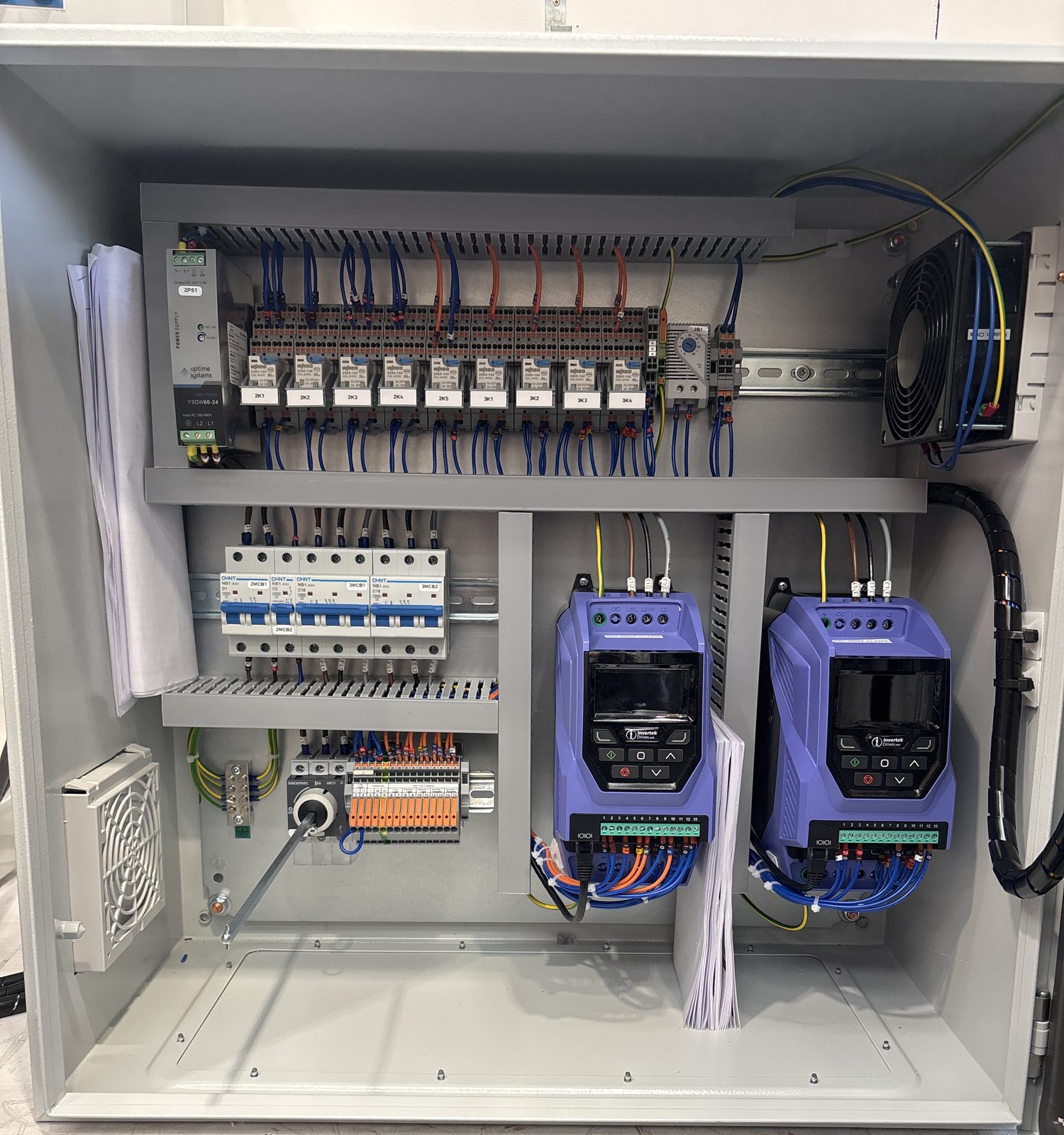
Each pump has an inverter. A pressure transducer reports the system pressure, and the panel speeds the pump up or slows it down to hold a set point. When one pump at full speed is not enough, the next joins in. How a booster set control panel works goes through it step by step.
For it: constant pressure at the taps, whatever the demand; soft starts and stops, so no water hammer and no starting surge; less energy, because a pump turning slower than full speed uses a good deal less power, and a booster set spends most of its life at part load; a smaller pressure vessel.
Against it: more to go wrong than a contactor, and drives that need to be kept cool and dry. Which is an argument about where the drives are mounted more than whether to have them, and we come to that below.
Which to choose
Choose variable speed when:
- the pressure matters to the people using the water: showers, upper floors, anything where a swing of a bar is noticed;
- the demand varies a lot through the day, as it does in almost any occupied building;
- the supply cannot take the starting current of the pumps direct-on-line;
- the pipework is long or old and water hammer is a concern.
Fixed speed still makes sense when:
- the demand is steady or the set runs rarely: filling a tank, a simple wash-down;
- a pressure swing does not matter;
- the motors are single phase. An inverter needs a three phase motor, so a set with single phase motors stays fixed speed unless the pumps are changed too.
It used to be that cost settled the question in favour of fixed speed for anything small. It does not any more: inverters no longer break the bank.
The single phase supply question
A single phase supply is not the same thing as a single phase motor. If the site only has 230V single phase but the pumps have three phase motors, an inverter can take single phase in and give three phase out. That is what our BH panels do, for motors up to 2.2kW. The motors need to be connected for 230V three phase, which most small motors can be: check the nameplate for 230/400V.
Where the drives are mounted
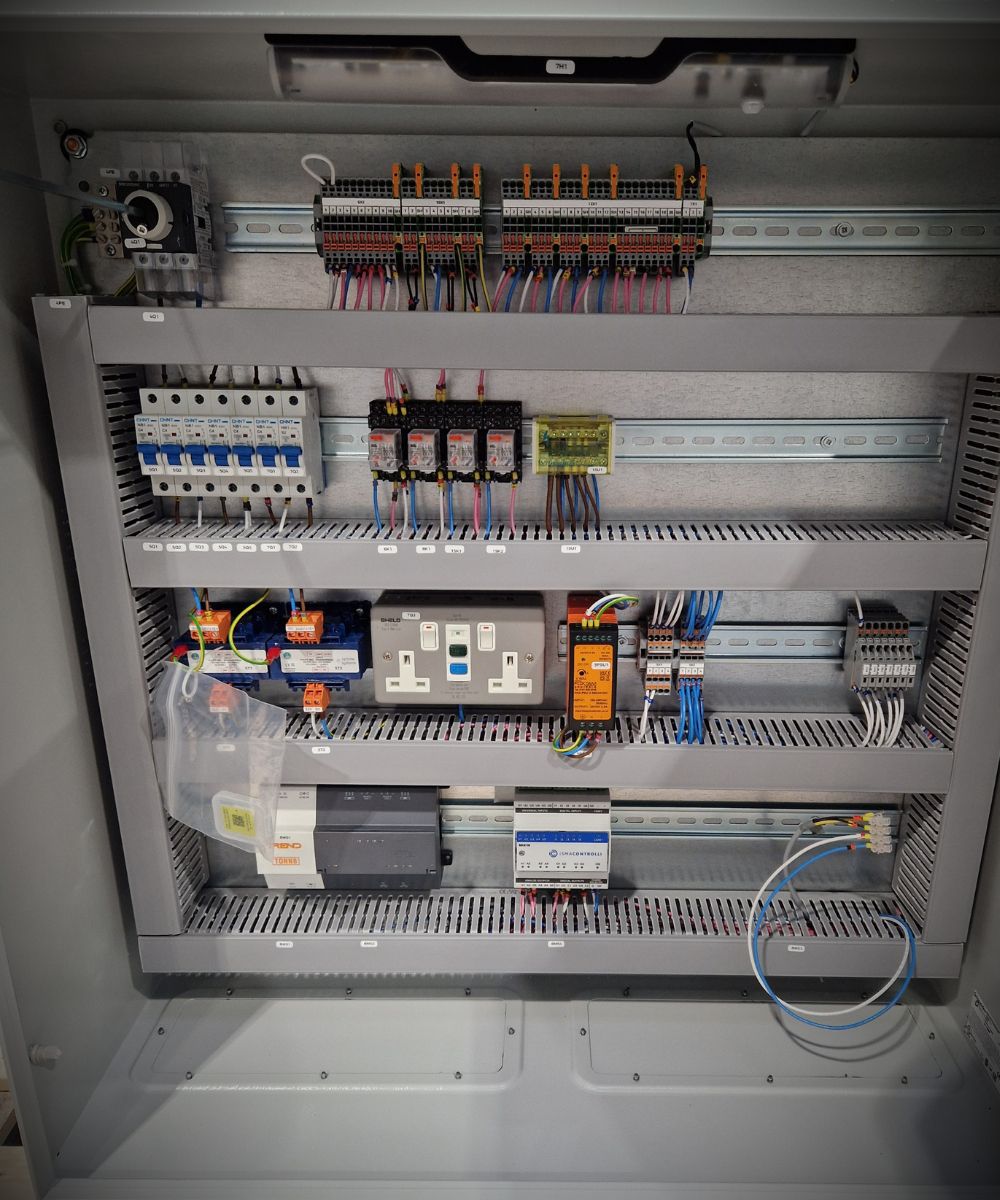
Variable speed sets come in two kinds. On some the inverter sits on top of each pump motor. On others the inverters are in the control panel.
Pump-mounted drives live with the motor's heat and vibration, and they are tied to one manufacturer and one generation of product. When one fails years later, the replacement often will not talk to the ones still running: see replacing failed Hydrovar inverters.
Panel-mounted drives are standard industrial inverters. They run cooler, they are easier to get at, and a failed one is replaced with an off-the-shelf drive. Our booster set control panels are built this way, for one to six pumps.
Converting a fixed speed set to variable speed
If the pumps and pipework are sound, there is no need to replace the set to get constant pressure. The conversion is:
- a new control panel with an inverter for each pump;
- a 4-20mA pressure transducer on the discharge manifold, in place of the pressure switches;
- the motors wired to the panel's drives rather than to contactors.
The pumps, the frame, the manifold and the vessel stay. The conditions are that the motors are three phase, in good order and suitable for inverter use, which the pump manufacturer's data will confirm.
To price one we need the number of pumps, the kW and voltage of the motors, and the supply. Standard panels are priced in the shop, under booster set control panels.
Frequently asked questions
Is a variable speed booster set worth the extra cost?
In an occupied building, usually yes. The pressure is steady, the pumps start gently and they use less energy at part load, which is where a booster set spends most of its time. For a set that runs rarely or feeds a steady demand, fixed speed is still a reasonable choice.
Can I convert a fixed speed booster set to variable speed?
Yes, if the motors are three phase. It takes a new control panel with an inverter per pump and a pressure transducer in place of the pressure switches. The pumps, pipework and vessel stay.
Does a variable speed booster set still need a pressure vessel?
Yes, but a smaller one. It covers small demands so the pumps can stop when nobody is drawing water.
Can a variable speed booster set run from a single phase supply?
Yes, for small motors. An inverter can take a 230V single phase supply and drive a three phase motor. Our panels do this up to 2.2kW per pump.
Written by the engineers at G&G Controls, a UK control panel manufacturer in Stoke-on-Trent. For general guidance only; consult a qualified professional for advice on your own installation.
Up next
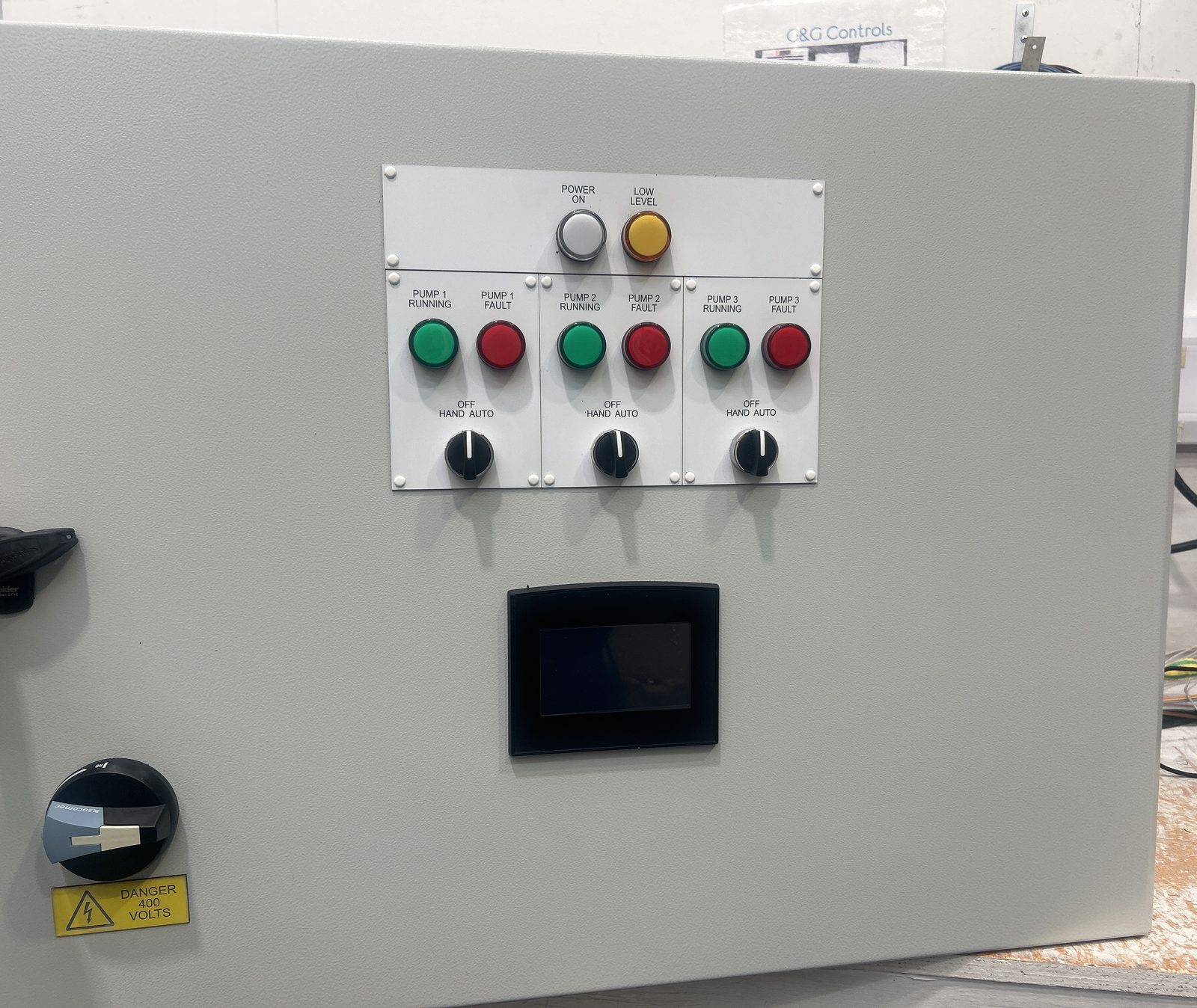
How a booster set control panel works
What a booster set control panel does, step by step: reading the pressure, varying pump speed, duty/assist staging, duty rotation and dry run protection.