How a booster set control panel works
By Tristan Newton, Commercial Director · 12 November 2026 · 5 min read
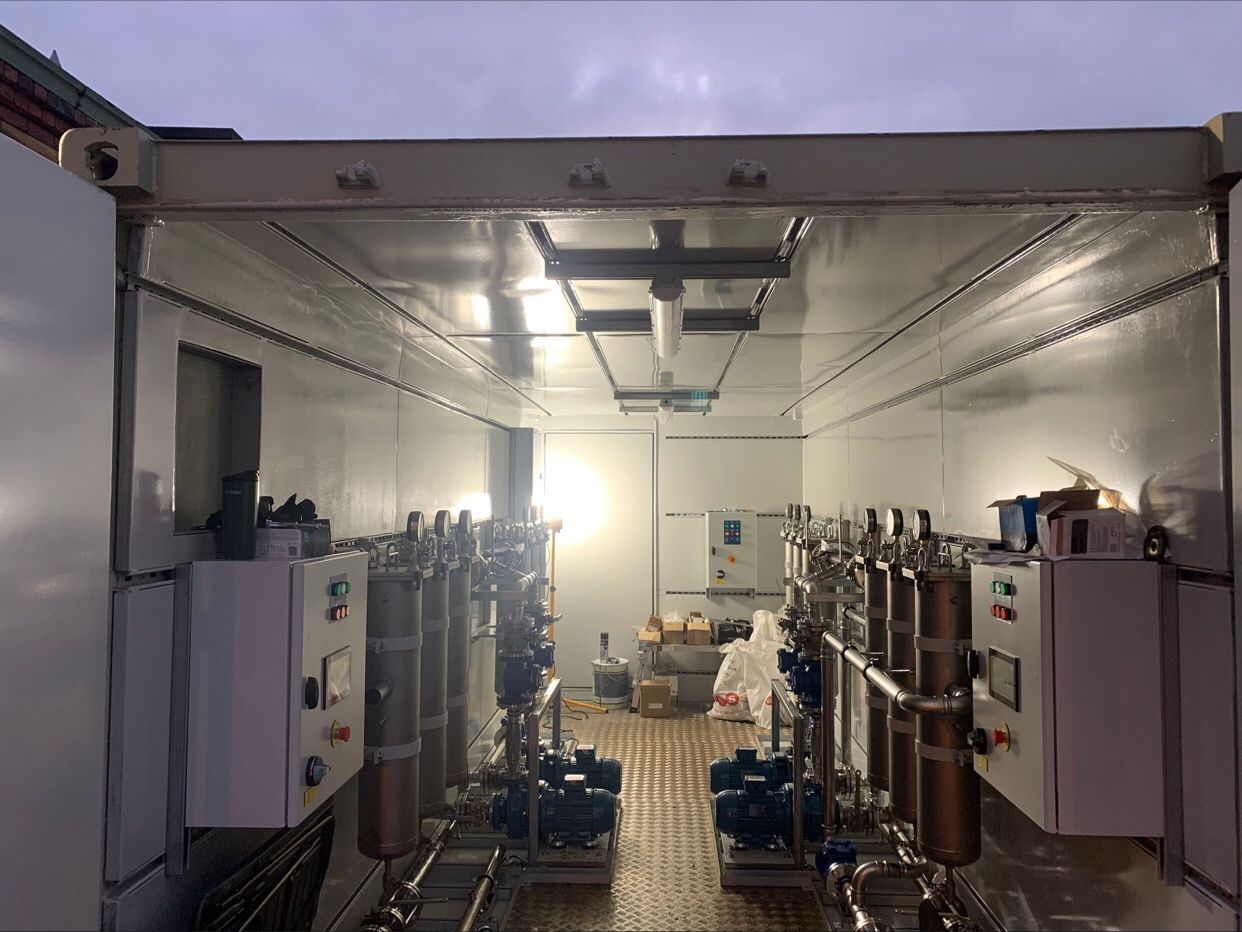
A booster set keeps the water pressure up where the mains cannot: the top floors of a building, a housing development at the end of a long main, an irrigation system. The pumps do the work, but the control panel decides how many run, how fast, and when to stop. Here is what it is doing, in the order it does it.
What is in a booster set
- Two or more pumps, usually vertical multistage, on a common frame and manifold.
- A pressure vessel on the discharge side, which absorbs small demands and smooths the pressure so the pumps are not starting for every dripping tap.
- A pressure transducer on the discharge manifold, which tells the panel what the system pressure is.
- A break tank feeding the pumps, on most sets, with a low level float in it.
- The control panel, which is the subject of the rest of this article.
Step 1: read the pressure
The transducer sends a 4-20mA signal proportional to pressure. On a 0-16 bar transducer, 4mA is 0 bar and 20mA is 16 bar. The signal starts at 4mA rather than zero for a reason: a broken wire or a dead transducer reads 0mA, which the panel can tell apart from "no pressure" and show as a fault.
Older and simpler sets use pressure switches instead: one switch per pump, each set to make at a slightly different pressure. They work, but they only know "above" or "below", which is why they go with fixed speed pumps. Fixed speed or variable speed covers the difference.
Step 2: compare it with the set point
The set point is the pressure you want in the system, entered once. On our panels that is on the inverter itself, or on a touchscreen on the door if the panel has one.
The panel compares the pressure it is reading with the set point, continuously. Below the set point, it needs more from the pumps. Above it, less.
Step 3: change the pump speed
In a variable speed panel each pump has an inverter (a variable speed drive, or VSD). When the pressure falls below the set point the drive speeds the pump up; when it rises above, the drive slows it down. The result is a pressure that stays at the set point while the demand moves around, rather than one that saws up and down between a cut-in and a cut-out.
It also means every start is a soft start. The pump ramps up rather than hitting the pipework at full speed, which is kinder to the motor, the supply and the pipes.
Step 4: bring in the next pump
One pump at full speed can only deliver so much. When the lead pump is flat out and the pressure is still below the set point, the panel starts the next pump, and the two share the load. When demand falls away, it drops one off again. This is duty/assist: the same idea as on a pumping station, explained in duty/standby, duty/assist and duty changeover, except that here the trigger is pressure rather than a float.
On a G&G panel up to six pumps run from the one set point. You do not set up each inverter separately or copy parameters from one to the next.
Step 5: share the work
If the same pump led every time it would wear out first, and the others would sit idle until the day they were needed. So the panel rotates the duty: the lead pump changes, and the running hours stay roughly level across the set.
Step 6: protect the pumps
A booster pump that runs without water can wreck its seals in minutes. The low level float in the break tank is there to prevent that: when the level drops, the panel stops the pumps and shows low level on the door.
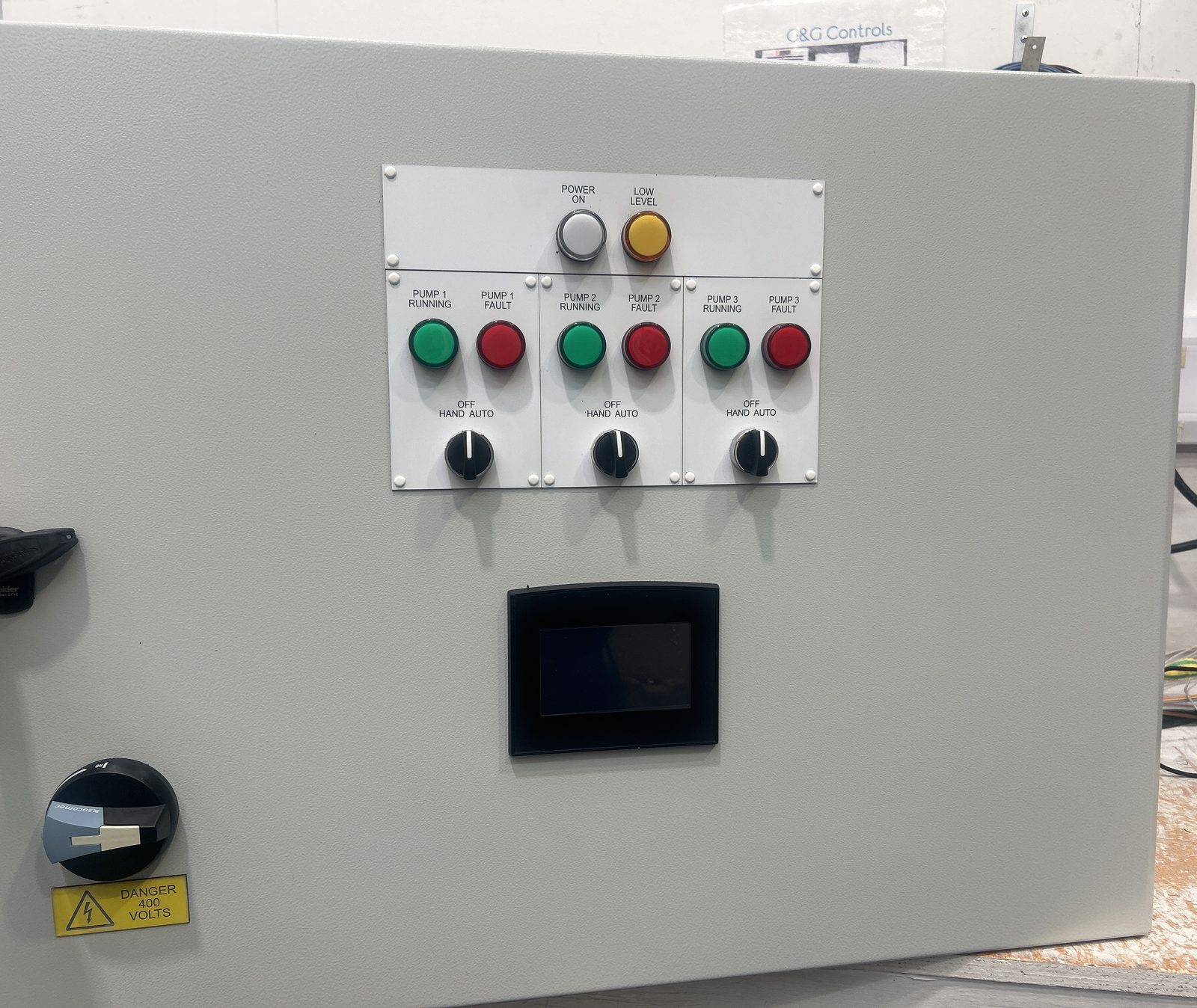
The drives protect the motors from overload, and each pump has a hand/off/auto switch so one can be taken out for service while the others carry on.
Step 7: tell someone
On the door: a running lamp and a fault lamp for each pump, and a low level lamp. On the terminals: volt-free contacts for pump running, pump fault and low level, which is what a BMS needs to show the set on its graphics and raise an alarm.
Where the drives live
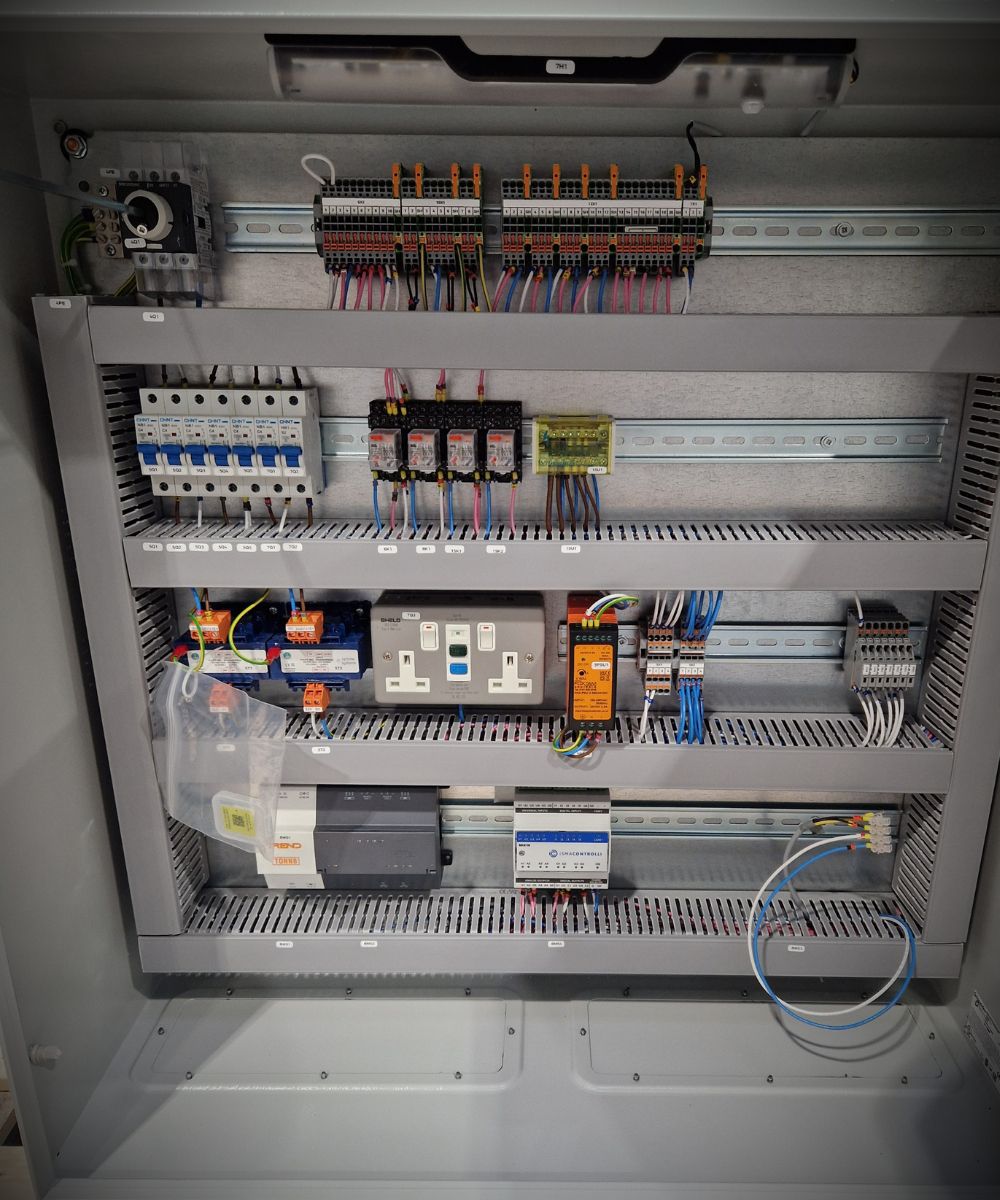
There are two ways to build a variable speed set. The drives can sit on top of each pump motor, or they can sit in the control panel on the wall.
Pump-mounted drives make a neat package, but they live with the heat and vibration of the motor, they are specific to the pump manufacturer, and when an old one fails the replacement is often not compatible with the ones still working. That is the story in replacing failed Hydrovar inverters.
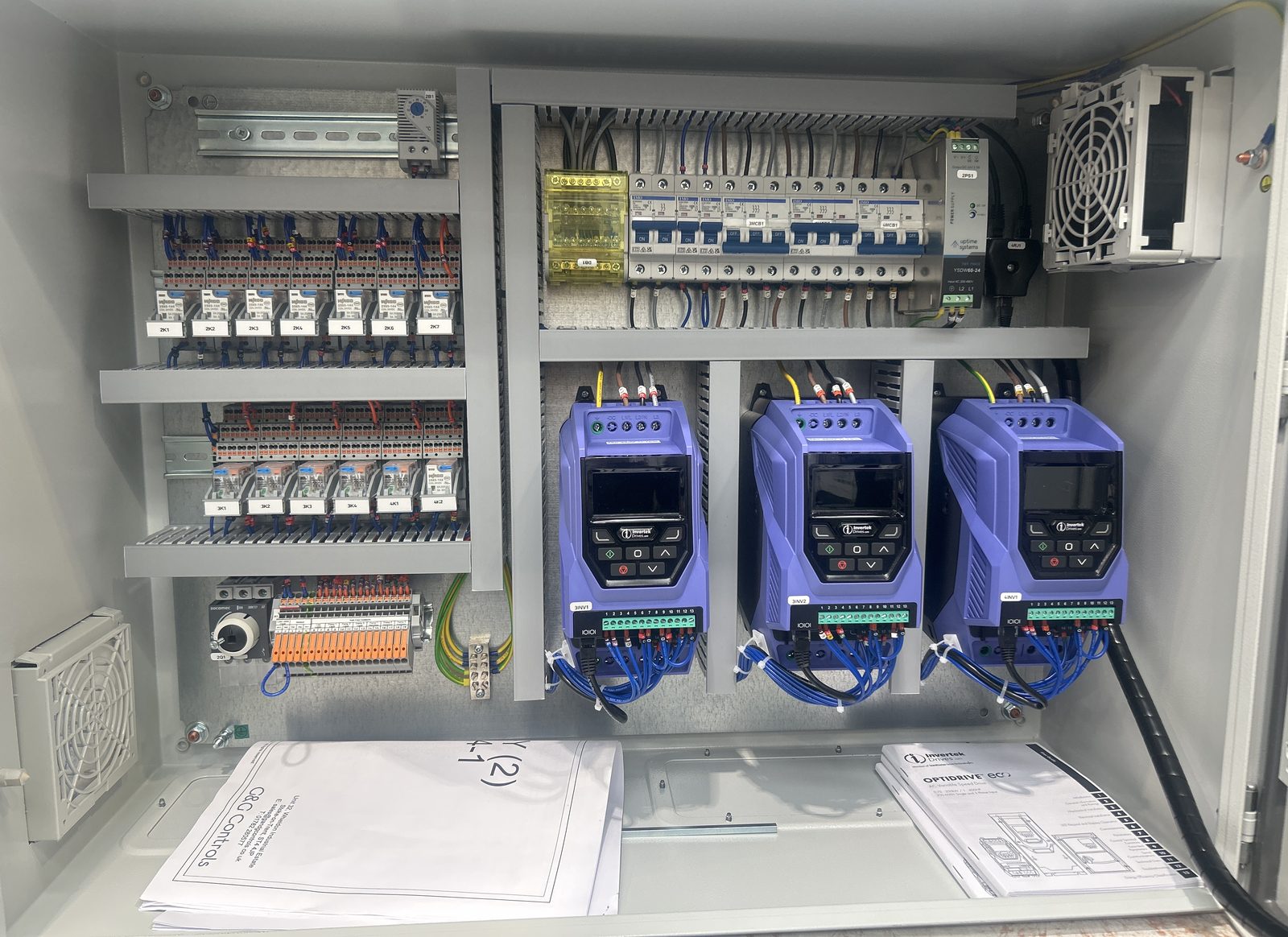
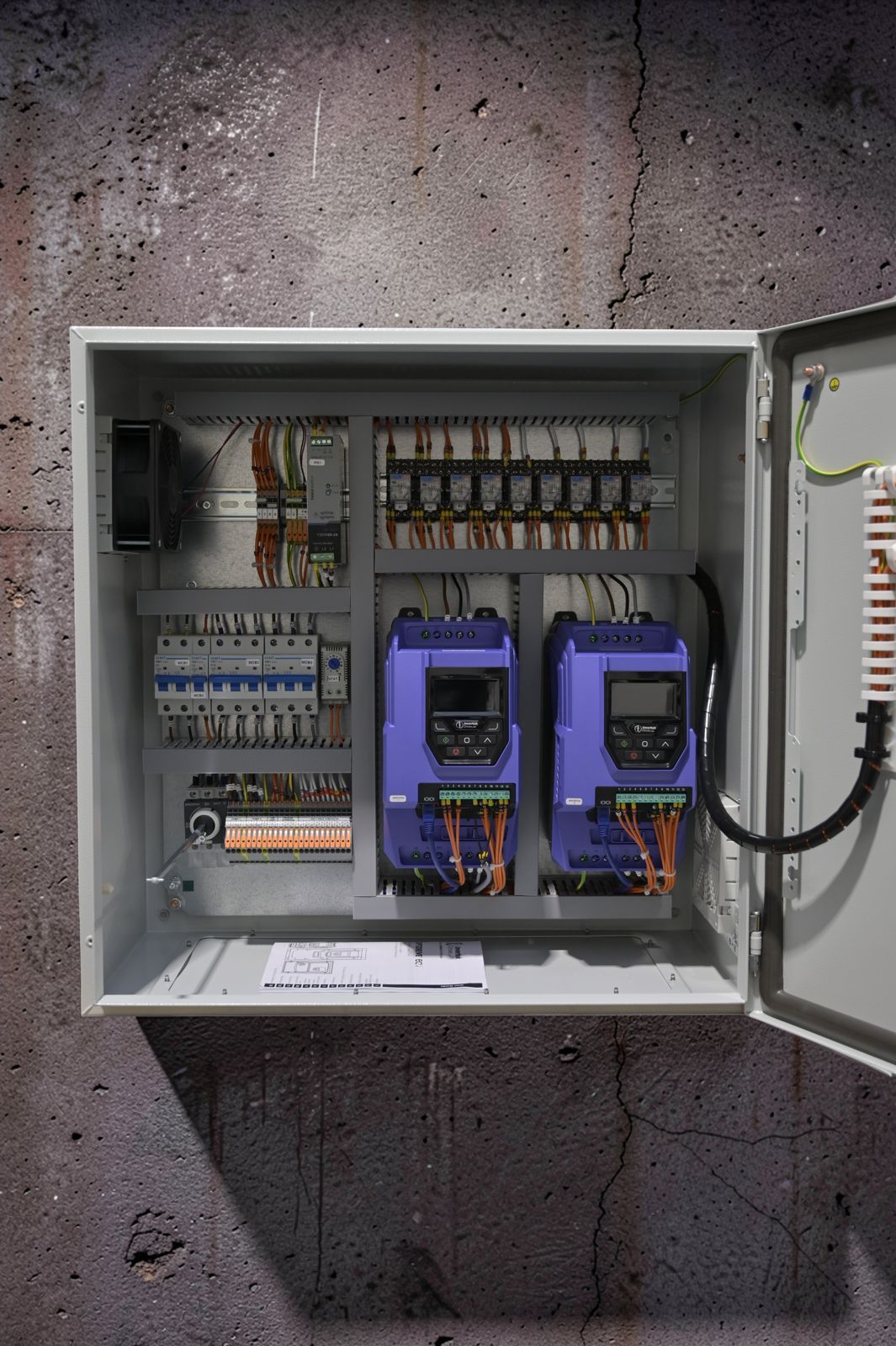
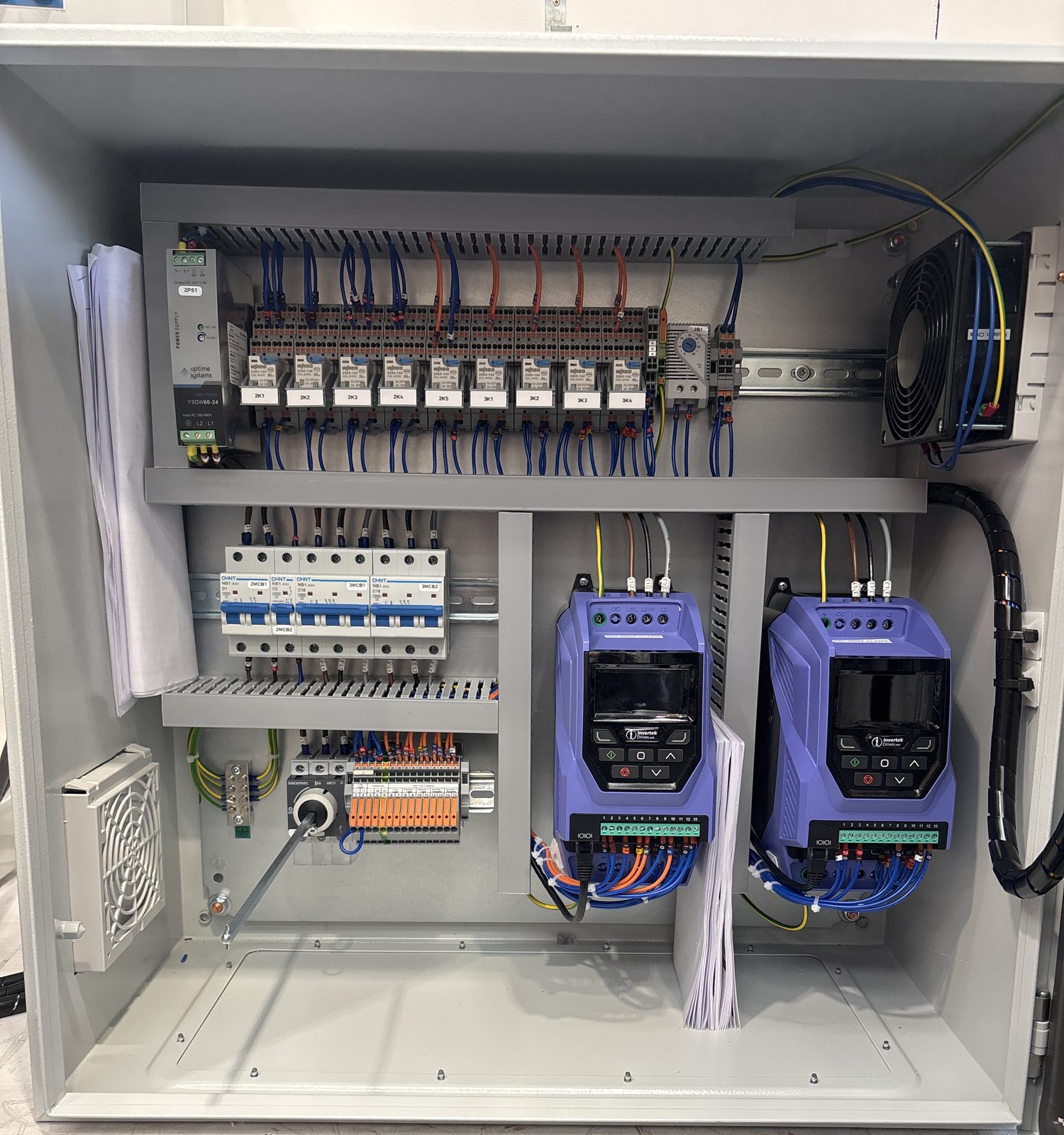
Panel-mounted drives are standard industrial inverters in a clean, cool enclosure. If one fails, it is swapped for an off-the-shelf drive without touching the pumps. This is how our booster set control panels are built.
What a panel builder needs from you
To build a panel for a booster set, new or existing, we need:
- the number of pumps;
- the motor kW (or full load current) and voltage of each;
- the supply: three phase, three phase and neutral, or single phase;
- the pressure transducer fitted, and its range, or that you need one;
- the set pressure, if you know it;
- any signals a BMS needs, and whether you want a touchscreen;
- where the panel is going: plant room, outdoors or in a kiosk.
Frequently asked questions
What does a booster set control panel do?
It holds the water pressure in a system at a set point. It reads the pressure from a transducer, varies the speed of the pumps to match the demand, starts and stops additional pumps as needed, shares the running hours between them and stops them if the break tank runs low.
Does a booster set need a pressure vessel if it has inverters?
Yes, though a smaller one than a fixed speed set needs. The vessel covers small demands and leaks so the pumps can stop when nobody is drawing water, and it steadies the pressure while a pump ramps up.
Can one panel control more than two pumps?
Yes. Ours are built for one to six pumps, all working to a single set point.
Can a new control panel be fitted to an existing booster set?
Yes. The panel is built to suit the pumps already there: their number, kW and voltage. The existing pressure transducer is reused if it gives a 4-20mA signal.
Written by the engineers at G&G Controls, a UK control panel manufacturer in Stoke-on-Trent. For general guidance only; consult a qualified professional for advice on your own installation.
Up next
Why does my pump keep tripping? A diagnostic checklist
Overload, blockage, seal, cable or supply: a step-by-step way to find out why a pump trips, what each cause looks like at the panel, and what to do about it.