Adoptable pumping station control panels: what the water companies require
By Tristan Newton, Commercial Director · 17 July 2026 · 4 min read
An adoptable pumping station is one the water company will take over and maintain once it is built, under a Section 104 agreement. Because they will own it for decades, they say exactly how it must be built, and the control panel is one of the things they look at hardest. A panel that would be perfectly good for a private station will fail an adoption inspection.
This is what changes, what the different authorities ask for, and how to get through handover first time.
The rules
Adoptable sewers and pumping stations in England and Wales are built to the Design and Construction Guidance (DCG), which replaced Sewers for Adoption in 2020. It sets the minimum. On top of it, each water company publishes its own local practice or amendments, and those are where the detail lives: which kiosk, which telemetry outstation, which components, how it is labelled.
The specification that applies is the one current when the station was designed and agreed with the authority, so always work from the version referenced in the S104 agreement, not the one on the website today.
How an adoptable panel differs from a standard one
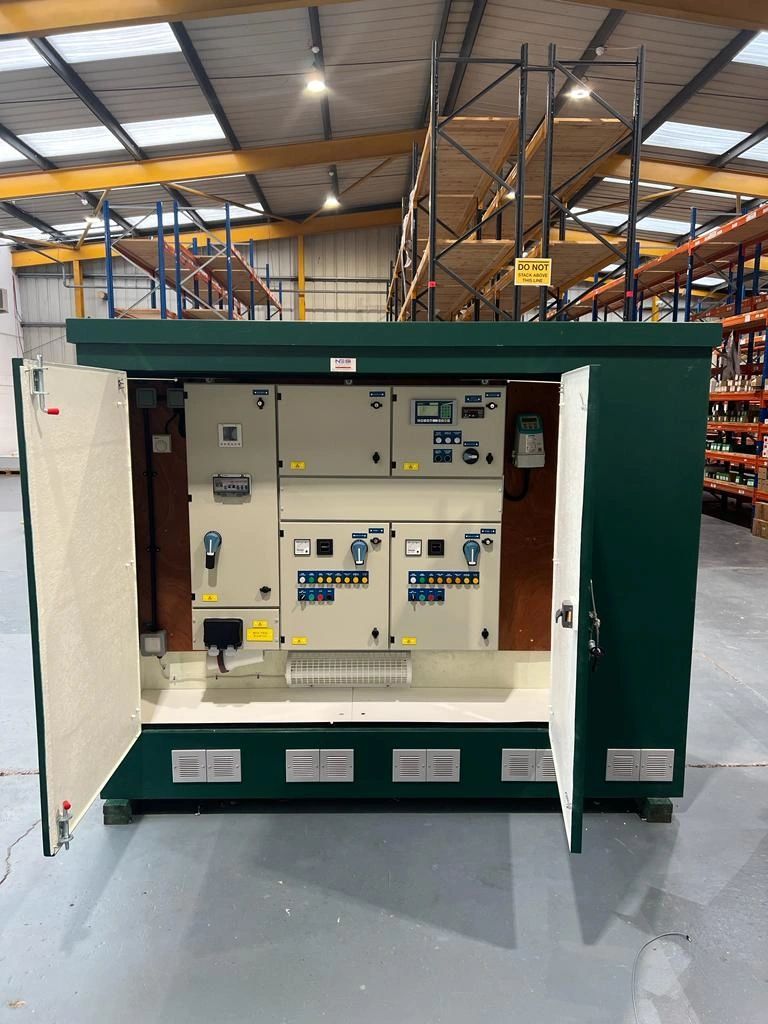
The kiosk. Adoptable stations are almost always in a GRP kiosk to the authority's specified size and colour, with a light, a heater, a lockable door to their key suite and the station identification on it.
Telemetry. The water company monitors its stations from a control room. The panel has to provide the signals their telemetry outstation needs, on volt-free contacts, and space and power for the outstation itself. Which signals, and which outstation, is specific to the authority.
Two pumps, duty/assist, with changeover. Standard. So is a separate high level alarm with battery backup and a beacon, wired independently of the pump control.
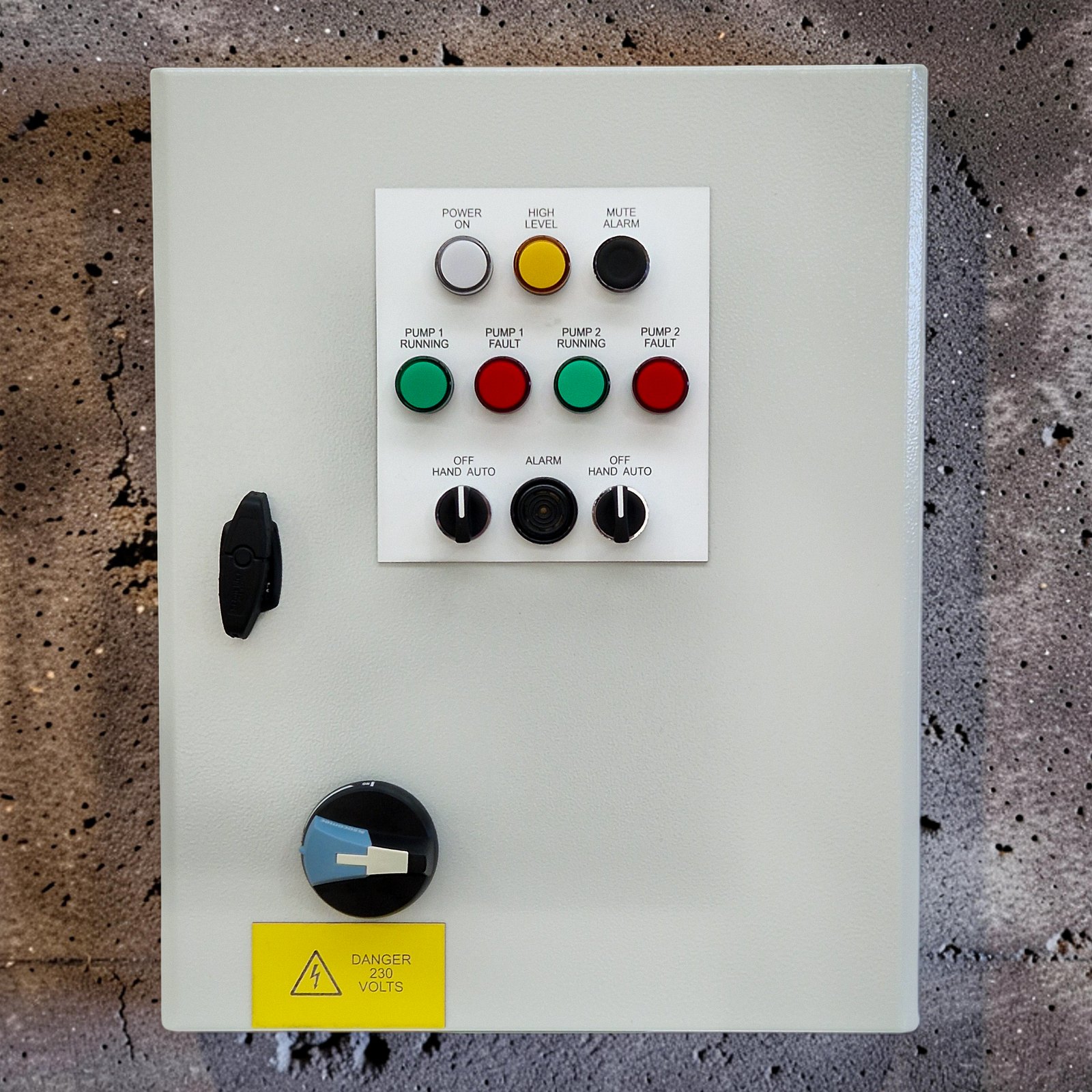
Metering and indication. Hours run meters and ammeters per pump are commonly required, along with a specified set of lamps and switches on the door.
Generator connection. A generator inlet socket of a specified rating, with a changeover arrangement, so the authority can run the station from a portable generator.
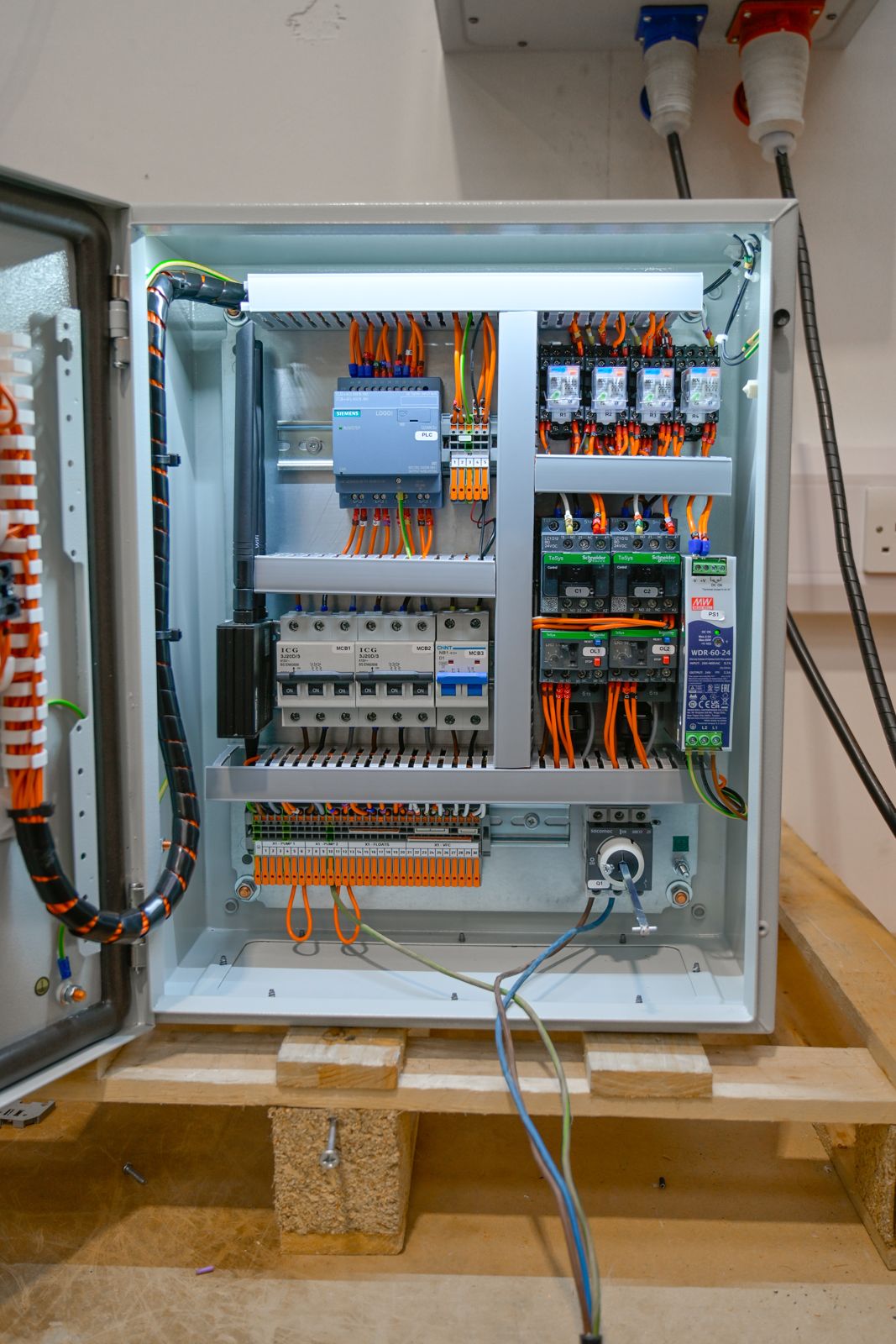
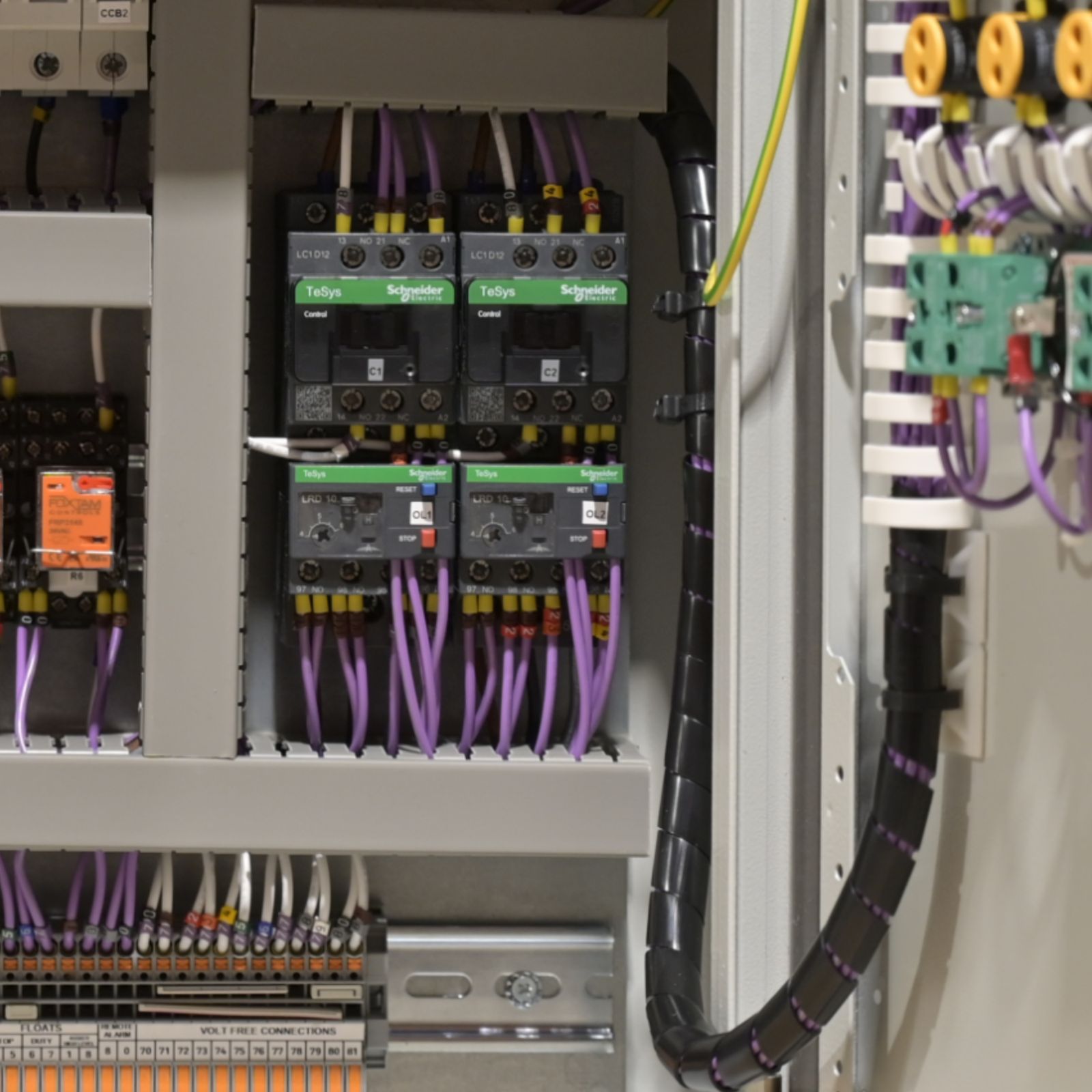
Components and construction. Some authorities name the make of switchgear, isolator or level controls. The panel is built to BS EN 61439-2, with Form of separation, labelling, cable identification and drawing format to their standard.
Level control. Floats or a level sensor to their specification, often with the float arrangement and levels defined.
Documentation. A specific handover pack: as-built drawings in their format, test certificates, component schedules, O&M information and the panel serial numbers.
What the main authorities look for
The detail changes with each revision, so treat this as a guide to where each one is strict, and check the current amendments for the region.
- United Utilities has one of the most prescriptive specifications, down to named components and the exact telemetry interface. Expect the longest list.
- Severn Trent specifies its kiosk and telemetry arrangement and is particular about the handover documentation.
- Anglian Water has its own telemetry standard and defined alarm and indication requirements.
- Thames, Yorkshire, Southern, Welsh Water and the others each publish their own addendum to the DCG. They are all different, and none of them is optional.
If you are the developer or the M&E contractor, the safest course is to send us the authority, the site and the S104 reference before anything is designed, and let us build to the specification from the start. Changing a finished panel to suit an inspector is expensive and slow.
Getting through handover
The inspections that fail are usually for things that are easy to get right at the start and painful to fix later:
- the wrong kiosk, or the right kiosk with the wrong door furniture;
- telemetry signals missing or on the wrong type of contact;
- labelling and cable identification not to the authority's format;
- the documentation pack incomplete, or drawings in the wrong format;
- the station built to a superseded version of the amendments.
We build adoptable panels for all the main authorities, in a kiosk with the handover documentation, typically in three to five weeks including the kiosk. Adoptable enquiries go to John Davey, our adoptable sector lead, who has spent more than twenty years dealing with water company specifications. Adoptable control panels has the detail; the adoptable sector page covers the wider station.
Frequently asked questions
Can I use a standard pump panel for an adoptable station?
No. The water company's specification will require a kiosk, telemetry provision, independent high level alarm, metering and documentation that a standard panel does not have. It has to be built for adoption from the start.
Who supplies the telemetry outstation?
Usually the water company, or their nominated supplier, with the panel builder providing the space, power and volt-free signals for it. Some authorities have the panel builder supply it. Check the amendments for the region.
How long does an adoptable panel take?
Three to five weeks including the kiosk, once the specification is confirmed. Allow longer if the authority has to approve the drawing before build.
Does the specification cover private pumping stations too?
No. A private station, one that will not be adopted, can be built to a standard specification. Many developers still choose to build to adoptable standards so the station could be offered for adoption later.
What do you need from me to quote an adoptable panel?
The water authority, the site, the S104 or planning reference, the pump duty and any drawings you have. We do the rest.
Written by the engineers at G&G Controls, a UK control panel manufacturer in Stoke-on-Trent. For general guidance only; consult a qualified professional for advice on your own installation.
Up next
The high level alarm has gone off: what to do
A plain guide for whoever looks after the building. What the alarm means, what to check in the first five minutes, when to call someone, and how to stop it happening again.