Where to hang the floats: stop, start, assist and high level
By Tristan Newton, Commercial Director · 15 May 2026 · 4 min read
Four float switches control most twin pump wastewater stations, and where they hang decides how well the station works. Set too close together and the pumps short-cycle themselves to death. Set too far apart and the chamber sits full of stagnant sewage. Get the high level float wrong and the alarm goes off during normal pumping, or never.
Here is how to set them, from the bottom up.
The four floats
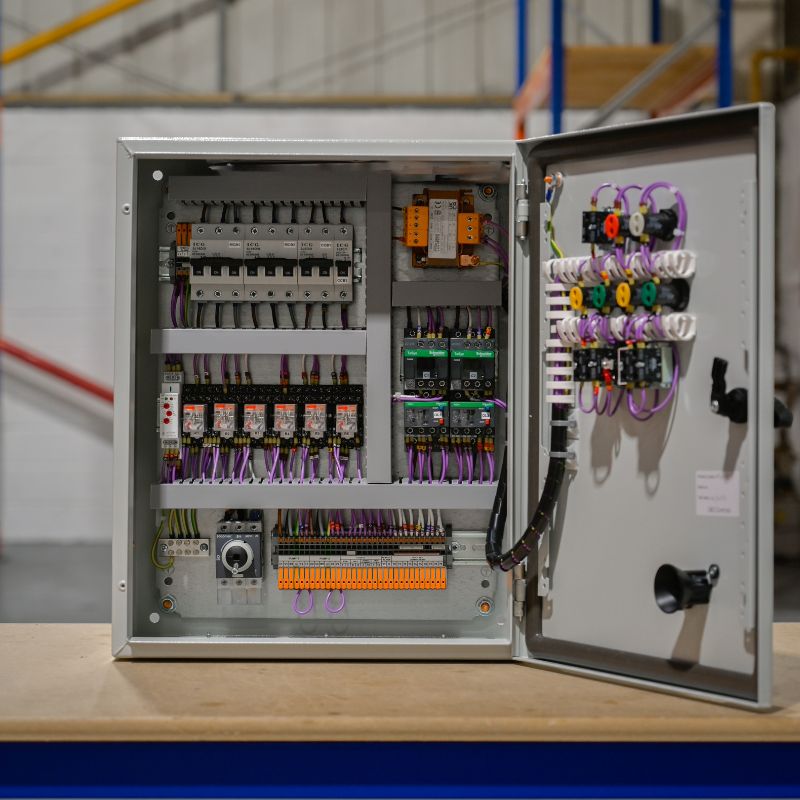
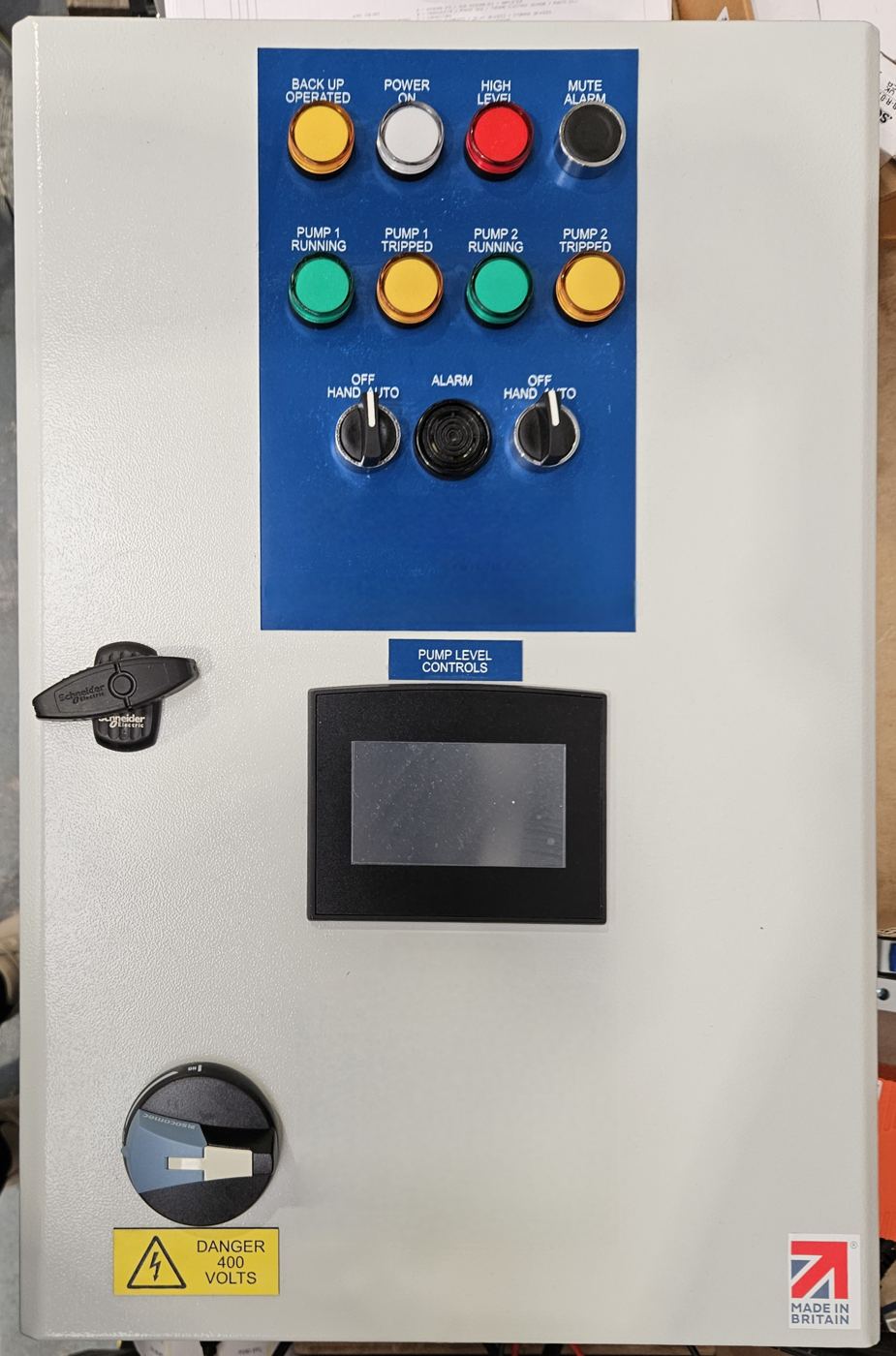
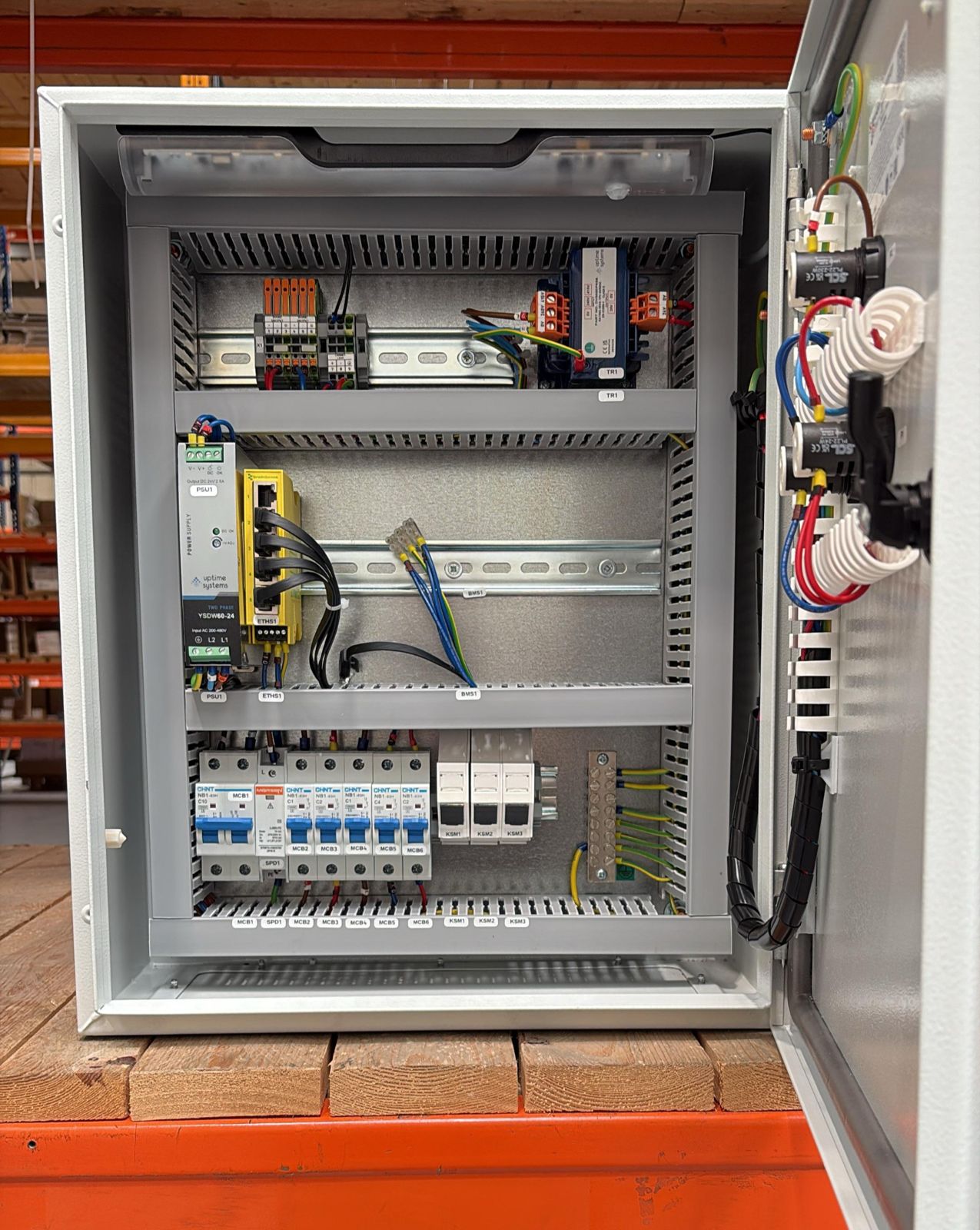
A standard duty/assist panel such as Basix uses four floats, each a simple tilt switch on a cable:
- Stop: the lowest. When it drops, all pumps stop.
- Start: when it rises, the duty pump starts.
- Assist: when it rises, the second pump starts as well.
- High level: when it rises, the alarm sounds and, on a Telemetrix panel, the text and email go out.
Between stop and start is the working band. The pumps only ever run when the level is somewhere in it.
Setting the stop float
Hang it so the pump stops before it draws air. The pump manufacturer will give a minimum submergence for the pump; the stop float needs to tip below that point, with the pump still covered. Too low and the pump snores and runs dry on every cycle, which is how seals fail. Too high and you leave more sewage in the chamber than you need to.
Setting the start float
This is the one that sets the cycle rate, and it is the one most often wrong.
The volume between stop and start is what each pump run empties. Divide that by the inflow and you get the time between starts. Motors have a maximum number of starts per hour (often 10 to 15 for a submersible pump; check the datasheet), and every start heats the windings and wears the contactor. So the working band has to be big enough that the pumps do not start more often than that at normal inflow.
In practice: the start float goes as high as the chamber allows while still leaving room above it for the assist and high level floats and the incoming pipe. If the pumps are cycling every couple of minutes, the band is too small; raise the start float.
Setting the assist float
Above the start float by enough that it only trips when the duty pump is genuinely not keeping up: storm inflow, or a pump that is wearing. If the assist float trips on every cycle, both pumps run together every time and the arrangement has stopped meaning anything. A gap of 150 to 300mm above the start float is typical; more in a large chamber.
Setting the high level float
Above the assist float, and below the incoming pipe invert, so the alarm goes off before the sewer backs up. If the alarm only sounds once the incoming drain is surcharged, it is too late to do anything about it.
The high level float is also the one that should be on its own circuit, and where a station has a level sensor rather than floats, it is the float we still recommend as an independent backup. Floats, radar or hydrostatic? explains why.
Physically hanging them
- Fix the cables to a bracket or a float cable holder at the top of the chamber, not to each other and not to the pump guide rails.
- Leave enough free cable for each float to tip fully, and no more. Loose loops are what tangle.
- Keep the floats clear of the incoming flow, the pumps and the ladder.
- Use the cable weights supplied if the floats have them, so each one hangs where you put it.
- In a narrow chamber, two floats may be the most you can hang without them fouling each other. That is the point at which a level sensor is the better answer.
Testing them
With the panel in auto and someone at the door, lift each float by hand in turn and watch the panel: start float, duty pump runs; assist float, second pump runs; high level, alarm and sounder. Drop the stop float, everything stops. Then run a real cycle with water and time it.
Write the levels on the commissioning sheet. Six months later, when someone asks why the station is cycling, the first question is whether the floats have moved.
Frequently asked questions
Can I run a twin pump station on three floats?
Yes: stop, start and high level, with the panel using the high level float to bring in the assist pump. It works, but you lose the separate warning that the duty pump is not coping, and the alarm and assist happen at the same moment. Four is better.
How far apart should the floats be?
It depends entirely on chamber size and inflow. The rule is the starts-per-hour limit for the pumps at normal inflow; hang the start float high enough that the band between stop and start does not breach it. Ask the pump maker for the limit if it is not on the datasheet.
What if the floats keep fouling?
Fat, rags and wipes tangle floats, and a narrow chamber makes it worse. Reduce the number of floats if you can, keep the cables short, and consider a hydrostatic level sensor with a single backup high level float instead.
Should the high level float be wired to the panel or to a separate alarm?
To the panel, which raises the sounder and beacon and, on Telemetrix, sends the alerts. Where a water company or client specification asks for an independent high level alarm, it is a second float on a separate battery-backed alarm unit.
Written by the engineers at G&G Controls, a UK control panel manufacturer in Stoke-on-Trent. For general guidance only; consult a qualified professional for advice on your own installation.
Up next
Choosing level sensing: radar vs hydrostatic vs float switches
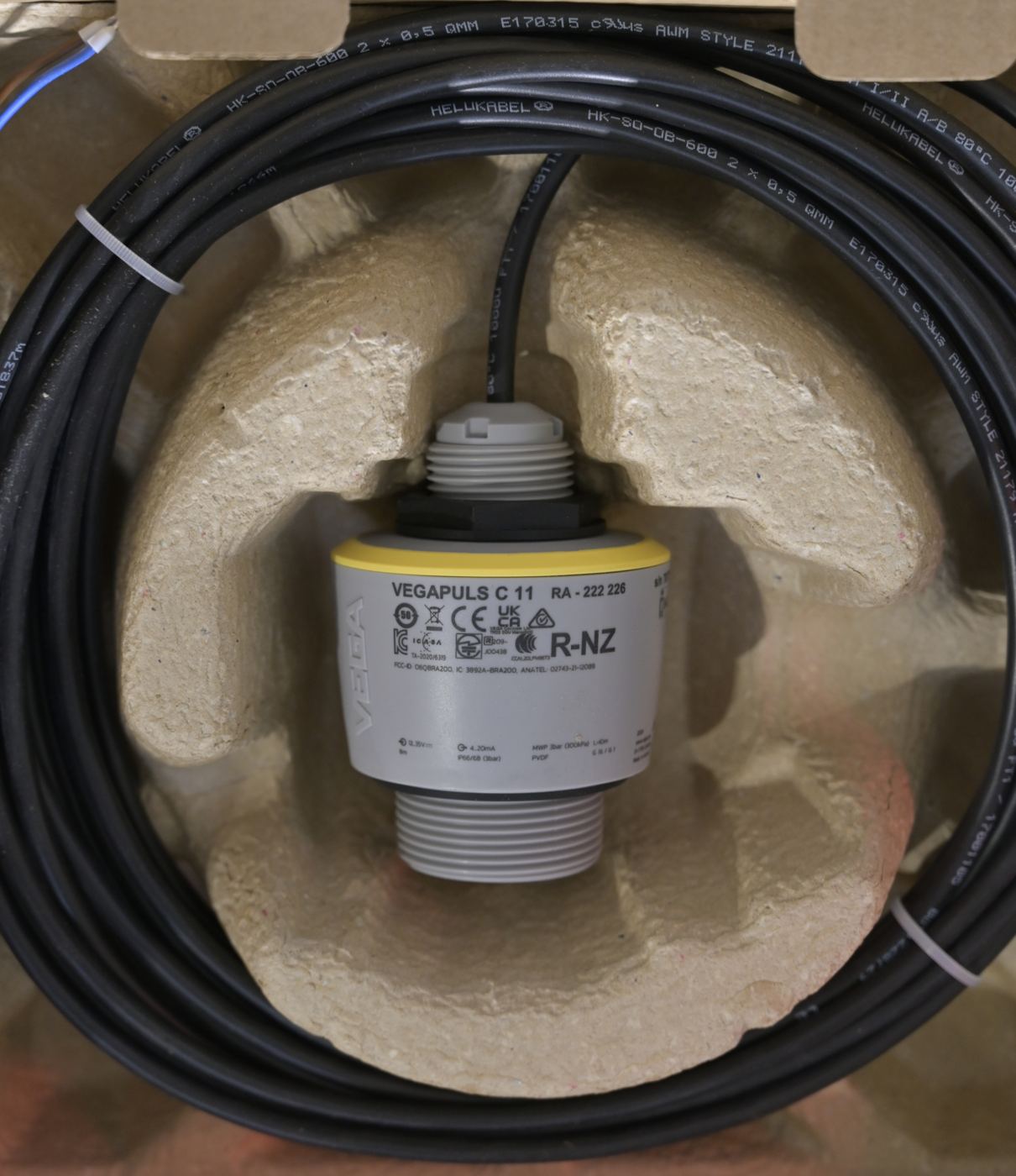
Let’s explore how they work, what's good about each and what can go wrong in real-world use. These are all widely available products, that are use standard signals such as 4-20mA, rather than…