Standardising a control panel platform: how OEMs take cost and lead time out
By Tristan Newton, Commercial Director · 21 August 2026 · 4 min read
If you make equipment and every unit needs a control panel, you probably order more panel variants than you need. Not because anyone decided to, but because each product, each customer request and each engineer's preference added one, and nobody took any away. Fifteen drawings for what is, underneath, three panels.
Standardising to a platform is how equipment makers take real cost and lead time out of their panels. Here is what a platform is, what it saves, and how to move a range across to one without stopping production.
What a platform is
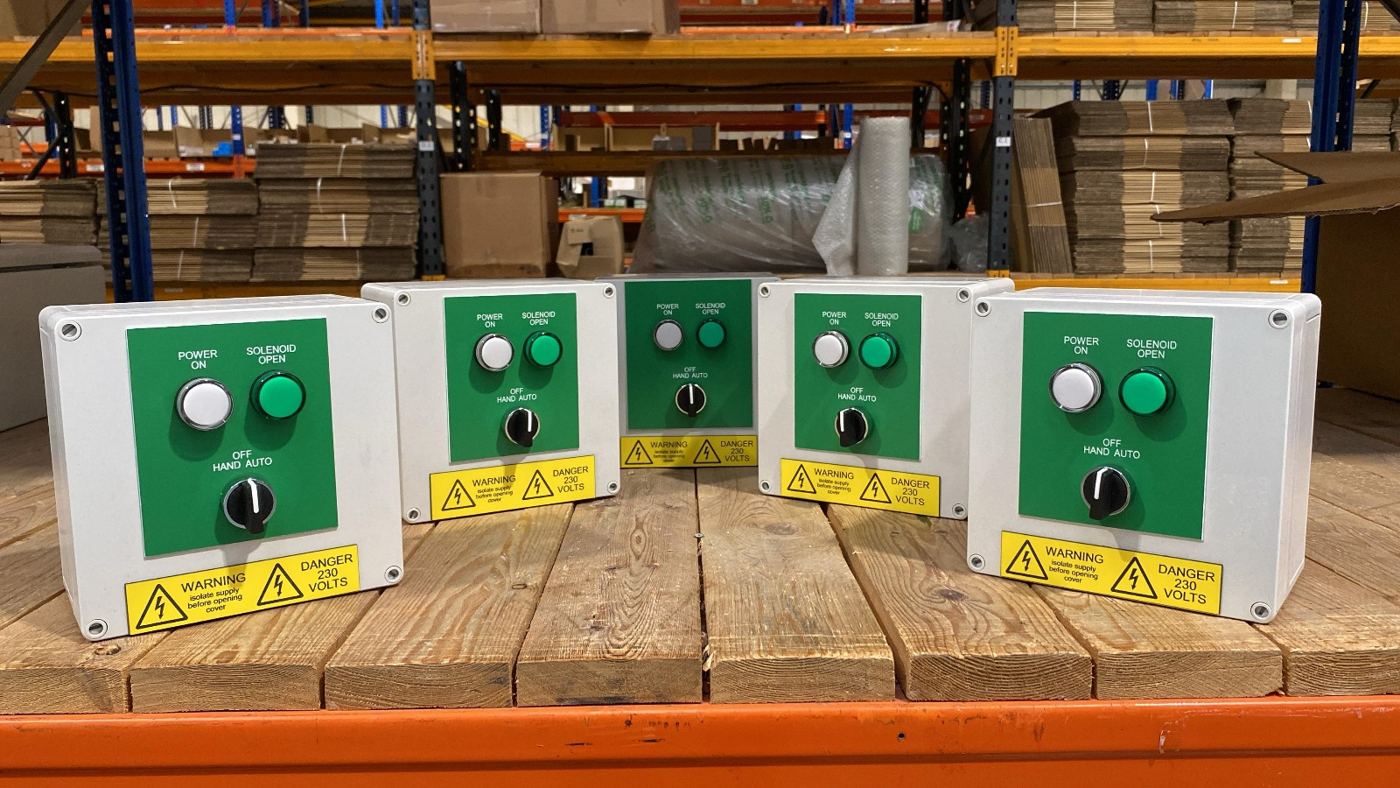
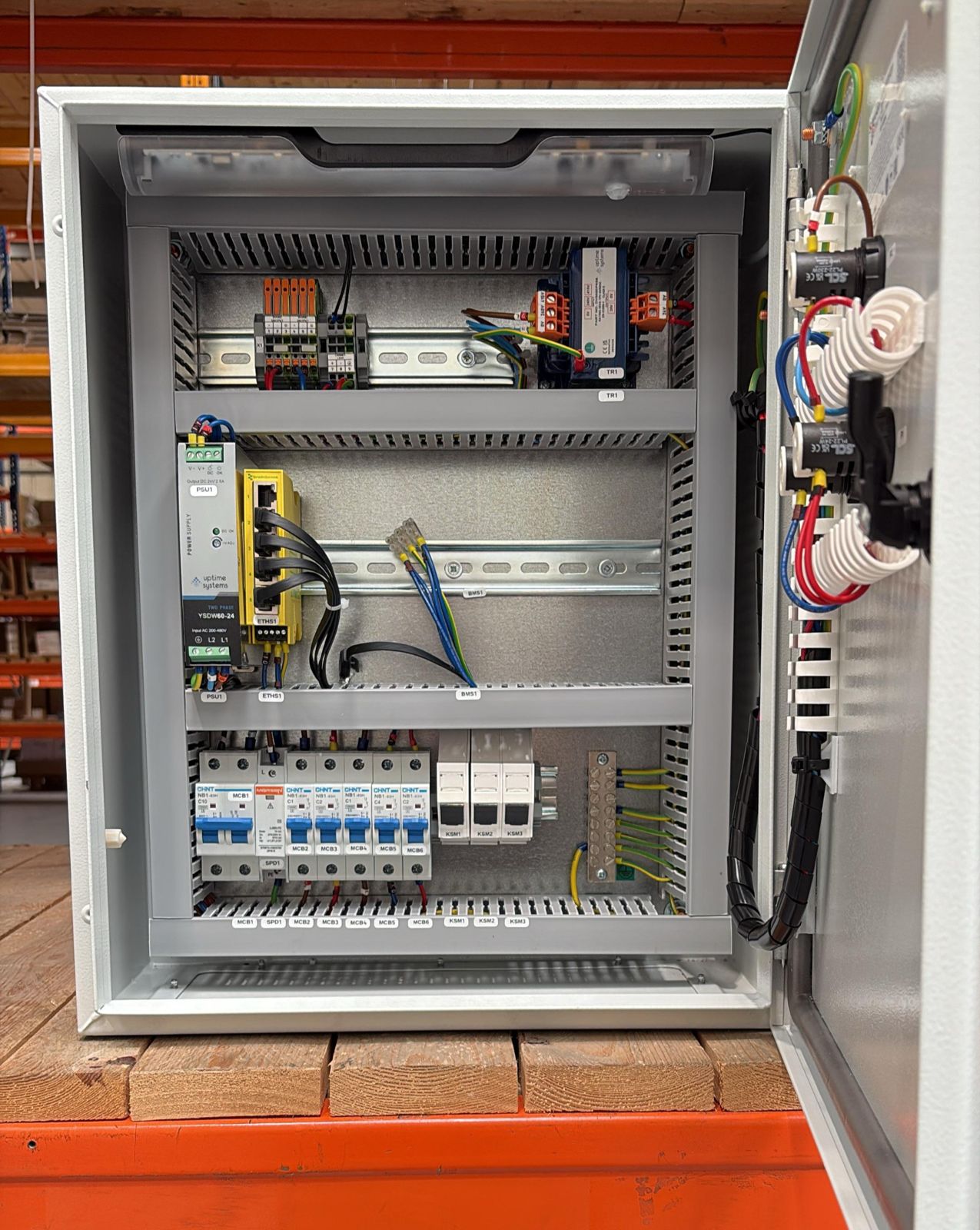
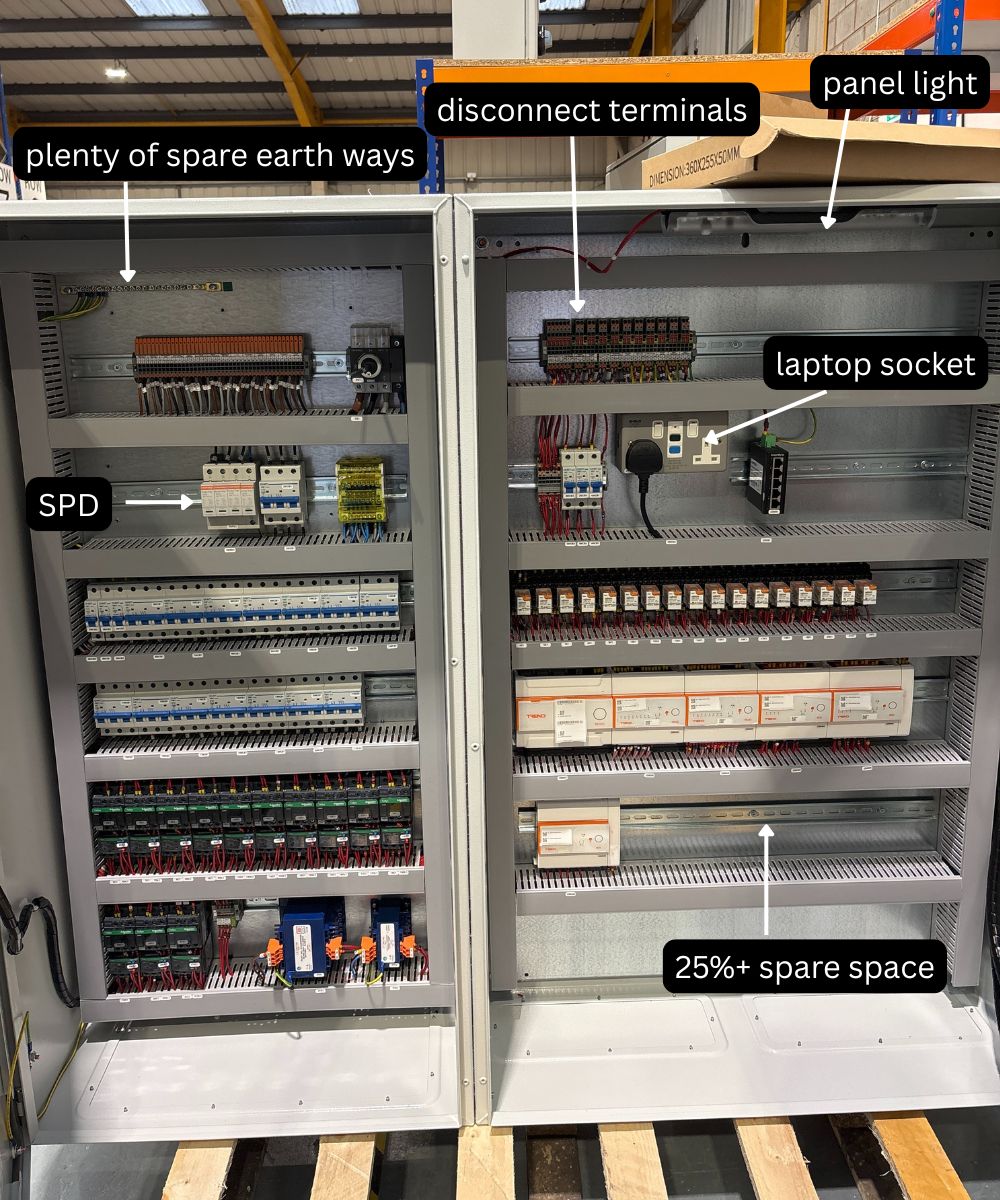
A platform is one base panel design with defined option blocks, rather than a separate design per product:
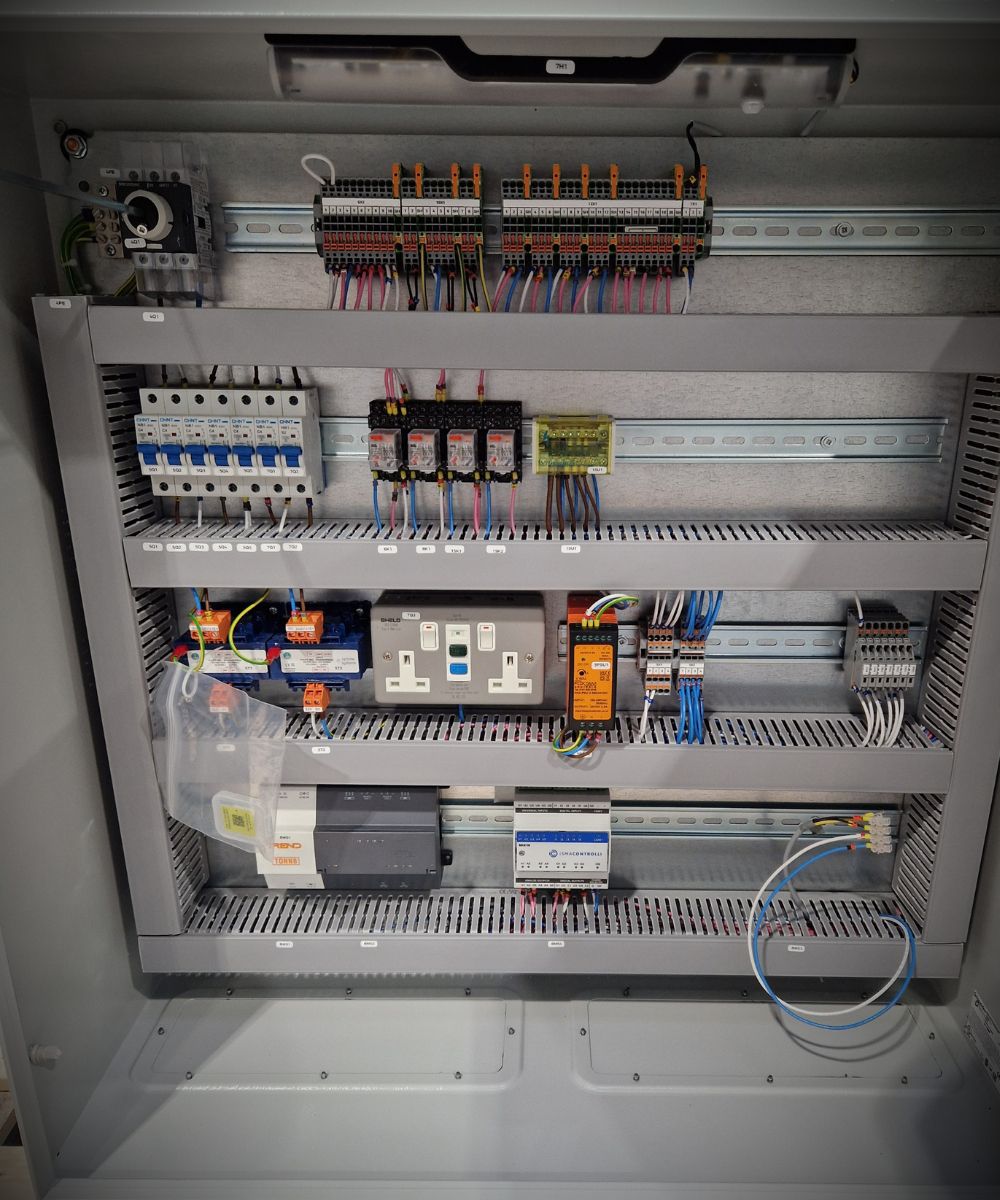
- The base: enclosure, isolator, control supply, main terminals, door layout, labelling and documentation, identical across the range.
- Option blocks: the parts that vary, each designed once and added or omitted per order. A second motor starter. An inverter instead of DOL. A touchscreen instead of lamps. A telemetry module. A heater and light.
- A configuration code: the panel is ordered by code, not by drawing, and the code says which blocks it has.
One platform with six option blocks covers more variants than fifteen drawings did, and every one of them shares the same components, the same wiring conventions and the same test procedure.
What it saves
Component cost. Fewer part numbers, bought in larger quantities, held in stock. Standard blocks are designed for the components that are cheapest to buy and quickest to fit, rather than whatever was to hand when each drawing was done.
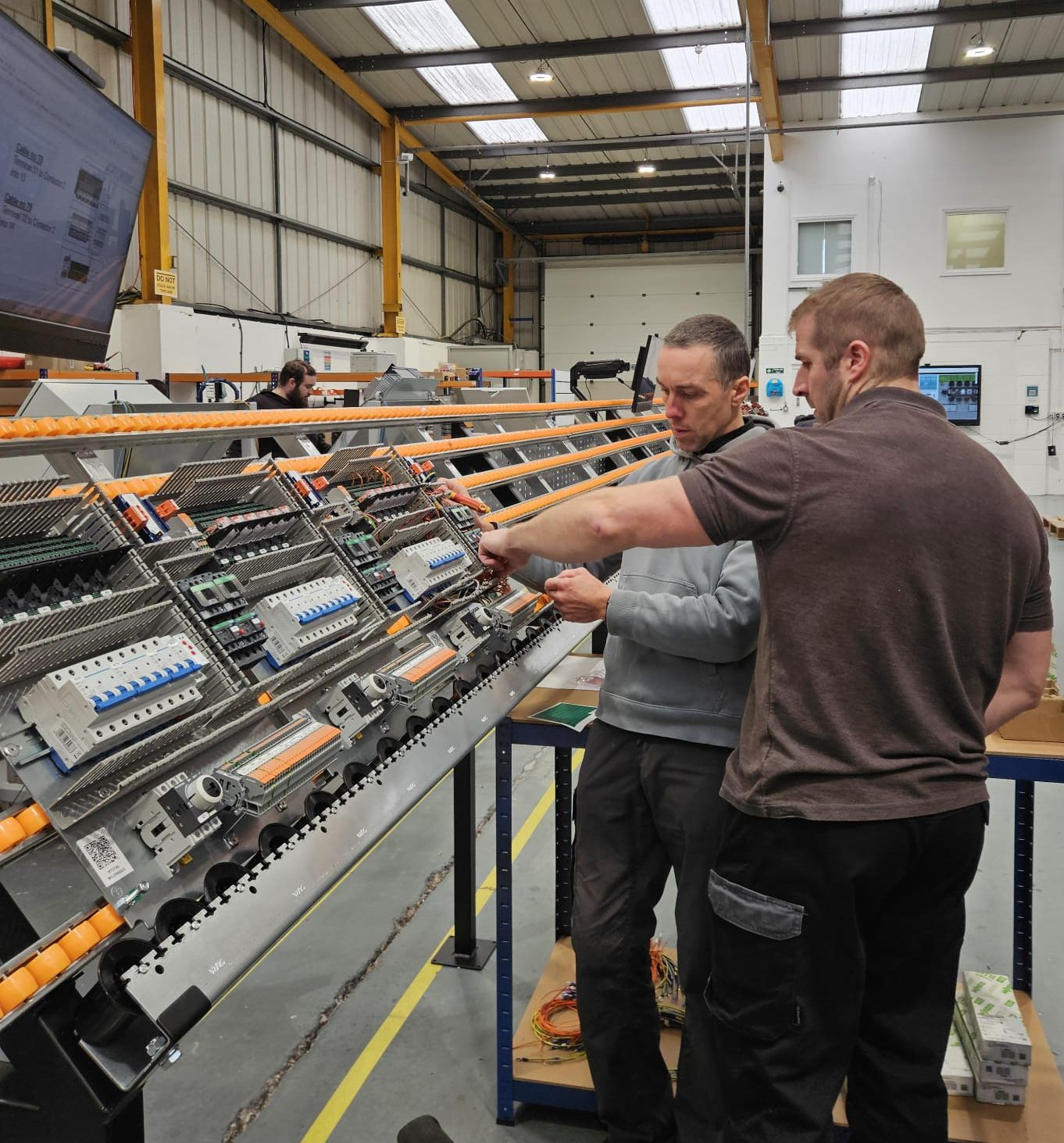
Labour. A panel wirer who builds the same base every day builds it faster and with fewer errors than one who reads a new drawing each time. On a repeat panel, programming and drawing time is nil: the drawing exists, the test sheet exists, the labels are printed from the code.
Lead time. Base panels can be built ahead and held, with option blocks fitted on call-off. The panel that used to be four weeks becomes days.
Errors. Every variant shares the tested wiring of the base. A fault fixed once is fixed for the range.
Support. Your engineers and your customers' engineers learn one panel. The manual is one manual.
Across the ranges we have moved to a platform, the saving on the panel itself is typically 20 to 30 per cent, and the lead time drops from weeks to days for the standard configurations. Cutting BMS panel build times by 50 per cent describes the same idea applied to building controls.
How to move a range across
- Lay out what you have. Every panel drawing currently in use, side by side. This is usually the moment the duplication becomes obvious.
- Find the base. What is common to all of them? That is the platform. What differs is a candidate for an option block or for removal.
- Decide the blocks. Each real variation becomes a block with a code. Variations that exist because a customer once asked and never asked again do not.
- Design the base and the blocks once, on the components you want to standardise on, with room for the blocks in the enclosure.
- Build a pilot of the most common configuration and put it through your own test and your customer's first install.
- Switch new orders to the platform while the old drawings run out. You do not have to stop production to change.
- Fix the price per code. Because the panel is repeatable, the price can be fixed per configuration and held across the programme, which is how we price volume production.
What we need from you
The drawings you have, the volume you expect (panels per month, and how steady it is), the products the panels go into, and any documentation, labelling or branding the panel has to carry. From that we propose a platform, the option blocks and a fixed unit price for each, and we will usually suggest you come and see the factory in Stoke-on-Trent before you commit. OEM control panels has the detail on how we work with equipment makers, from five panels a month to two hundred.
Frequently asked questions
Does standardising mean my customers lose choice?
No. The option blocks are the choice, offered deliberately rather than by accident. What goes is the variation nobody asked for.
What volume makes a platform worth doing?
From about five panels a month the drawing and labour saving pays for the design work within a year. Above twenty a month it is hard to justify not doing it.
Can a platform include bespoke panels?
Yes. A platform covers the standard 80 or 90 per cent; the genuinely unusual order is drawn individually, on the same components and conventions, so it still looks and behaves like the rest of the range.
Who owns the design?
You do. The platform is designed for your products; the drawings are yours and can go with you. We would rather keep you by being good to work with.
Written by the engineers at G&G Controls, a UK control panel manufacturer in Stoke-on-Trent. For general guidance only; consult a qualified professional for advice on your own installation.
Up next
G&G Controls Live: the Ask the Experts session
Our open question-and-answer session on pump controls, held in March 2025: what we covered, where the answers were written up, and how to come to the next one.