UKCA and CE marking on control panels: where things stand
By Tristan Newton, Commercial Director · 10 July 2026 · 4 min read
Since Brexit there have been two conformity marks in the UK, and the rules about which one a control panel needs have changed more than once. Here is where things stand, what sits behind the mark, and what a buyer should actually check. This is the position as we understand it in 2026; the government's guidance on gov.uk is the authority, and it has moved before.
The short version
- In Great Britain, a control panel can carry the UKCA mark or the CE mark. The government has said CE marking will continue to be recognised for most goods, including electrical equipment, indefinitely.
- In Northern Ireland, which follows EU rules for goods, the CE mark is required (or CE plus UKNI in specific cases).
- For the EU, the CE mark is required. UKCA has no standing there.
- Either way, the mark is the manufacturer's claim. What matters is the Declaration of Conformity behind it and the standards the panel was built to.
What the mark means
A conformity mark is not a quality mark and nobody inspects the panel to award it. It is the manufacturer's own declaration that the product meets the regulations that apply to it, and that they hold the evidence. For a control panel the regulations are:
- The Electrical Equipment (Safety) Regulations 2016 (the UK form of the Low Voltage Directive): the panel is safe to use at its rated voltage.
- The Electromagnetic Compatibility Regulations 2016 (the EMC Directive): it neither emits nor is upset by interference beyond the limits.
- The Supply of Machinery (Safety) Regulations 2008 (the Machinery Directive) where the panel is supplied as part of a machine or forms the control system of one.
The way a manufacturer shows compliance is by building to the harmonised (designated) standards: BS EN 61439-2 for the assembly and BS EN 60204-1 for the electrical equipment of machines, plus the EMC standards for the components inside. BS EN 61439-2 for panel buyers covers what the assembly standard involves.
The Declaration of Conformity
This is the document that matters. It should state:
- the manufacturer's name and address;
- what the product is, well enough to identify it (a model, a range, a serial number);
- the regulations it complies with;
- the standards applied;
- who signed it, and when.
If you are asked for evidence of compliance on a project, the Declaration of Conformity and the test certificate for the individual panel are what you hand over. What a control panel test certificate should include.
UKCA or CE: which should you ask for?
For a panel installed in Great Britain, either is acceptable, and the practical answer is not to worry which. Ask instead:
- Is there a Declaration of Conformity, and what standards does it cite?
- Was the panel built and routine tested to BS EN 61439-2?
- Does the panel carry a rating plate with the manufacturer's name, the ratings and the mark?
For a panel going to Northern Ireland or the EU, specify CE marking at the outset.
Made in Britain
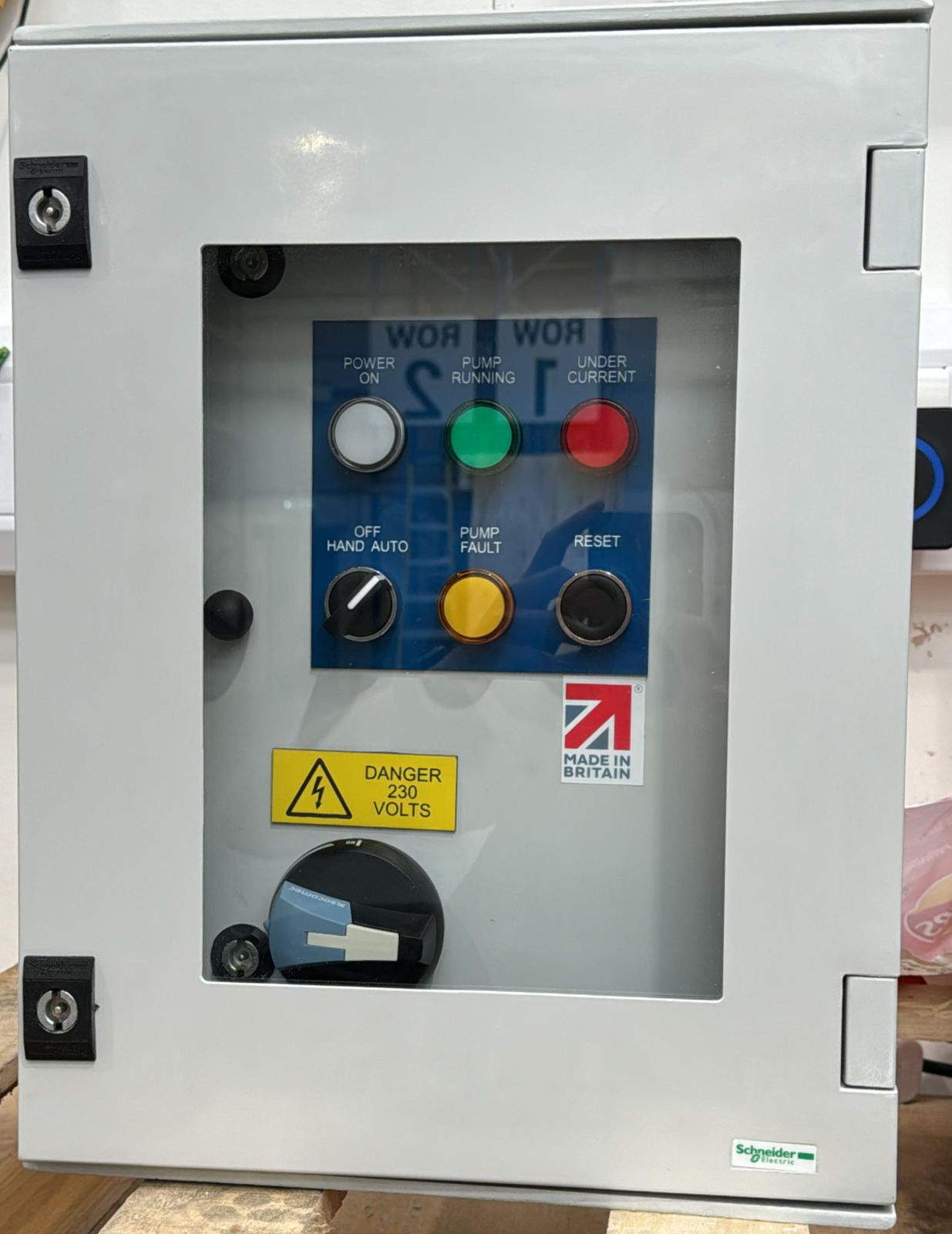
A separate thing entirely: the Made in Britain mark is a membership scheme for UK manufacturers, and it is on our panels because they are designed and built in Stoke-on-Trent. It says where the panel was made; it is not a conformity mark and does not replace one.
What we do
Every G&G panel is built and tested to BS EN 61439 and BS EN 60204-1 and is covered by our Declaration of Conformity. Copies are available on request against the panel serial number. Standards and compliance lists what we build to.
Frequently asked questions
Do I need UKCA marking on a control panel in the UK?
Not necessarily. CE marking continues to be recognised in Great Britain for electrical equipment, so a CE-marked panel is acceptable. UKCA is also valid. Northern Ireland requires CE.
Can a panel carry both marks?
Yes, and many do, so that the same product can be supplied to Great Britain, Northern Ireland and the EU.
Does the installer or the end user need to do anything?
No. The marking and the declaration are the manufacturer's responsibility. The installer's responsibility is the installation, to BS 7671, and any site modification to the panel becomes theirs to justify.
Who is the manufacturer if a panel builder assembles other people's components?
The panel builder. Assembling switchgear into an enclosure creates a new product, the assembly, and whoever does that is its manufacturer for the purposes of the regulations, with their own declaration to make. The component makers' declarations cover the components only.
Written by the engineers at G&G Controls, a UK control panel manufacturer in Stoke-on-Trent. For general guidance only; consult a qualified professional for advice on your own installation.
Up next
What a control panel test certificate should include, and what to ask for
Every panel should leave the factory with a test certificate. Here is what a proper one records, what the tests mean, and the questions to ask a panel builder before you order.