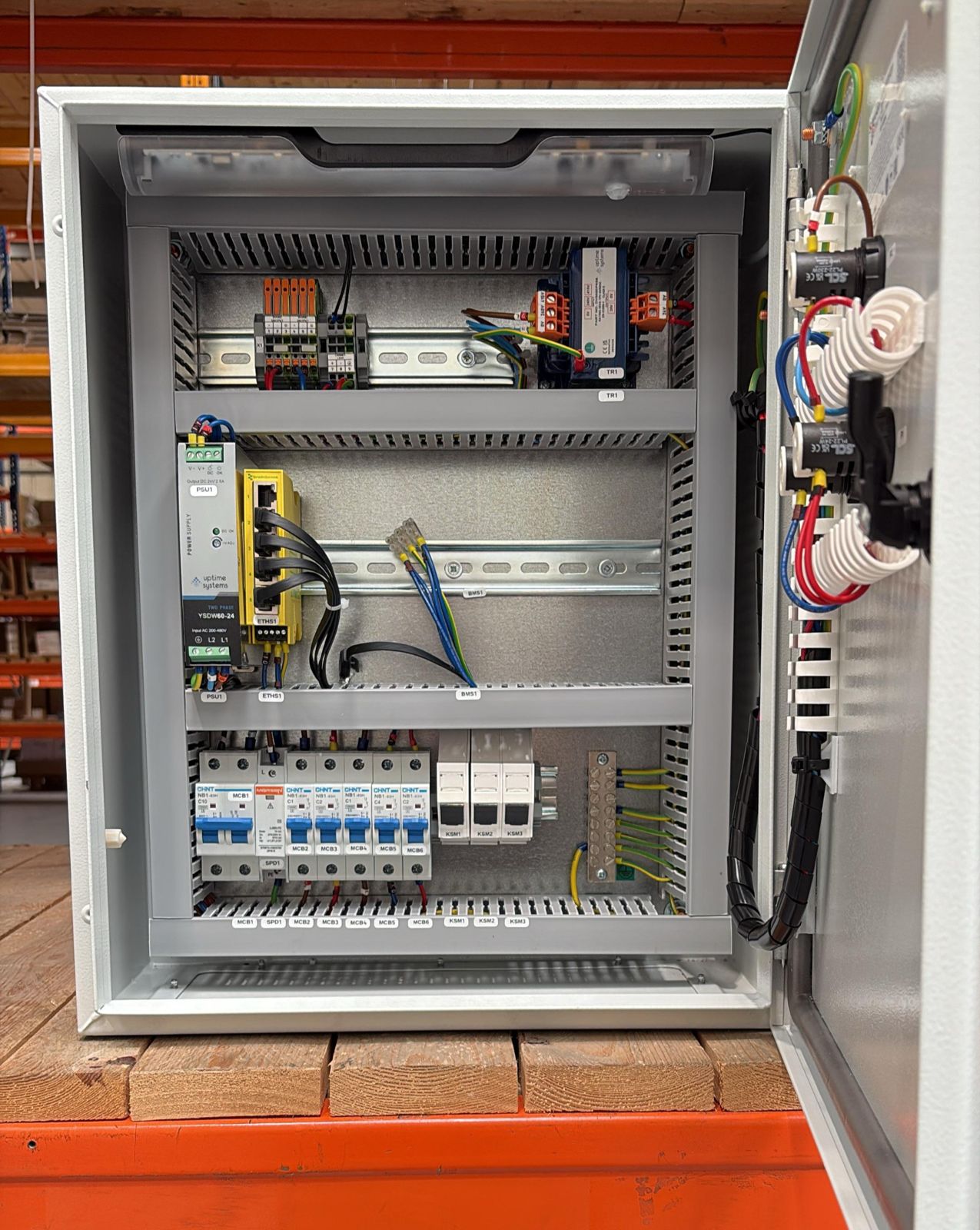
What a control panel test certificate should include, and what to ask for
By Tristan Newton, Commercial Director · 3 July 2026 · 4 min read
Every control panel should leave the factory with a test certificate, and every G&G panel does, inside the door with its wiring diagram. But a certificate is only useful if you know what should be on it. Here is what a proper one records, what each test proves, and how to tell a real routine test from a tick-box.
Why there is a certificate at all
BS EN 61439-2, the standard control panels are built to, requires routine verification of every assembly: a set of checks that this particular panel was built as designed and is safe to energise. The certificate is the record of that verification. BS EN 61439-2 for panel buyers explains where it sits in the standard.
It is also the document that lets an installer energise the panel with confidence, an inspector sign off the installation, and, years later, an engineer know what the panel was when it was new.
What should be on it
Identification
- The panel's serial number, and the drawing number it was built to.
- The customer, the project or site, and the date.
- The rated voltage, current and short-circuit withstand, matching the rating plate.
- The standards: BS EN 61439-2, and BS EN 60204-1 for a panel controlling machinery.
Visual and mechanical checks
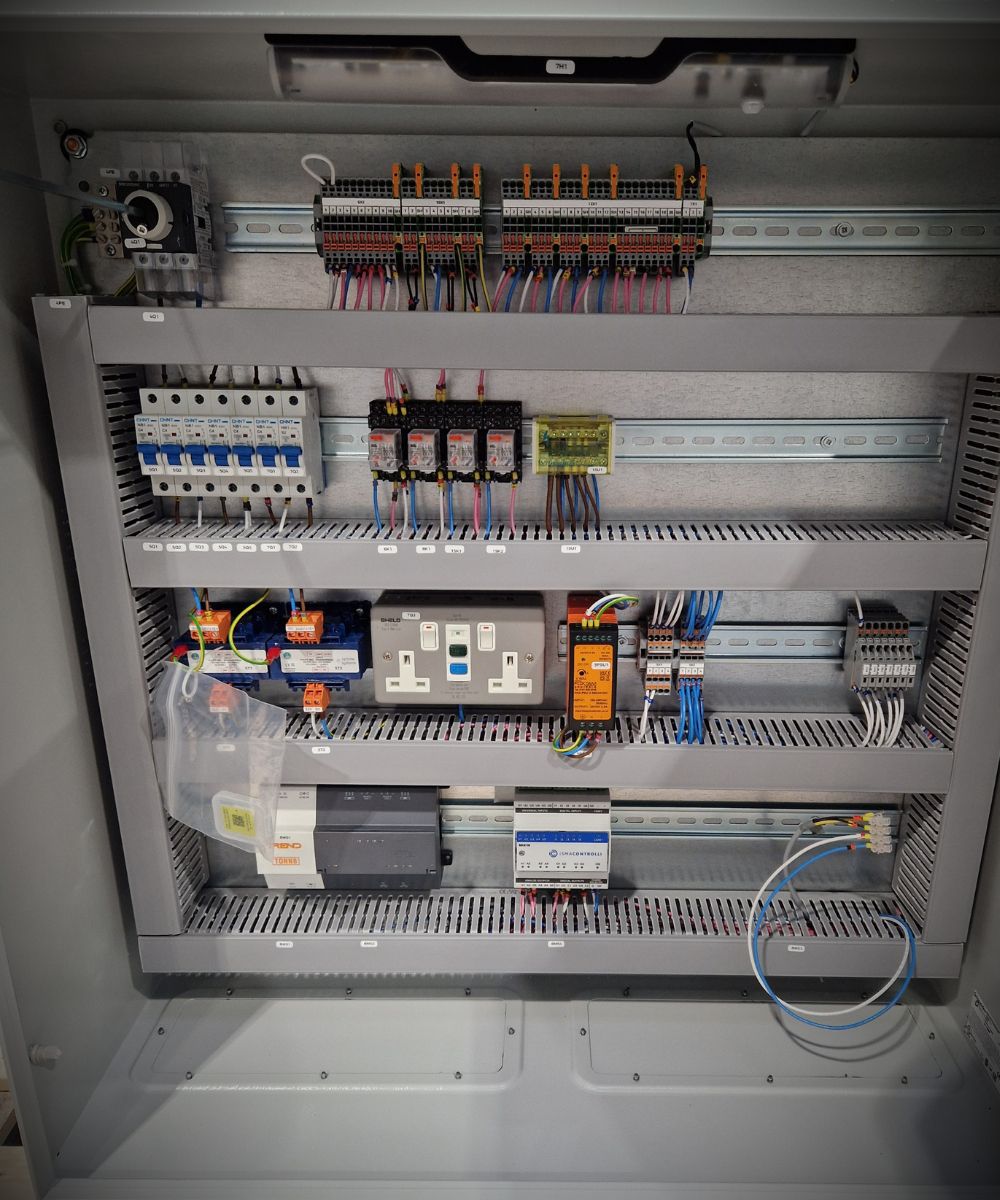
- Built to drawing: components, ratings and wiring match the diagram. The drawing supplied is an as-built, not a design intent.
- Enclosure: correct type and IP rating, glands and blanking plugs fitted, door seal intact, cut-outs sealed. IP ratings explained.
- Labelling: circuits, terminals, cables and door components identified to the drawing; warning labels in place.
- Mechanical operation: isolator, door interlock, switches and pushbuttons operate correctly.
- Terminations: connections torqued; a tug test on every cable.
- Clearances and creepage: live parts adequately spaced from each other and from earth.
Electrical tests
- Protective circuit continuity: the earth path from the main earth terminal to every exposed conductive part is continuous and of low resistance. This is the test that proves a fault will trip the protection rather than make the door live.
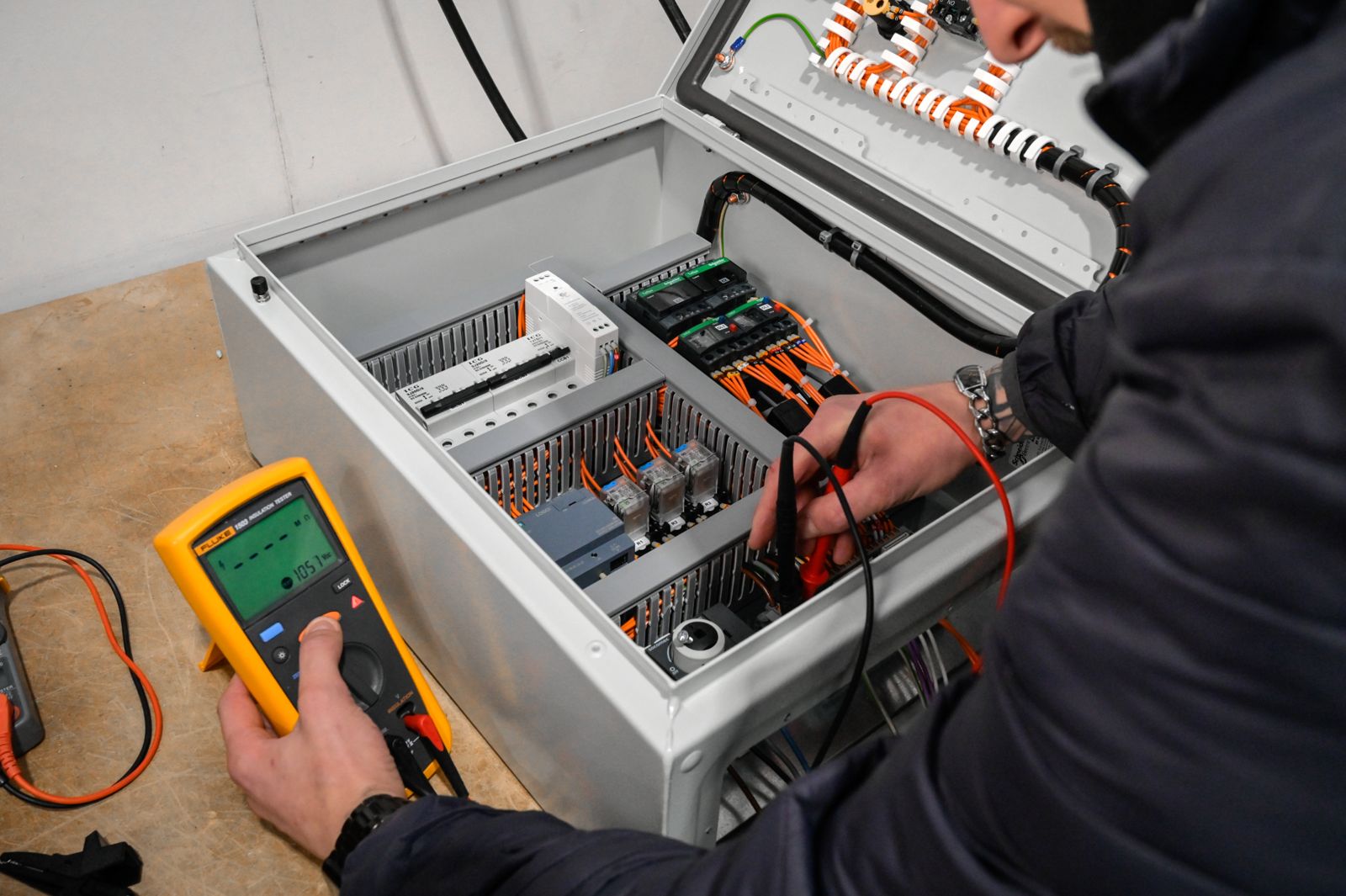
- Insulation resistance: measured at 500V DC between live conductors and earth, with a minimum value per circuit (the standard sets it at 1000 ohms per volt of rated voltage). A low reading means damaged insulation or a wiring error, and the panel does not ship until it is found. For larger assemblies, a power-frequency withstand (flash) test is applied instead.
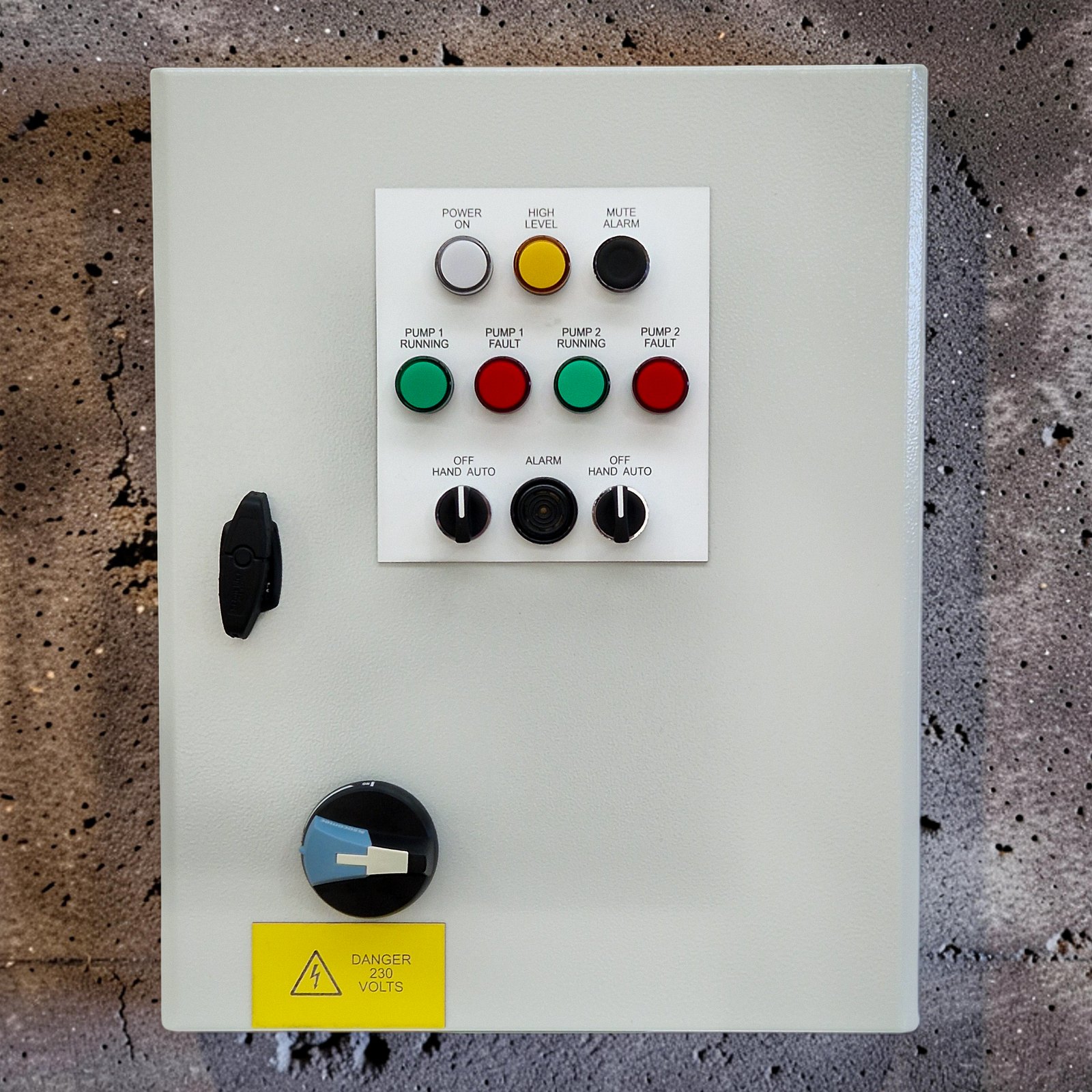
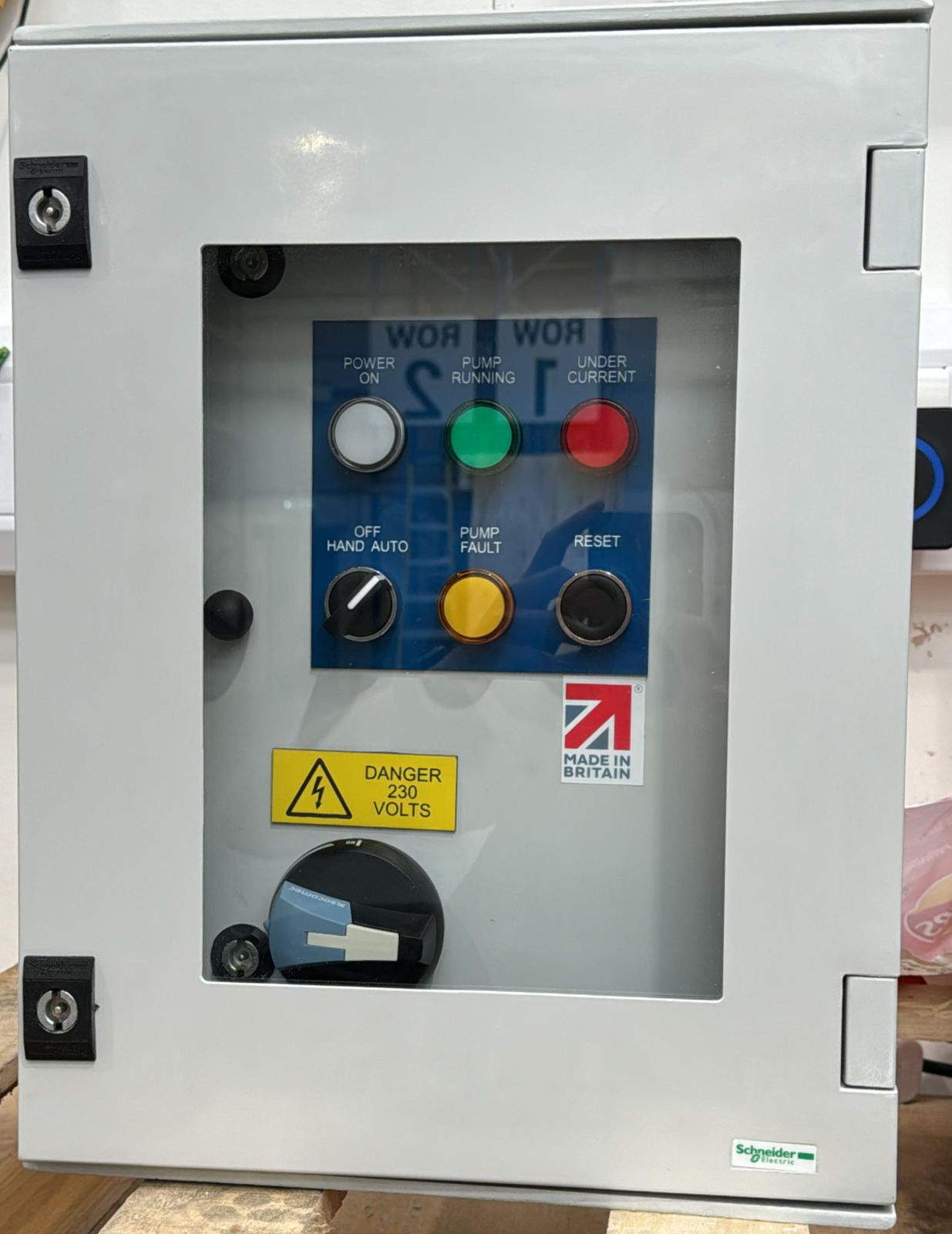
- Functional test: the panel is powered and operated through every function. For a pump panel that means each pump in hand and auto, the floats simulated one by one through stop, start, assist and high level, the duty changeover, the alarm and mute, the trip and reset for each pump. For a BMS panel, every output and input exercised against the schedule.
- Settings recorded: overload settings, timer settings, any parameters entered into a drive or a controller.
Sign-off
The name of the person who tested it, their signature, and the date. If you cannot see who tested your panel, ask why.
What a poor certificate looks like
A single page of ticks with no values on it. No serial number. No insulation resistance reading, just "pass". No record of which functions were exercised. A signature block with no name. A certificate that could have been printed for any panel is not evidence that this one was tested.
What to ask a panel builder
- Do you routine test every panel, and can I see an example certificate?
- What insulation resistance value do you record, and what do you do with a low one?
- Is the functional test done with the panel powered, with inputs simulated?
- Does the certificate travel with the panel, and is a copy kept?
- Does the panel carry a serial number that ties it to the certificate and the drawing?
What we do
Every panel we build is tested on the bench, powered, before it is packed: built-to-drawing, earth continuity, insulation resistance, and a full functional test with the inputs simulated. Overload and timer settings are recorded. The certificate, the as-built wiring diagram and the serial number go inside the door, and we keep a copy against the serial number, so if a panel comes back or an engineer rings from site ten years on, we can see exactly what it was.
Testing is part of the same standard line as the build: the same tester, the same checklist, every panel.
Frequently asked questions
Is a test certificate the same as a Declaration of Conformity?
No. The test certificate records the routine tests on the individual panel. The Declaration of Conformity is the manufacturer's legal statement that the product meets the applicable regulations, and is issued for the product type. A panel should have both. UKCA and CE marking covers the declaration.
Do I need to test the panel again on site?
The installation has to be inspected and tested to BS 7671 before it is energised, which includes the circuits feeding and leaving the panel. The panel's own routine test does not need repeating, but the installer's insulation resistance test will include the panel wiring, so a panel with a good certificate makes their job easier.
What if the certificate is missing?
Ask the manufacturer for a copy against the serial number. If there is no serial number and no manufacturer, treat the panel as untested and have a competent person inspect and test it before energising.
How long should a panel builder keep test records?
There is no fixed period in the standard, but a good builder keeps them for the life of the product. We keep ours against the serial number indefinitely.
Written by the engineers at G&G Controls, a UK control panel manufacturer in Stoke-on-Trent. For general guidance only; consult a qualified professional for advice on your own installation.
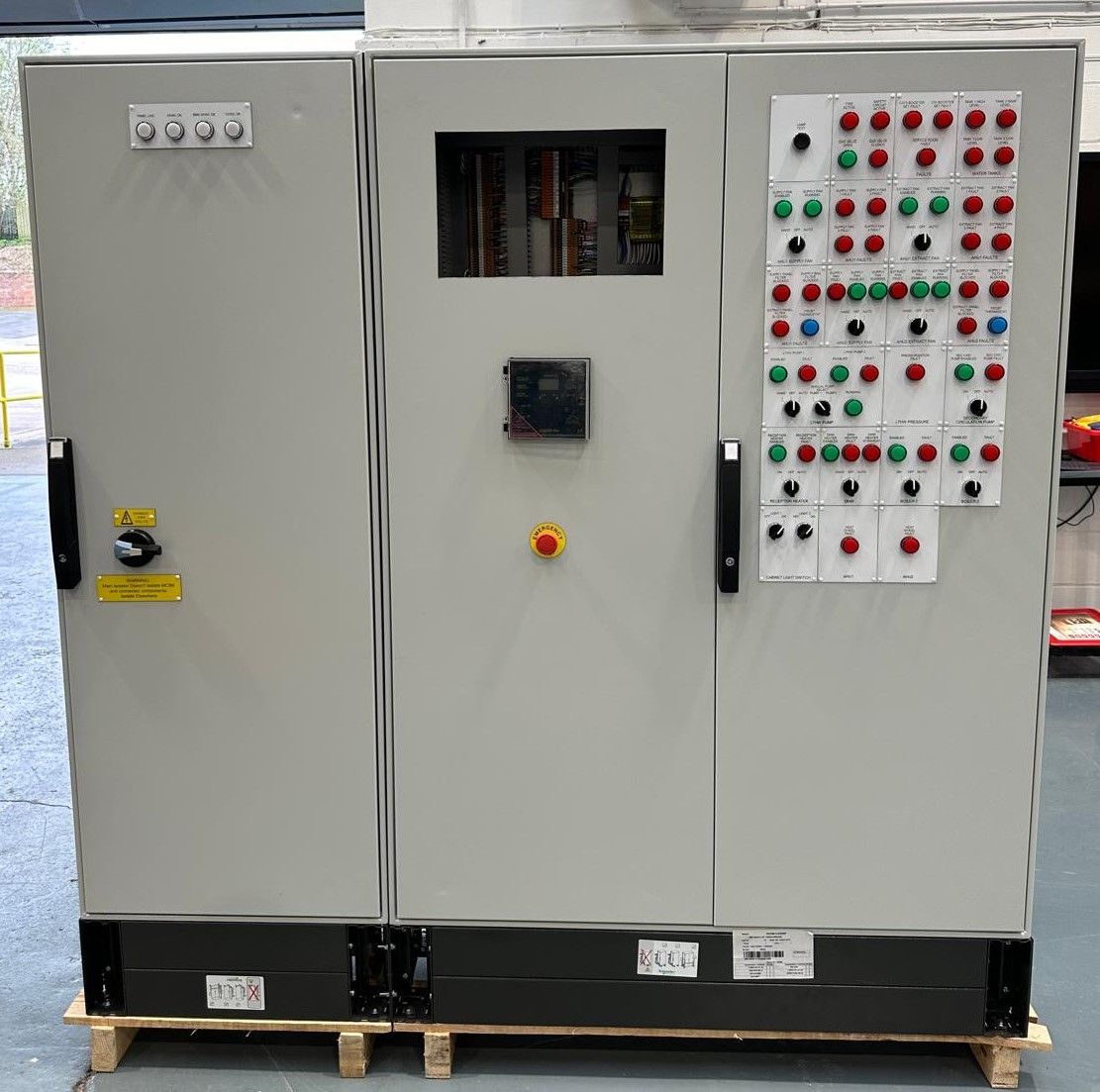
Up next
BS EN 61439-2 for panel buyers: what the certificate covers, and what it doesn't
The standard every UK control panel should be built to, explained for the person buying the panel rather than building it. Design verification, routine verification, Forms, and the questions to ask.