Skip to content
G&G Controls, The Panel People
Panel build and standards

What Isolators actually do (and installers don't know!)

By Tristan Newton, Commercial Director · 8 March 2024 · 2 min read
What Isolators actually do (and installers don't know!)

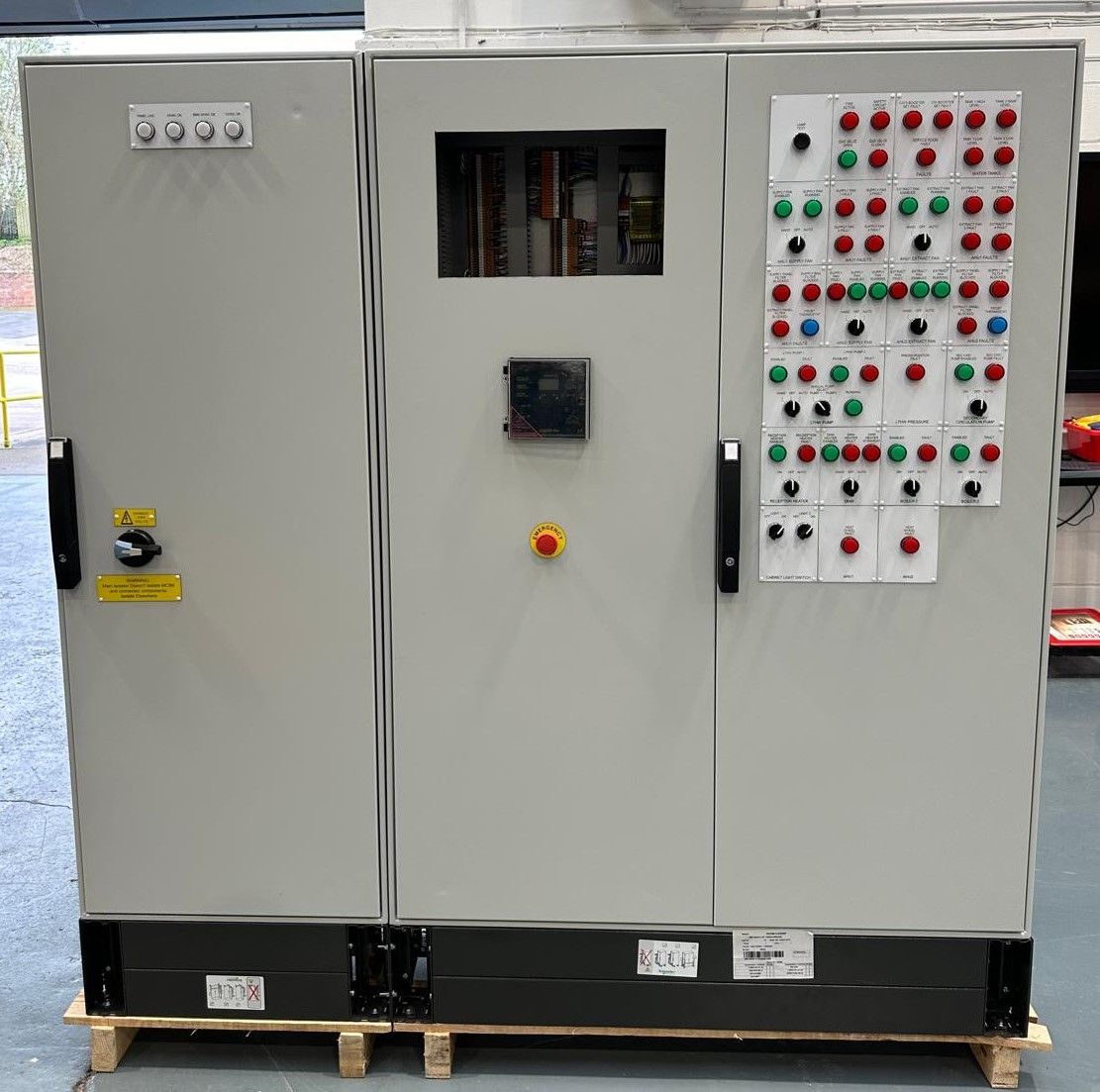
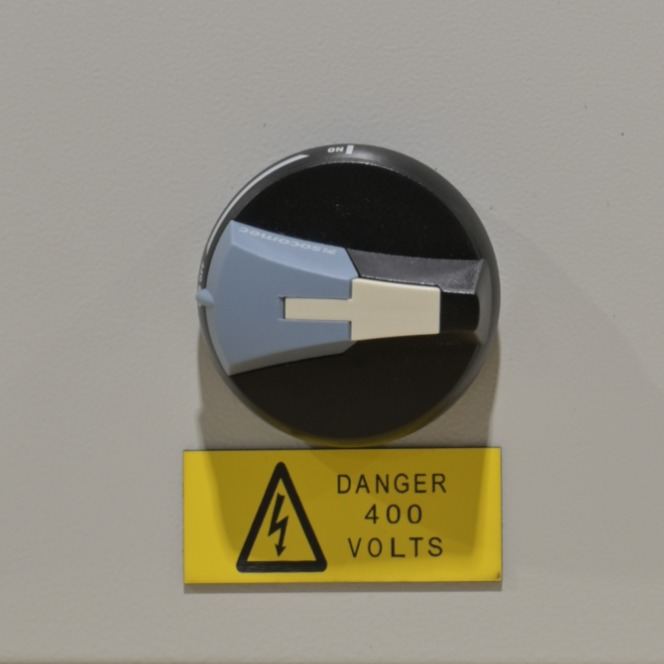
This is the isolator on a control panel:

Socomec rotary isolator handle on a panel door above a Danger 400 Volts warning label

Specifically, it's a Socomec one. You turn it off to cut power to the panel. So far so good.

So here's where we start changing things up a bit. It's not the isolator - that's the isolator handle. It's not isolating the power, it's just the handle that turns the isolator inside the panel. The isolator handle is connected to the interlocking isolator shaft which goes into the actual isolator itself which is mounted on the DIN rail (in 99% of cases - sometimes it's on the door itself). This is the shaft that stops the door opening when the isolator is turned on.

HOT TIP - most isolator handles have a small 'defeat' button underneath allowing you to open the panel without isolating the power. Warning: this is dangerous, follow all required procedures for safe work on a live panel. Electric shocks can kill.

The isolator itself is usually at least '3 pole', which allows for isolating three separate cables. One single phase panels that leaves a spare pole, but three phase panels with a neutral need a 4-pole isolator - this can be done as a separate pole bolted on the side of the isolator. Often this can be done as a fixed neutral link which isn't disconnected when the isolator is turned off. And then there's 6-pole or 8-pole isolators, which are used for panels with two incoming power supplies such as with a separate generator inlet. Lastly there may be an auxiliary contact, which is rated to a lower full load current than the main isolator and is just used for control signals (eg. to tell a master panel that a slave panel has it's isolator turned on or off).

The isolator is where incoming power connects to In form 1 panels (put simply, panels in one enclosure) there is one isolator that isolates the whole panel, however on form 4 panels (with individual sections for each circuit) there will be an individual isolator for each section of the panel.

An often overlooked fact is that the isolator has a maximum current rating and it's important that the MCB/fuse on the supply to the panel is no greater than the isolator rating.

When a panel is turned off there is one part of the panel still live - the incoming power that connects to the isolator. To improve the safety of these connections for anyone working on the panel, we now fit isolator shrouds which is a small plastic cover over the terminals.

We listen to feedback from engineers and constantly tweak our panels to improve them. Probably the most basic but brilliant update we've done recently - isolator shaft guides. Just a simple cone on the back of the door to help locate the shaft into the handle to allow you to shut the door more easily

Written by the engineers at G&G Controls, a UK control panel manufacturer in Stoke-on-Trent. For general guidance only; consult a qualified professional for advice on your own installation.
Up next

Do control panel enclosures need to be metal? The law.

There's rarely a yes or no answer when it comes to electrical regulations! But in this post we try and get as close to a definitive answer as possible. Let's start with the relevant regulations, which are from the Electr
Related panel

If this article is about a problem you have on site, this is the panel we would suggest.

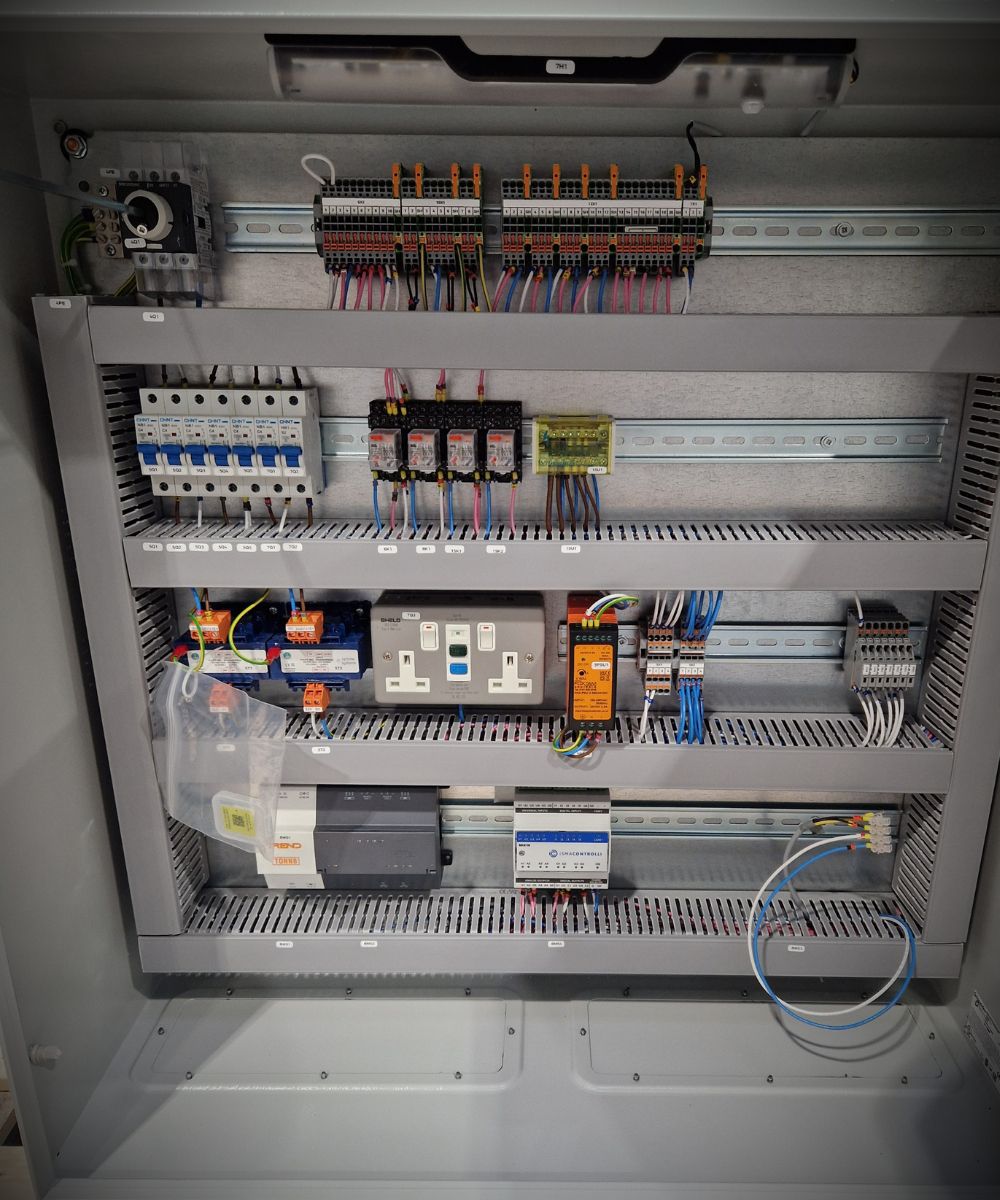
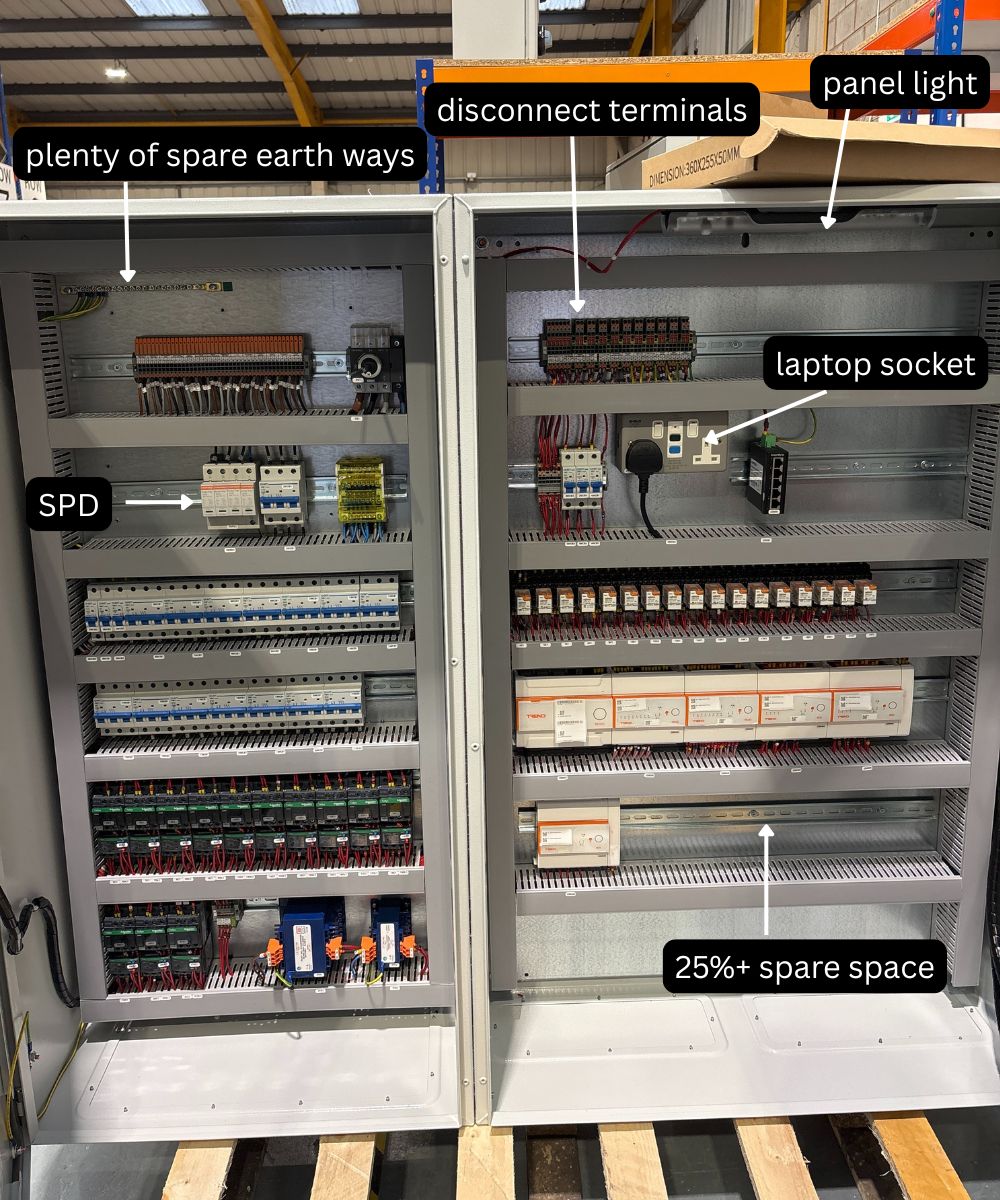
BMS control panel internals annotated: spare earth ways, disconnect terminals, panel light, laptop socket, surge protection and 25% spare space

Building management systems

BMS control panels

From a points list to a tested, documented panel. We build for BMS integrators every day and understand what site teams need.

Priced per panel from the points list.

Ask an engineer

A question about this article or a panel for your site. We reply during working hours.

Or call 01782 280577

What happens next. Drawings from a points list in 2 working days. Evometrix panels in 10 to 20 working days. We reply during working hours, Monday to Friday, 7am to 4.30pm.

Your details go to our sales team by email and are used only to answer this enquiry. No mailing list, nothing shared. Privacy policy.

More on panel build and standards

UKCA and CE marking on control panels: where things stand

UKCA and CE marking on control panels: where things stand

Which mark a control panel sold in Great Britain and Northern Ireland needs, which regulations sit behind it, what the Declaration of Conformity is, and what a buyer should check.

10 July 2026 · 4 min read

What a control panel test certificate should include, and what to ask for

What a control panel test certificate should include, and what to ask for

Every panel should leave the factory with a test certificate. Here is what a proper one records, what the tests mean, and the questions to ask a panel builder before you order.

3 July 2026 · 4 min read

BS EN 61439-2 for panel buyers: what the certificate covers, and what it doesn't

BS EN 61439-2 for panel buyers: what the certificate covers, and what it doesn't

The standard every UK control panel should be built to, explained for the person buying the panel rather than building it. Design verification, routine verification, Forms, and the questions to ask.

26 June 2026 · 5 min read

Latest from the knowledge hub

Standardising a control panel platform: how OEMs take cost and lead time out
Company and industry

Standardising a control panel platform: how OEMs take cost and lead time out

Equipment makers who order panels every month usually order too many variants. How to design one platform with option blocks, what it saves, and how to move a range across to it.

21 August 2026 · 4 min read

Free-issue controllers: how it works and what we need from you
BMS

Free-issue controllers: how it works and what we need from you

Sending your own Trend, Distech, ISMA or Tridium controllers to be fitted into a panel: what to send, when, how it is labelled and tested, and who is responsible for what.

14 August 2026 · 4 min read

What's inside a BMS outstation panel
BMS

What's inside a BMS outstation panel

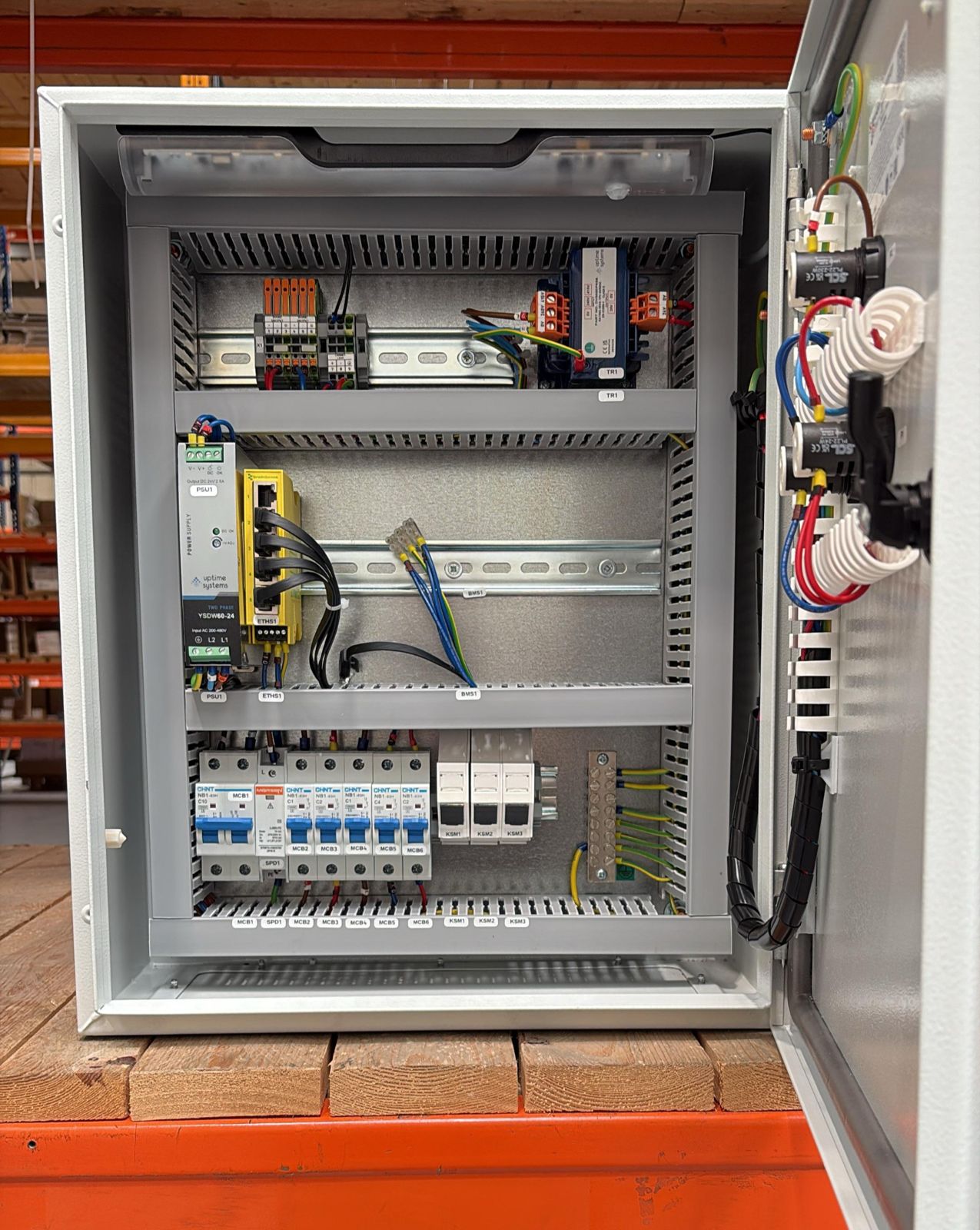
Power supplies, surge protection, a network switch, the controller and the terminals: what each part of a BMS panel does, and why the bits around the controller matter as much as the controller.

7 August 2026 · 4 min read

All 66 articles →