How to specify a pump control panel: the six things we need to quote it
By Tristan Newton, Commercial Director · 1 May 2026 · 4 min read
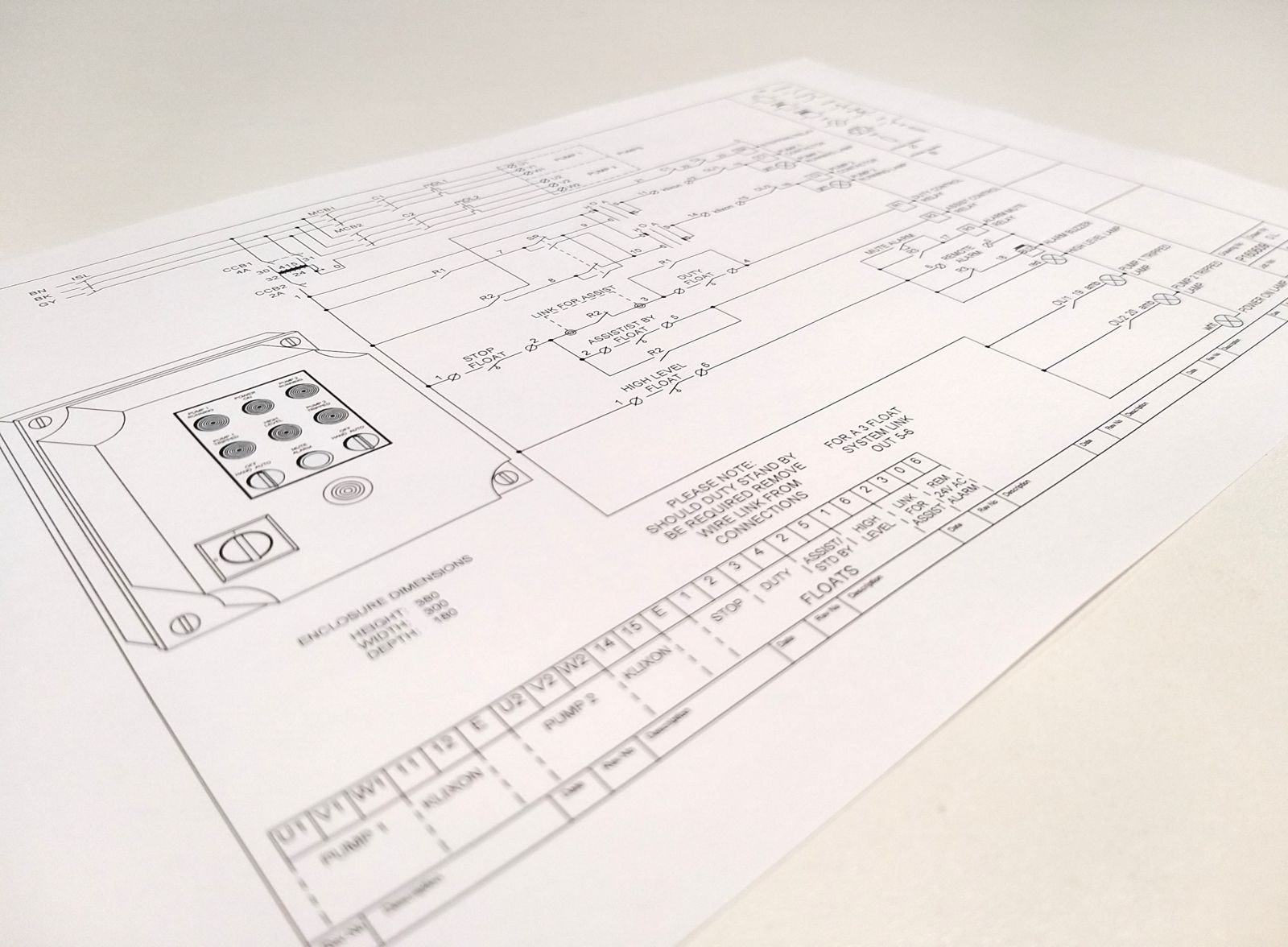
Ask a panel builder for a price with "twin pump panel, 4kW" and you will get a question back. Give them the six things below and you will get a price and a lead time the same working day, and the panel that turns up will be the one the site needed.
This is the list we work through on every pump panel enquiry. None of it is difficult to find; most of it is on the pump datasheet and the site survey.
1. The pumps
How many, and how big. The number of pumps sets the panel size. The motor rating sets the switchgear inside it. We need either the kW rating or, better, the full load current (FLC) from the pump nameplate or datasheet, because two 4kW pumps from different makers can draw different currents.
If you are not sure, what's the full load current of the motor? explains where to find it and what to do when the plate is unreadable.
Single or three phase. A 230V single-phase pump needs a capacitor-start panel; a 400V three-phase pump does not. Most standard panels can be built for either, but it has to be decided before it is built.
2. The supply
What is on site: 230V single phase, 400V three phase with a neutral, or 400V three phase without one. The last case matters because the control circuit needs 230V or 24V from somewhere, and if there is no neutral the panel needs a transformer to make it.
If the supply is not in yet, tell us what has been applied for. A panel built for three phase will not run on a single-phase temporary supply.
3. The starting method
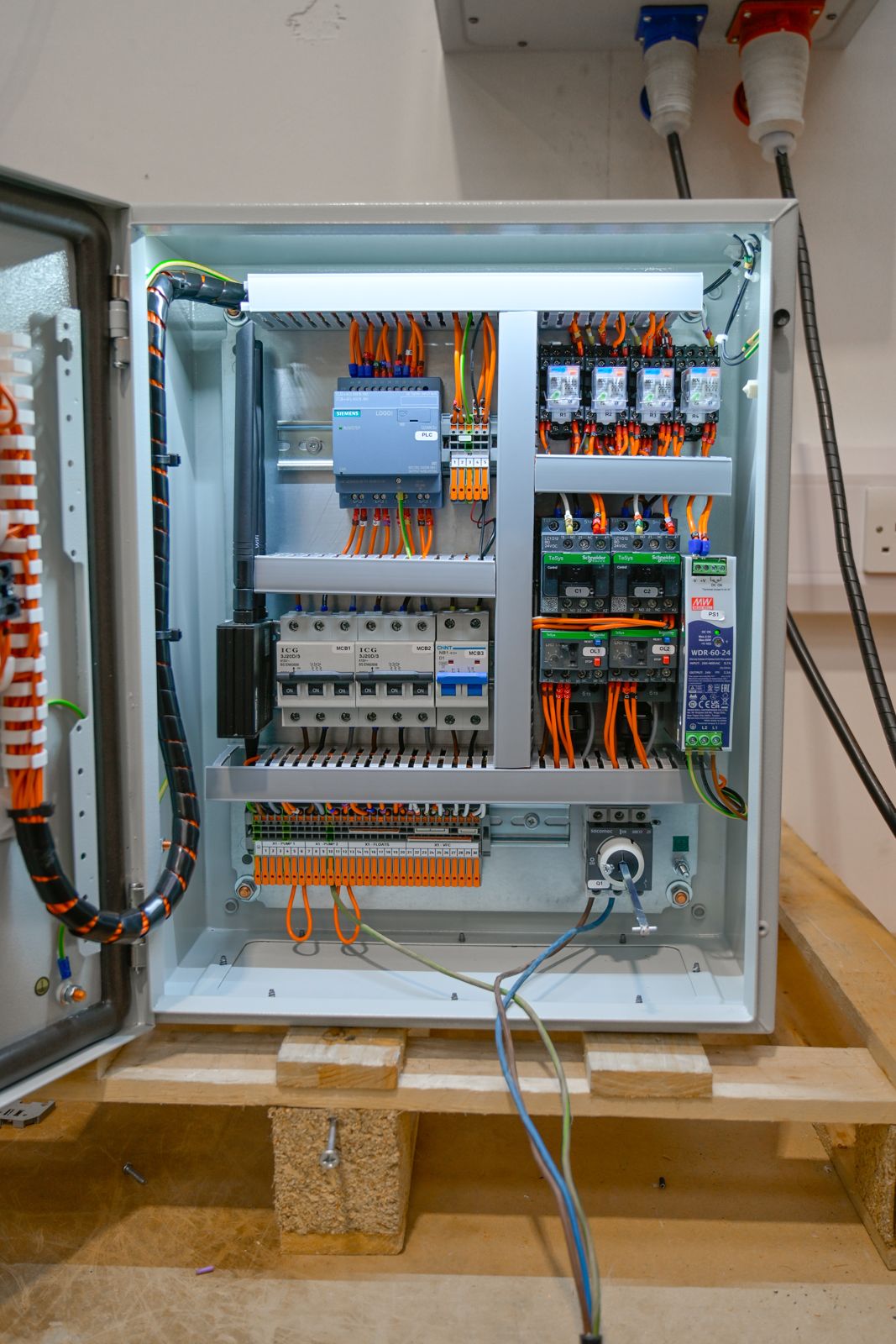
For most wastewater pumps up to about 18A per pump, direct-on-line (DOL) is right and is what stock panels are built for. Above that, or where the supply is limited, star/delta reduces the starting current. Inverters are used where the flow needs to vary, or for booster sets holding a pressure. If you do not know, tell us the pump duty and we will recommend one. Understanding motor starting methods covers the trade-offs.
4. Level control
How the panel will know where the water is:
- Float switches, usually four for a twin pump station: stop, start, assist and high level. Cheapest, and right for most clean stations.
- A 4-20mA sensor, either a hydrostatic probe on the floor of the pit or a radar head above it, into a panel with a level input such as Basix View. Better where floats foul or the chamber is narrow.
- Probes for clean water.
If the chamber is narrow, deep, or carries fat and wipes, say so. It changes the recommendation; our level sensing guide explains why.
5. The enclosure and where it lives
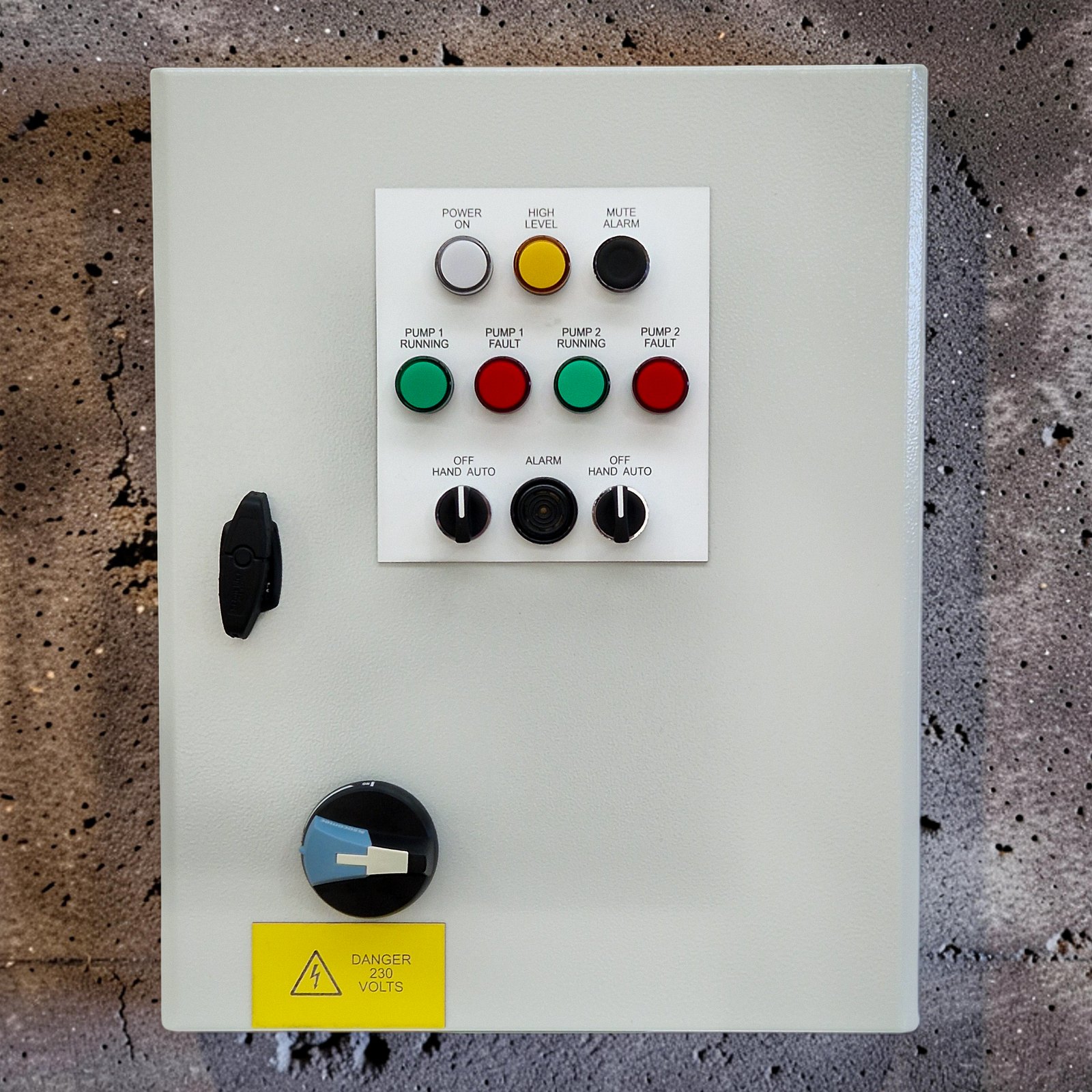
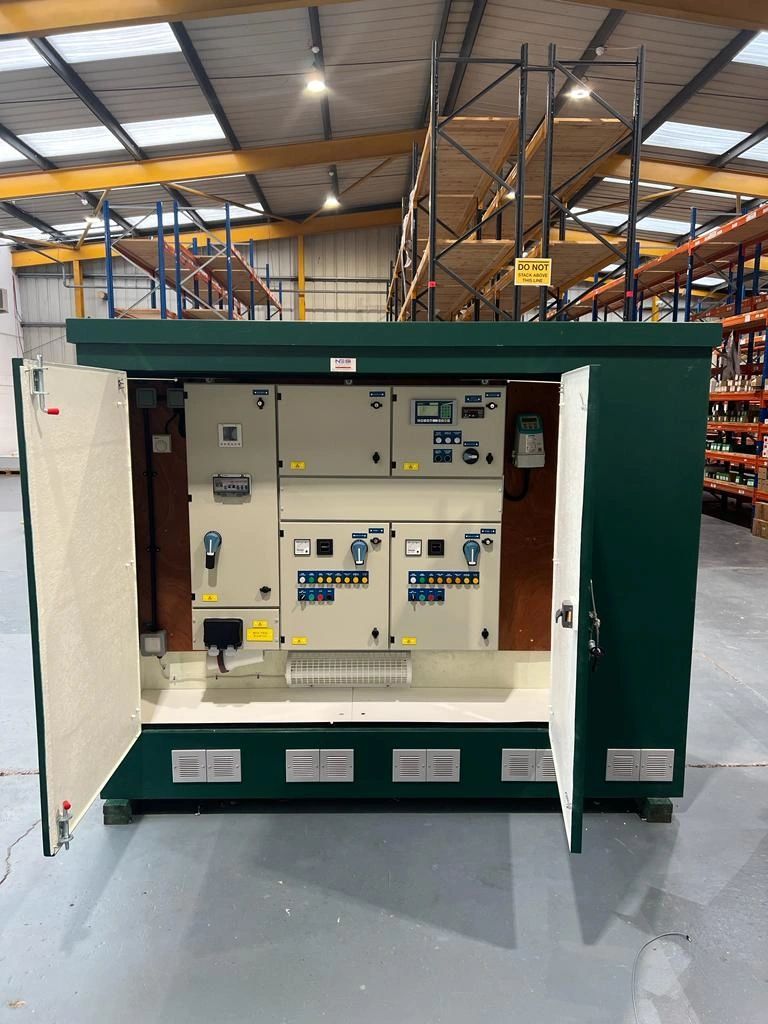
Indoors on a wall, outdoors on a wall, or in a kiosk. Outdoors usually means a GRP kiosk with a light and a heater, or a polyester enclosure. Indoors, a powder-coated steel enclosure is standard. Tell us about anything unusual: a coastal site, a plant room that floods, a wall that is too small for the standard box. Kiosk or wall-mounted? goes through the options.
6. Options and requirements
The extras that change a panel from standard to right for the site:
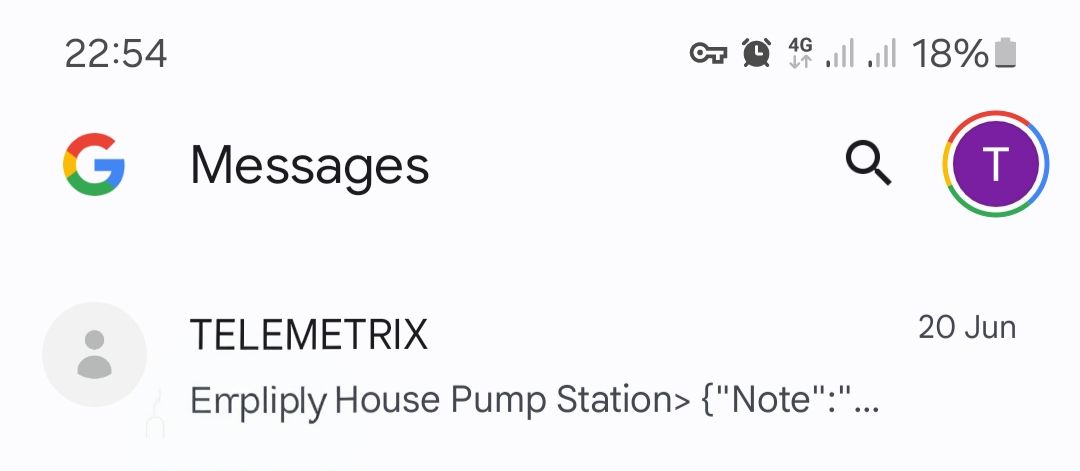
- Remote monitoring: text and email alerts when a pump trips or the level goes high. Telemetrix has this built in.
- A generator inlet, so a portable generator can run the station in a power cut.
- Hours run meters, ammeters, a high level beacon, a battery-backed alarm.
- Volt-free contacts for a BMS or someone else's telemetry.
- ATEX intrinsically safe barriers where the floats are in a hazardous zone. Why sewage pits need ATEX rated equipment.
- Any client or water company specification the panel has to meet, especially for adoptable stations.
What to send us
The pump datasheet, a photo of the site or a drawing if there is one, and the date you need it. That is genuinely all. If you have a specification, attach it; if you have an old panel you are replacing, a photo of its rating plate and the inside of the door tells us most of what we need.
Standard single and twin pump wastewater panels are held in stock for next-day delivery, and the list prices are published on each product page. Anything with options is typically ten working days. Send us the six things and we will come back the same day.
Frequently asked questions
Do I need a drawing before I can get a price?
No. The pump datasheet and a description of the site is enough for a price. We draw the panel once the order is placed, and you approve the drawing before it is built.
What if I only know the pump's kW rating?
That is enough to quote. We will size the overload from the typical full load current for that rating and confirm the exact setting from the nameplate when the pump is known.
Can the same panel run single-phase and three-phase pumps?
Not the standard Basix panel, which is built for one or the other. Telemetrix is the exception: it accepts 230V single phase or 400V three phase with no changes to the panel.
How long does a quote take?
Usually the same working day. Bespoke or adoptable panels with a specification to read can take a little longer.
Written by the engineers at G&G Controls, a UK control panel manufacturer in Stoke-on-Trent. For general guidance only; consult a qualified professional for advice on your own installation.
Up next
Why wastewater pumps should be deliberately over-sized
Controversial view - wastewater pumps should not be sized according to the required flow and pressure. In the world of pump sizing, lots of attention is paid to the required flow and pressure…