Wiring a Basix pump control panel on site: supply, pumps and floats
By Tristan Newton, Commercial Director · 22 May 2026 · 4 min read
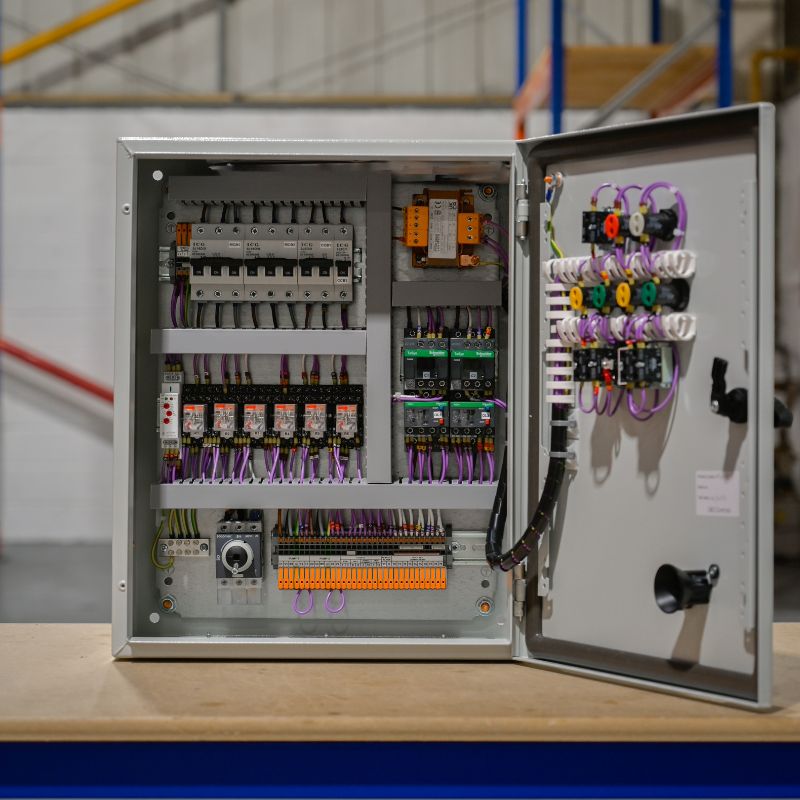
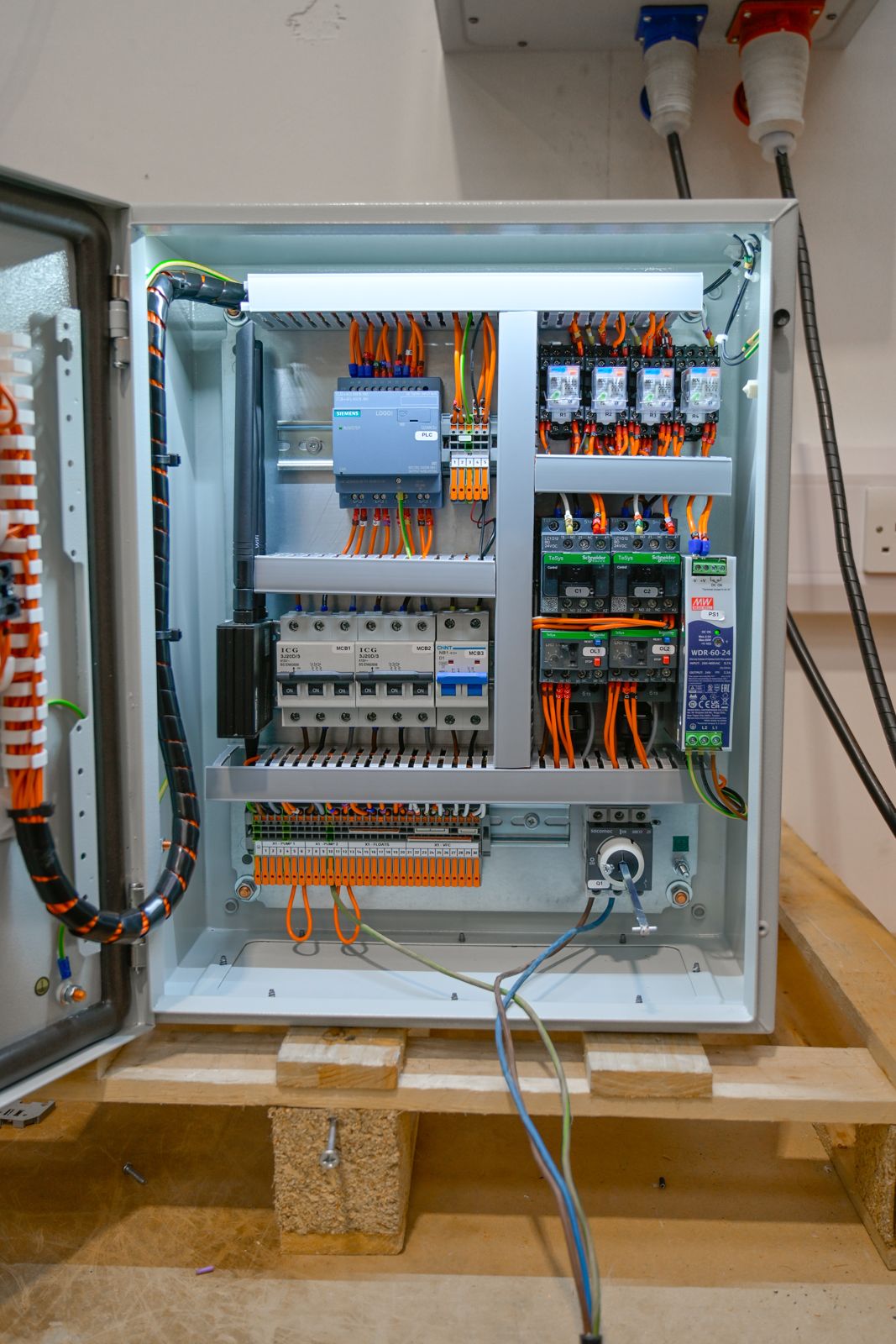
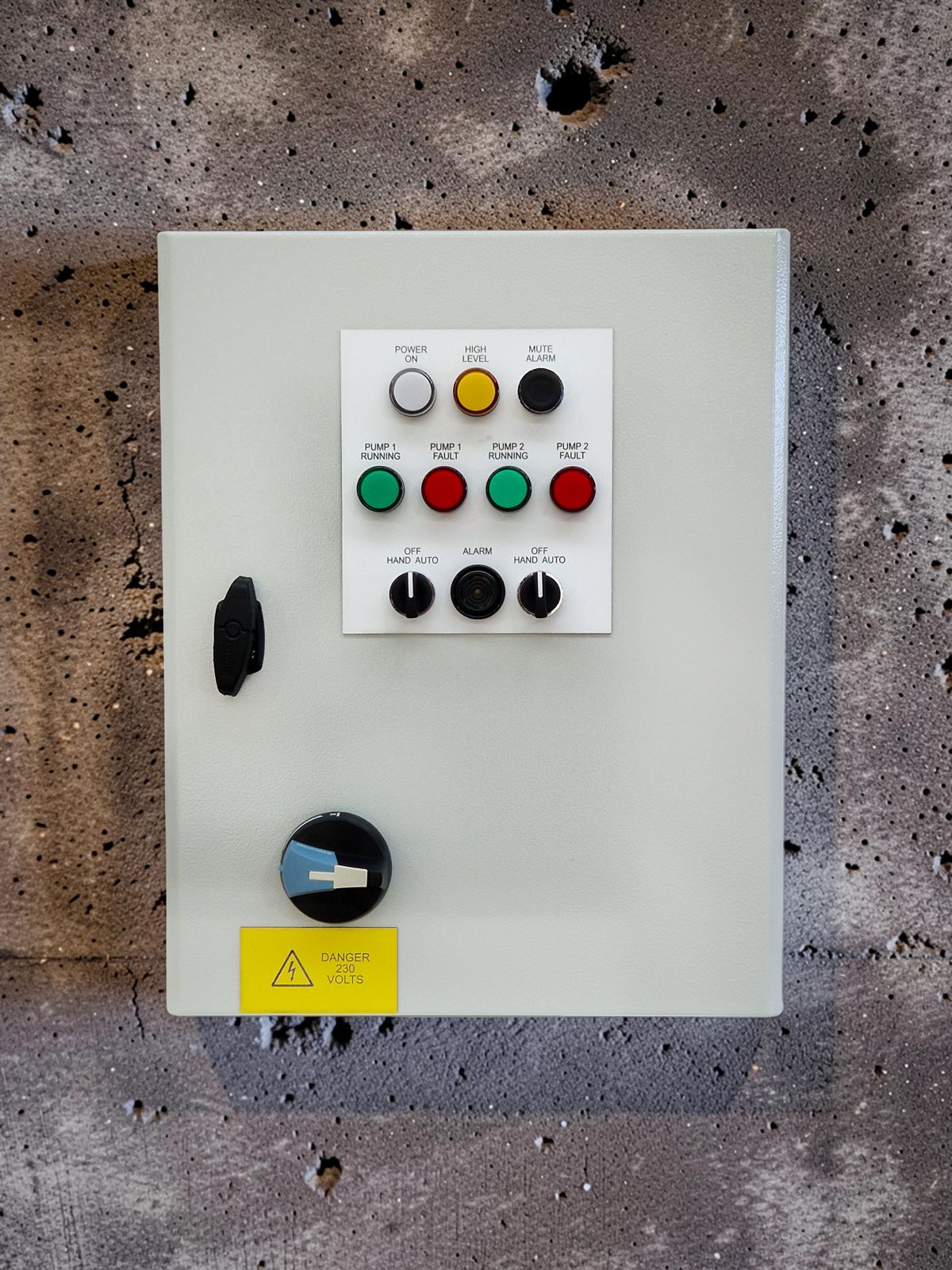
A standard wastewater pump panel has three groups of connections: the incoming supply, the pump cables and the level controls. Get those three right, in that order, and the panel will run first time. This is how we wire a Basix panel on site, and the checks we make before switching on.
First, the safety bit. Only do this if you are competent to work on low-voltage electrical equipment. Isolate and prove dead before you touch anything, and follow your own safe isolation procedure. Every G&G panel ships with its own wiring diagram and test certificate inside the door: the diagram supplied with the panel takes precedence over anything general written here. Terminal numbers below are typical, not a substitute for the drawing.
Before you start
- Check the panel rating plate matches the pumps: number of pumps, single or three phase, and the current range of the overloads.
- Check the enclosure is fixed level, that gland plate entries are at the bottom, and that no cable will enter from the top where water can track in.
- Read the diagram. Two minutes now saves an hour later.
1. The incoming supply
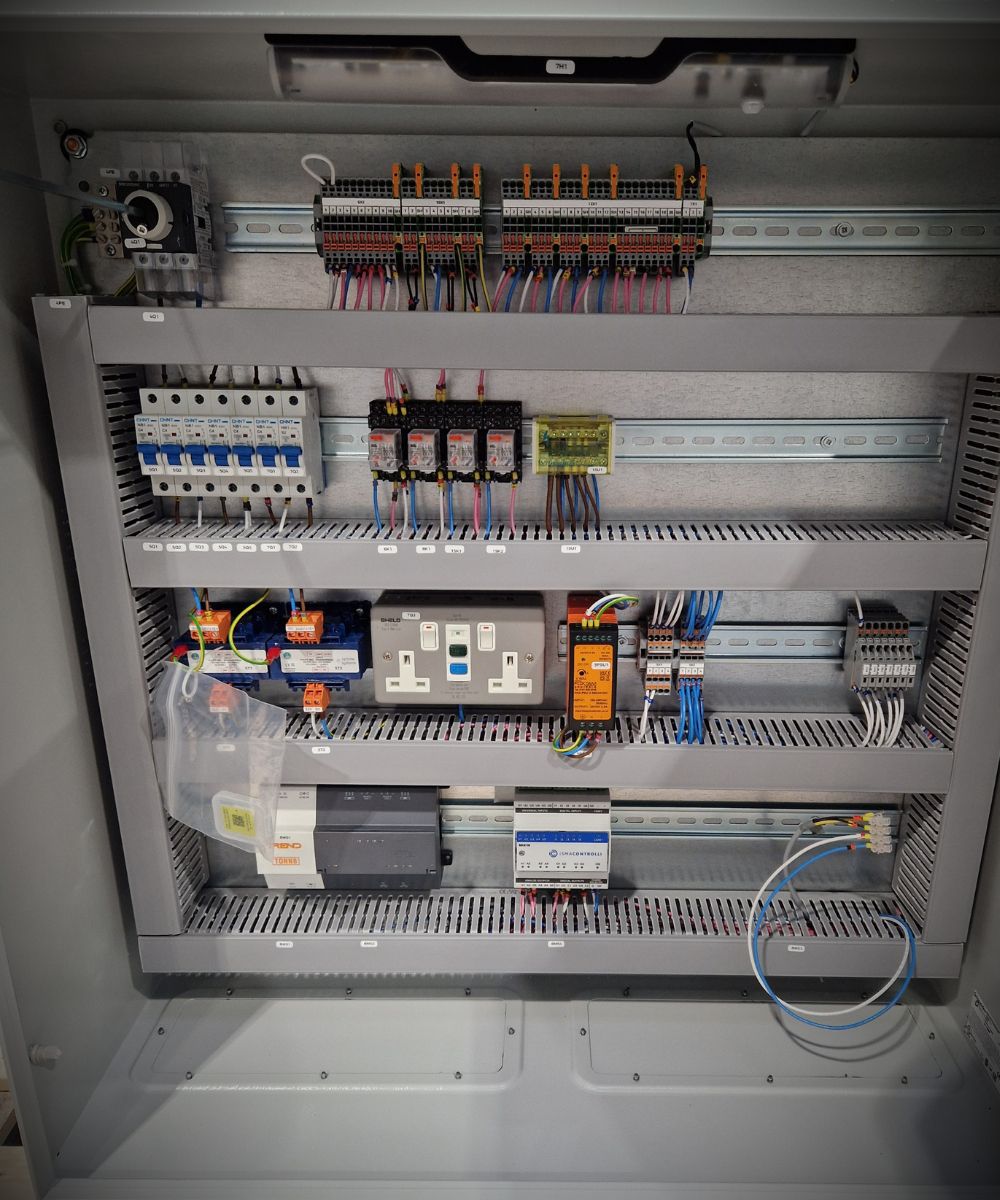
The supply lands on the door-interlocked isolator at the top of the panel, or on incoming terminals next to it. Three phase: L1, L2, L3, N (where present) and earth. Single phase: L, N and earth.
Use the right size cable for the panel rating and the protective device feeding it, and gland it properly. The earth goes to the main earth terminal, not a spare terminal that happens to be nearby. Why multiple earths on the same stud are banned explains what inspectors look for.
Do not switch on yet.
2. The pump cables
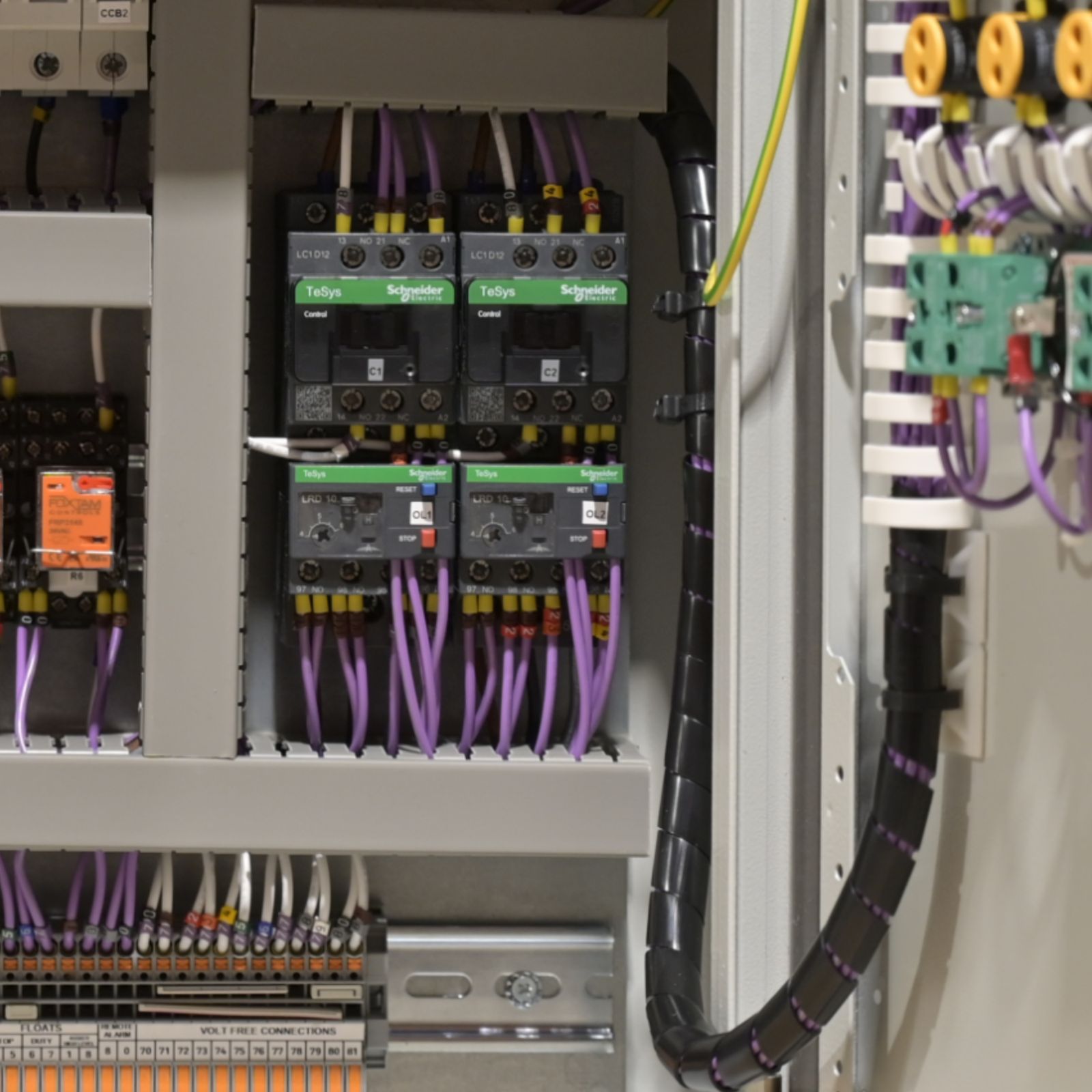
Each pump has its own contactor and overload. The pump cable connects to the outgoing terminals below the overload for that pump, marked U, V, W (three phase) or L, N (single phase), with the pump earth to the earth bar. Pump 1 to pump 1's terminals, pump 2 to pump 2's; it sounds obvious, but swapping them is the most common wiring fault we see.
Submersible pump cables are often SWA. Gland them so the armour is earthed at the panel end. Should you gland both ends of SWA cable? covers the arguments.
If the pump has seal leak or thermal contacts, they go to the control terminals marked for them, not to the power terminals. A panel with the seal leak option will have a relay and lamp for each pump.
3. The level controls
For a float switch panel, the floats connect to the control terminals labelled for each function. A typical twin pump panel uses four:
- Stop (low level)
- Start (duty)
- Assist (standby)
- High level alarm
Floats are two-wire devices on the low-voltage control circuit. Keep their cables away from the power cables where you can, and make sure each float is on the right terminal pair. Where to hang the floats covers the levels themselves.
For a panel with a 4-20mA input, such as Basix View or Telemetrix View, the sensor cable goes to the analogue input terminals with the screen earthed at the panel end only.
4. Anything else
- Volt-free contacts for run, fault and high level, if someone else's telemetry or a BMS needs them.
- The beacon, if fitted, to its supply terminals.
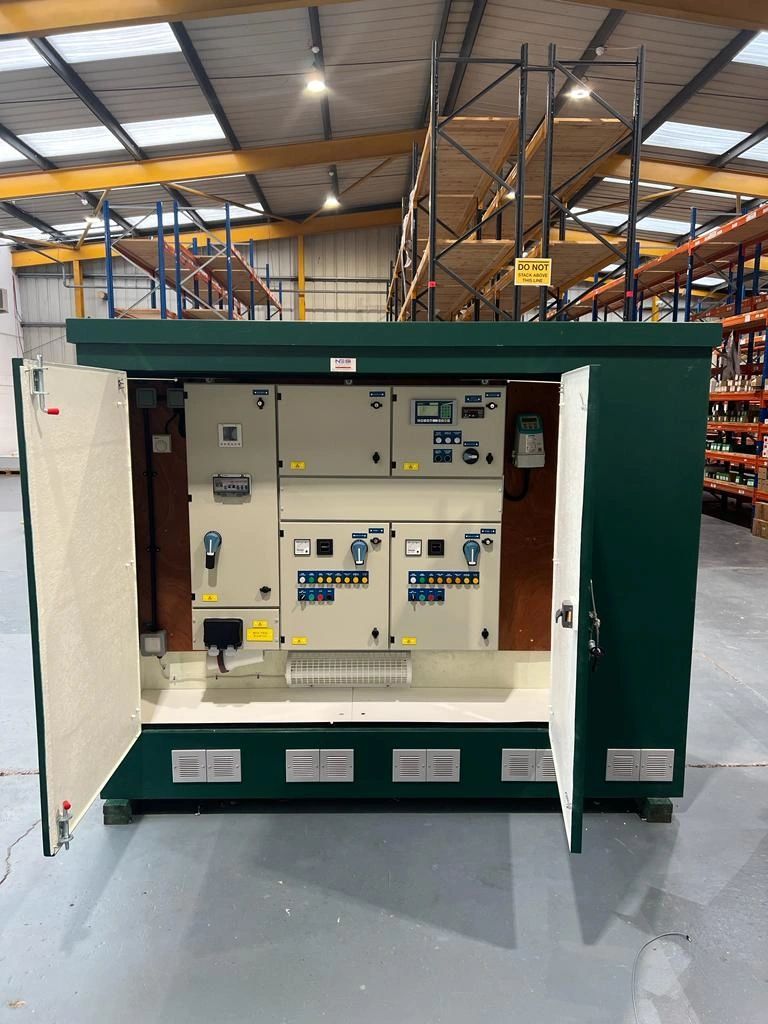
- Heater and light in a kiosk are usually pre-wired.
Before you switch on
- Every terminal tightened, every cable identified. Give each one a tug.
- Insulation resistance test the pump cables and motors before connecting them to the panel. A wet pump cable will trip the panel the moment you try it.
- Overload settings match the pump full load current on the nameplate. What you are doing wrong with overloads if you are unsure.
- Floats hang free and are not tangled.
- Panel door closed, isolator on, control circuit breaker on.
Commissioning
Turn each pump to hand in turn and check it runs and the direction is right (on a three-phase pump, wrong rotation means little or no flow; swap two phases at the pump terminals). Then set both to auto, fill the chamber and watch a full cycle: duty pump starts on the start float, stops on the stop float, the assist float brings in the second pump, the high level float raises the alarm and sounder. Check the duty changes over on the next cycle.
Write the pump full load currents and the overload settings on the commissioning sheet in the door, and leave the diagram where you found it. The next engineer will thank you.
Stuck? The technical line is 01782 320400, Monday to Friday, 7am to 4.30pm.
Frequently asked questions
Which terminal does each float go to?
It is printed on the terminal rail and shown on the diagram inside the door. On a standard twin pump Basix panel the four control pairs are stop, start, assist and high level, in that order from the left, but always check the drawing for the panel in front of you.
The pump runs in hand but not in auto. What is wrong?
Almost always the floats: a float on the wrong terminals, a float that is stuck, or the stop float not making. Lift each float by hand with the panel in auto and watch which lamp changes.
Do I need a neutral for a three-phase panel?
The standard panel uses the neutral for the 230V control circuit. If the supply has no neutral, tell us when ordering and we fit a transformer to provide it.
Can I extend the float cables?
Yes, in a proper junction box with the joint above the water line, using cable rated for the environment. Keep the joint accessible: floats are the part that gets replaced.
Written by the engineers at G&G Controls, a UK control panel manufacturer in Stoke-on-Trent. For general guidance only; consult a qualified professional for advice on your own installation.
Up next
Duty/standby, duty/assist and duty changeover explained
What the three twin-pump arrangements mean, which one your pump station should use, and why a panel that alternates the duty pump makes both pumps last longer.